Government Home Repair Grants and Eligibility Guidelines
Who Is Eligible for Government Home Improvement Grants?

Who is eligible for government home improvement grant assistance? In most cases, it is a homeowner who lives in the home as a primary residence, meets a program's income limit, and needs repairs tied to health, safety, energy efficiency, or accessibility.
Quick eligibility checklist:
- Income: Many local programs serve households below 80% of Area Median Income (AMI). Some are stricter, such as USDA Section 504, which uses very-low-income county limits.
- Homeownership: Most repair grants require you to own and occupy the property. Renters may qualify for limited accessibility or weatherization services through local programs.
- Location: Programs can be limited to a city, county, state, disaster area, or USDA-designated rural area.
- Age or disability: Seniors, people with disabilities, and veterans with service-connected disabilities may have access to specialized help.
- Repair need: Funding usually prioritizes active roof leaks, unsafe wiring, failing heating systems, accessibility updates, insulation, and other urgent repairs - not cosmetic remodeling.
There is no single federal grant that pays for every home project. Eligibility and funding can vary sharply by address, household size, income, property condition, and the purpose of the work. For homeowners in the NY/NJ/CT tri-state area dealing with an aging roof, worn siding, or gutter problems, the first step is understanding whether the repair solves a documented safety, habitability, or energy issue.
I am Bill Hogan, owner of Hogan Roof, with more than 20 years of experience helping property owners protect their homes through roofing, siding, and gutter work. I understand that people asking who is eligible for government home improvement grant support often need clear answers before they can plan an urgent repair or explore financing.
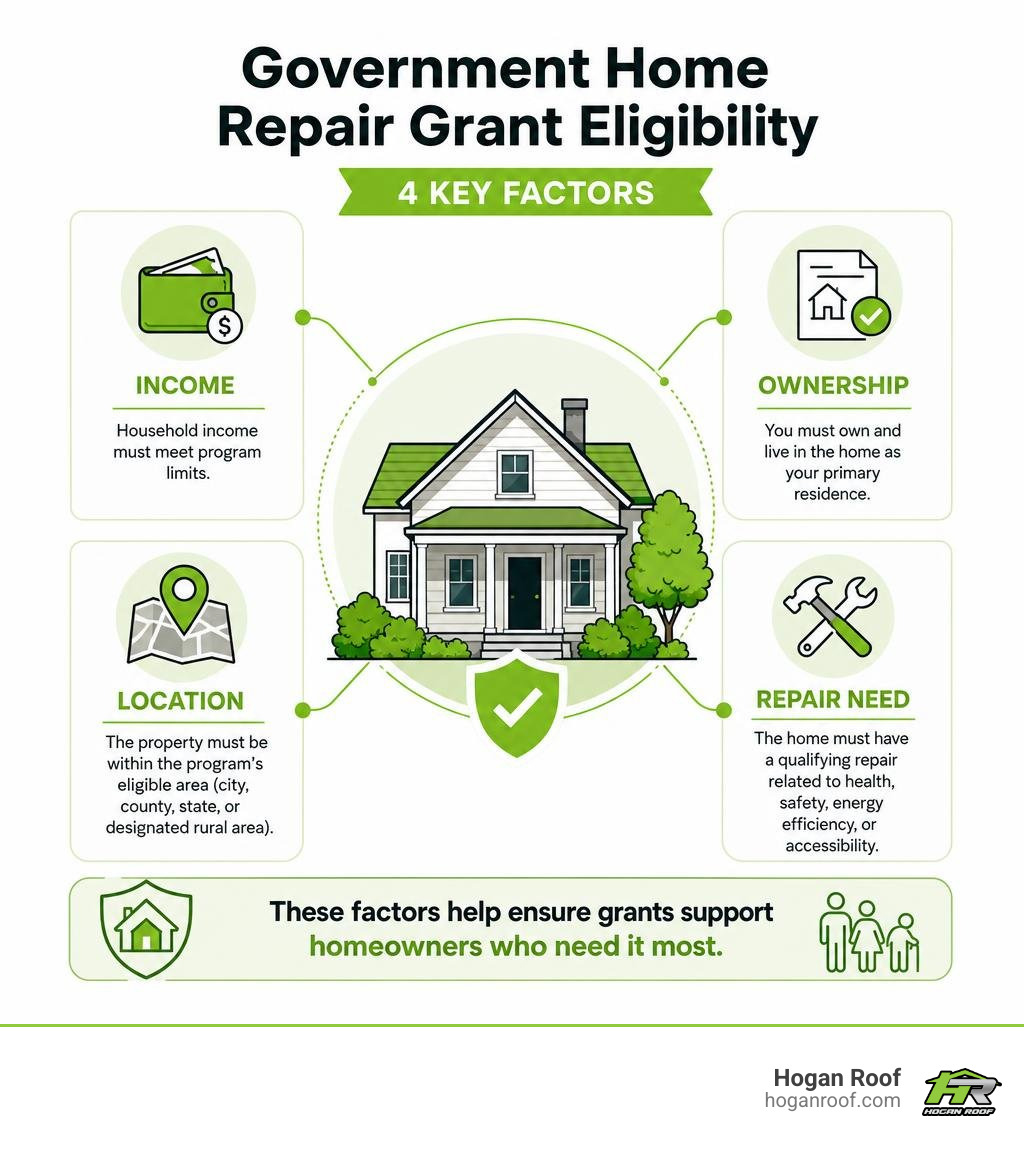
Key Factors Determining Who Is Eligible for Government Home Improvement Grant Assistance
When government entities distribute housing preservation grants, they must ensure tax dollars assist households that truly need support. Public home repair grants are structured around strict administrative guidelines rather than general application pools.
Understanding how program evaluators measure your financial position, property ownership status, and physical location helps you assess your eligibility before filling out lengthy paperwork.
Core Eligibility Criteria: Income Limits, AMI, and Property Ownership
Income is the single most critical filter used across federal, state, and local home improvement grants. Most government programs do not use a single national dollar cutoff; instead, they calculate limits based on your county’s Area Median Income (AMI) or the Federal Poverty Guidelines (FPL).
- 80% Area Median Income (Low Income): This is the standard ceiling for many local municipal block grants, state housing programs, and housing rehabilitation initiatives.
- 50% Area Median Income (Very Low Income): Used by programs like the USDA Section 504 Home Repair program, targeting households with severe financial limitations.
- 200% of Federal Poverty Guidelines: The core benchmark for the Department of Energy’s Weatherization Assistance Program (WAP), making energy-efficiency upgrades accessible to families under specific household income thresholds.
Beyond income, clear property ownership is mandatory. Applicants must prove they hold legal title to the property through a recorded deed or title document. Land contracts or unrecorded heir property arrangements can cause delays, though some local non-profits offer legal aid to resolve heir title issues.
Primary occupancy is equally strict: you must occupy the structure as your principal residence, typically for at least 12 months prior to applying. Single-family detached homes, townhomes, and row houses are standard eligible property types, while multi-family properties generally must be owner-occupied with strict unit restrictions. Reviewing $10,000 Grant for Home Improvement Guidelines can help clarify how these rules apply to specific grant amounts.
Geographic Location and Rural Area Qualifications
Where your home sits on a map dictates which grants you can access. Federal funding flows down two distinct geographic pipelines:
- Rural Programs: Administered directly by USDA Rural Development. To qualify, your home must reside in an officially designated rural zone—typically defined as open countryside, rural towns, or places with populations under 35,000.
- Urban and Suburban Programs: Funded via U.S. Department of Housing and Urban Development (HUD) block grants (such as CDBG and HOME programs). Cities and counties receive annual formula grants to distribute locally to qualifying homeowners.
Because local municipalities manage their own HUD block grant funds, program terms in nearby towns can vary significantly. One municipality might emphasize senior accessibility modifications, while a neighboring county focuses on emergency structural and roof repairs.
Major Federal Home Improvement Grant Programs and Qualifications
Navigating federal housing grants requires knowing which agency governs each specific program. The federal government does not issue one general "home repair grant," but rather funds dedicated programs tailored to rural residents, energy efficiency, disasters, or veterans.
| Grant Program | Primary Target Audience | Income Ceiling | Maximum Grant Award | Primary Covered Repairs |
|---|---|---|---|---|
| USDA Section 504 Repair | Very-low-income rural homeowners (62+) | 50% Area Median Income (AMI) | $10,000 lifetime ($15,000 in disaster areas) | Health and safety hazards, roof replacement, structural fixes |
| Weatherization Assistance (WAP) | Low-income homeowners & renters | 200% Federal Poverty Level (FPL) | Avg. ~$7,500 value per home | Insulation, air sealing, heating system repairs/replacements |
| VA SAH Grant | Veterans with severe service-connected disabilities | No income ceiling | Up to $126,526 | Major adaptive housing construction, ramps, bathroom retrofits |
| VA SHA Grant | Veterans with moderate service-connected disabilities | No income ceiling | Up to $25,350 | Mobility modifications, door widening, accessibility fixes |
| HUD Older Adults (OAHMP) | Low-income seniors (62+) aging in place | Low-income limits | Varies by local grantee | Fall prevention, grab bars, maintenance-level safety updates |
Who Is Eligible for Government Home Improvement Grant Funding Through USDA Section 504?
The USDA Section 504 Single Family Housing Repair program provides direct grants to very-low-income seniors living in designated rural areas.
To qualify for a Section 504 grant:
- You must be at least 62 years old .
- You must own and occupy the rural home.
- You must be unable to obtain affordable credit elsewhere.
- Your household income must fall at or below your county’s 50% Area Median Income (AMI) .
The lifetime maximum grant allowance is $10,000 . However, if your home is located in a presidentially declared disaster area, the maximum grant cap increases to $15,000 . Grants must be used specifically to remove health and safety hazards—such as replacing a failing roof, repairing dangerous electrical panels, or restoring structural integrity.
Homeowners under age 62 (or those needing larger repair amounts) can apply for Section 504 low-interest loans of up to $40,000 at a fixed 1% interest rate repaid over 20 years. Qualifying elderly homeowners can combine a $10,000 grant with a low-interest loan for up to $50,000 in total repair funds ($55,000 in declared disaster zones).
A key requirement: if you sell your home in less than 3 years after receiving a Section 504 grant, you must repay the full grant award amount.
Weatherization Assistance Program (WAP) and HUD Block Grants
Managed by the U.S. Department of Energy, the Weatherization Assistance Program (WAP) helps low-income families cut utility costs by improving home energy performance. WAP provides an average benefit value of $7,500 per home in retrofits and energy-saving technology at zero cost to the homeowner.
Eligibility for WAP requires household income to be at or below 200% of the Federal Poverty Level (or matching state Supplemental Security Income criteria). Priority is granted to elderly individuals, families with children, and persons with disabilities.
Work performed under WAP includes:
- Adding high-density attic, wall, and floor insulation.
- Sealing bypasses, ducts, and air leaks.
- Repairing or replacing unsafe or non-functional heating and cooling equipment.
Simultaneously, HUD distributes annual Community Development Block Grants (CDBG) directly to state and local governments. Municipalities design local home repair programs using these funds, offering forgivable grants or deferred loans to homeowners earning at or below 80% AMI .
Specialized Grants for Seniors and Disabled Veterans
Veterans with service-connected disabilities can access substantial housing modification funding through the Department of Veterans Affairs:
- Specially Adapted Housing (SAH) Grants: Designed for veterans with severe service-connected disabilities (such as loss of limbs, blindness, or severe burns). Funding can reach up to $126,526 to build an adaptive home or remodel an existing residence for barrier-free living.
- Special Home Adaptation (SHA) Grants: Designed for veterans with specific service-connected mobility restrictions, providing up to $25,350 to modify doors, path entryways, and bathrooms.
For non-veteran seniors, HUD funds the Older Adults Home Modification Grant Program, which pairs licensed Occupational Therapists with handymen to deliver functional, low-cost accessibility updates (such as tub transfer benches, non-slip stair treads, lever handles, and grab bars) so low-income seniors aged 62+ can age safely in place.
Covered Home Improvement and Repair Categories
Government grant programs do not fund luxury upgrades, cosmetic remodeling, or elective home expansions. Every public dollar awarded must target habitability, building safety, energy conservation, or barrier-free accessibility.
Health, Safety, and Roofing Repairs
Roof failures represent one of the primary drivers of health and safety grant applications. A severely damaged roof allows water intrusion, triggering structural frame rot, ceiling collapses, electrical shorts, and toxic mold cultivation.
If you are evaluating who is eligible for government home improvement grant funds for exterior work, structural integrity comes first. standard grant-funded health and safety categories include:
- Critical Roofing Fixes: Repairing active roof leaks, replacing degraded decking, structural rafter reinforcement, or replacing failed shingle systems. Homeowners facing sudden storm damage or severe leaks can explore professional residential roofing repair to secure detailed diagnostic assessments for program applications.
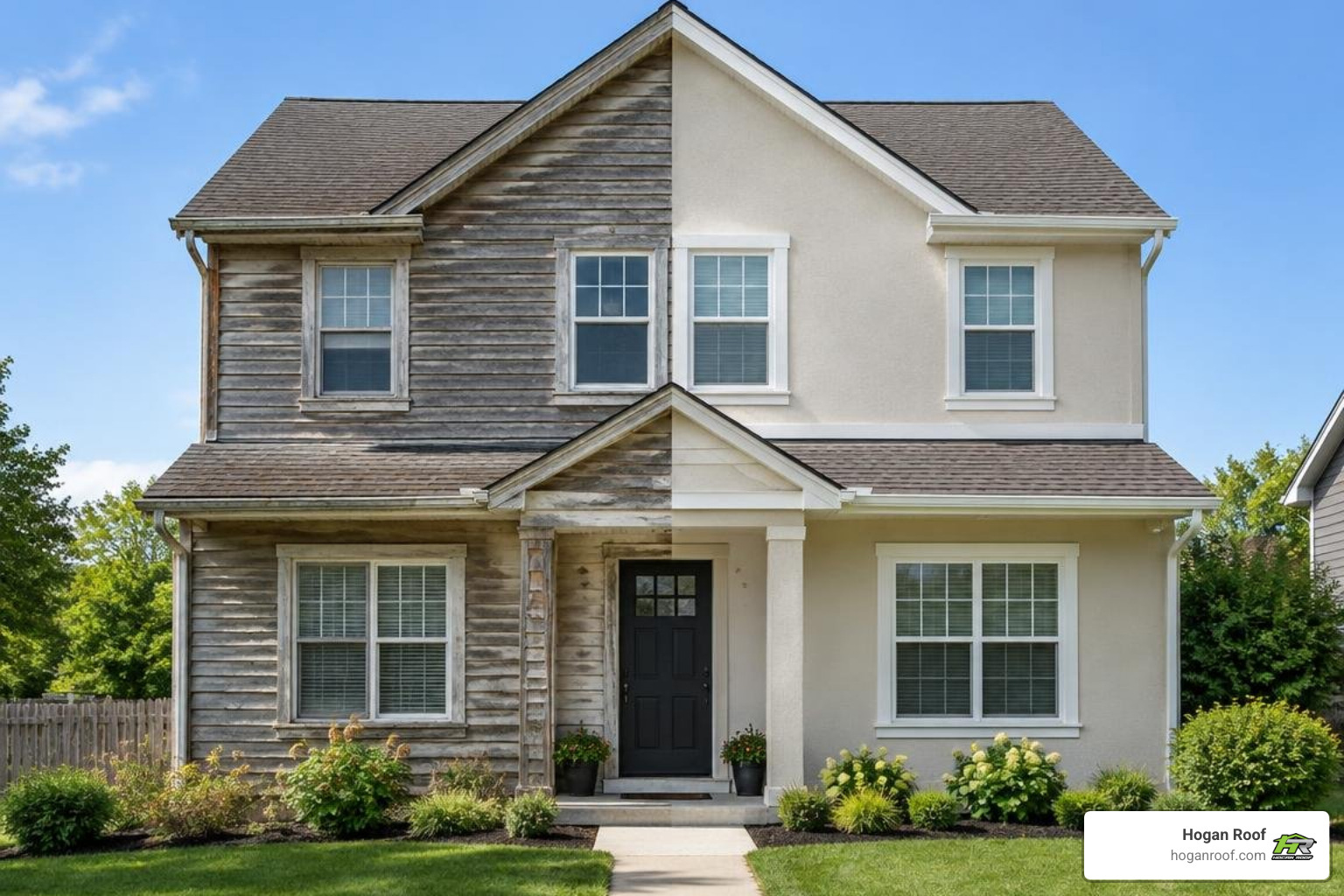
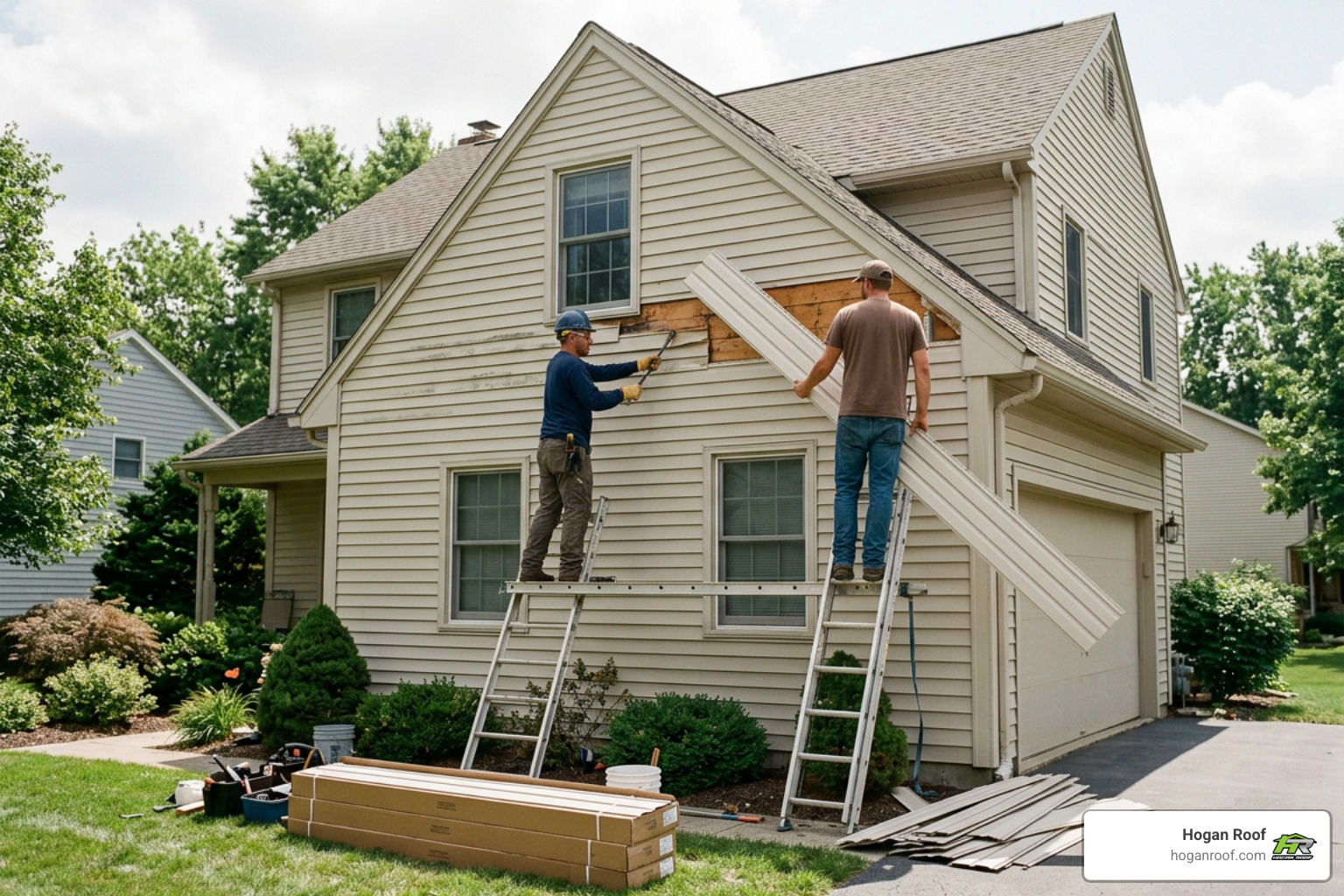
- Exterior Protection: Replacing broken or missing wall cladding to stop water penetration through siding repair.
- Water Management Systems: Installing functional drainage systems and gutter installation to divert water away from home foundations.
- Systemic Safety Hazards: Upgrading knob-and-tube or overloaded electrical panels, repairing leaking gas lines, and addressing broken main water channels.
Energy Efficiency, Retrofits, and Accessibility Modifications
Beyond emergency structural protection, public grant funding emphasizes long-term environmental sustainability and aging-in-place modifications:
- Thermal Envelope Enhancements: Installing blow-in attic insulation, continuous wall insulation, air sealing, and draft-proofing.
- Clean Heating & Cooling Upgrades: Transitioning away from broken, inefficient oil furnaces to high-efficiency cold-climate heat pumps. Program guidelines like the Warm Homes Local Grant Policy Guidance illustrate how energy retrofits are structured to help lower utility bills for qualifying households.
- Accessibility Improvements: Converting standard bathrooms into roll-in showers, building exterior wheelchair access ramps, widening door frames to 36 inches, and installing safety grab bars.
How to Apply for Government Home Improvement Grants
Applying for home modification grants requires systematic preparation. Because funding pools are limited, incomplete applications or work started prematurely can lead to immediate disqualification.
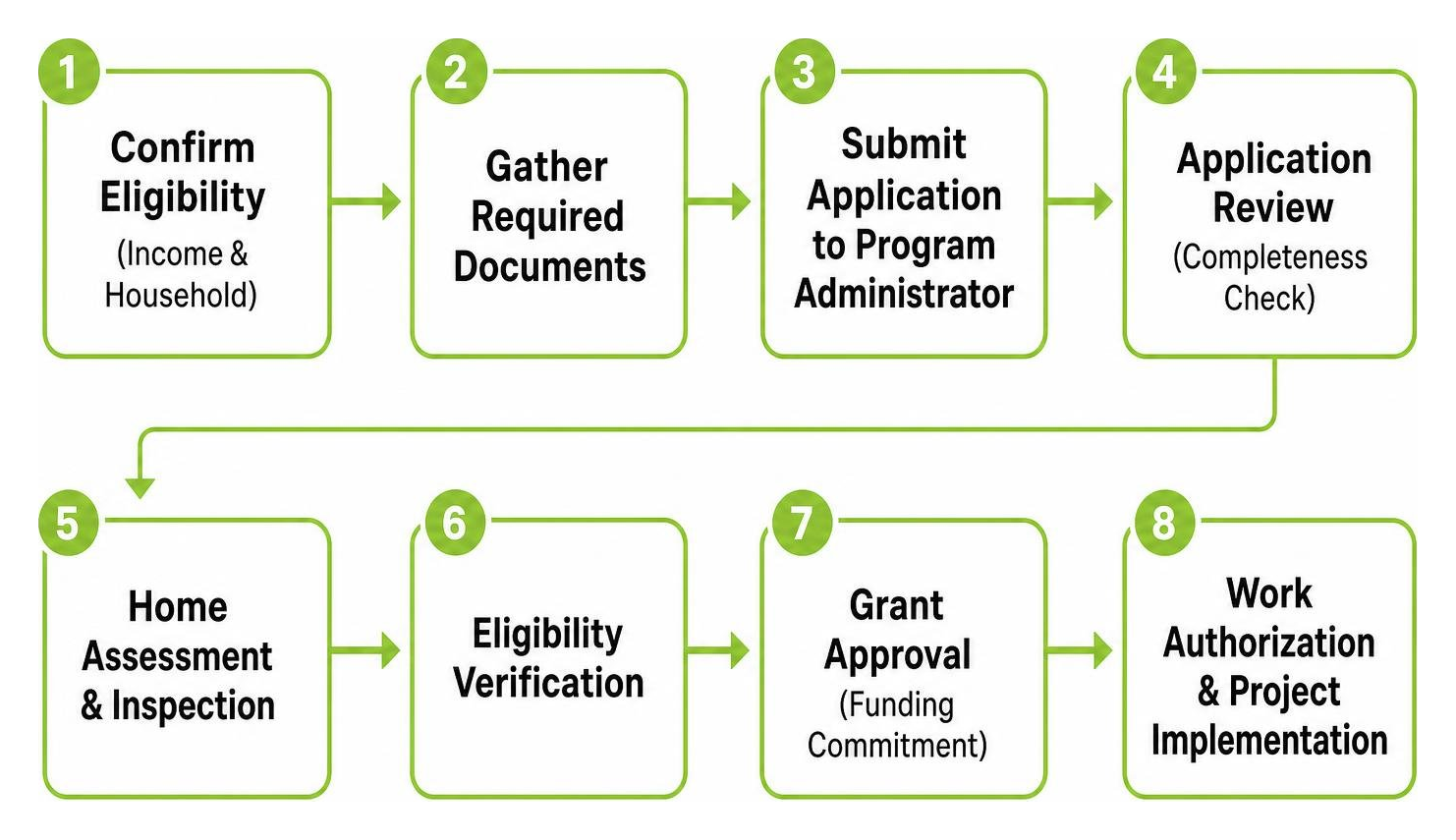
Essential Documentation and Application Requirements
Before contacting program administrators, gather complete financial and property documentation. Most grant programs require:
- Proof of Household Income: 2 years of federal tax returns (1040s), 3 to 6 recent consecutive pay stubs, W-2 forms, or official benefit verification letters (Social Security, SSI, Disability, Pensions).
- Proof of Property Ownership: Copy of your recorded property deed, current mortgage statement showing clean standing, and recent property tax assessment statement.
- Residency Verification: Government-issued photo ID showing the property address, paired with recent utility bills (electric, water, gas) matching your name.
- Hazard Documentation & Bids: Detailed photographic evidence of structural hazards, active roof leaks, or safety risks, accompanied by 2 to 3 formal, itemized quotes from licensed, insured contractors.
Layering and Combining Multiple Grant Programs
Homeowners faced with major repairs often find that a single grant award does not cover total scope costs. For instance, a $10,000 USDA Section 504 grant may fall short of replacing a heavily deteriorated structural roof that requires new decking and framing fixes.
In these situations, program guidelines frequently permit grant stacking (combining separate, non-duplicative funding streams for a single home project):
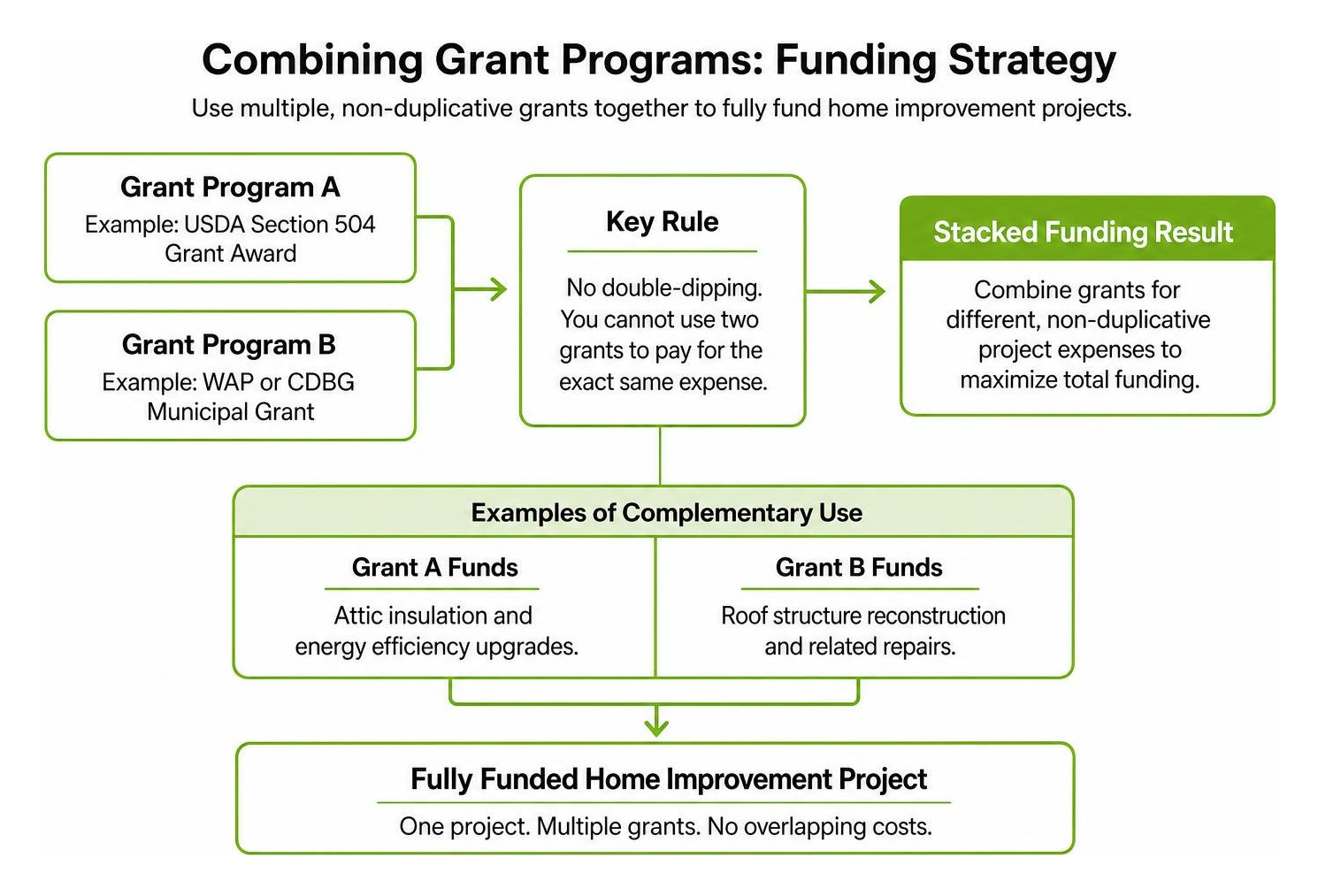
When stacking grants, you cannot request funding from two agencies for the exact same dollar expense—this is illegal double-dipping. However, you can use a Weatherization Assistance Program (WAP) grant to insulate your attic, while utilizing a local CDBG municipal grant to rebuild the compromised roof structure underneath it.
Who Is Eligible for Government Home Improvement Grant Stacking and Rebates?
Eligibility for grant stacking requires navigating multiple programmatic guidelines simultaneously:
- Verify Income Cross-Eligibility: Ensure your household income satisfies the most stringent program in your stack (e.g., qualifying under 50% AMI unlocks both USDA Section 504 and local 80% AMI municipal grants).
- Incorporate Utility Efficiency Rebates: Utility companies frequently offer rebates for high-efficiency heat pumps, attic insulation, and window replacements. These rebates can be stacked on top of government energy grants without triggering income reductions.
- Include Local Environmental & Stormwater Grants: Some county agencies offer specialized green infrastructure grants for rain gardens or stormwater diversion, which complement home drainage and foundation protection efforts.
State and Local Program Alternatives
When national federal grant waitlists are long or household income slightly exceeds strict federal cutoffs, state housing finance authorities and municipal agencies offer excellent alternatives.
State Housing Authorities and CDBG Local Grants
State-administered programs frequently provide higher funding caps and more flexible terms than national programs:
- Illinois Homeowner Assistance Fund Home Repair (HAFHR): Provides up to $60,000 per household for critical structural and safety repairs to homeowners earning up to 150% Area Median Income (AMI) who experienced financial hardship. Grants carry a 3-year forgivable recapture term.
- North Carolina DHHS Housing Services: Offers up to $7,000 annually per individual for seniors aged 60+ to implement minor home repairs, security modifications, and accessibility enhancements.
- Local Municipal Grantee Networks: States often route repair funds through non-profit community action agencies, regional housing trusts, and municipal development departments rather than managing applications directly.
Alternative Home Improvement Financing Options
If your household income exceeds grant eligibility limits or your local grant program has exhausted its budget for the fiscal year, government-backed low-cost loans and flexible home improvement financing provide clear pathways forward:
- HUD Title I Property Improvement Loans: Allows homeowners to borrow up to $25,000 for single-family home improvements through private lenders, backed by HUD guarantee, without requiring existing home equity.
- FHA 203(k) Rehabilitation Mortgages: Enables buyers or current owners to roll structural repair costs directly into a single long-term mortgage loan.
- Low-Fixed-Rate Private Financing: Homeowners requiring urgent protection who need immediate project execution can secure competitive monthly terms. Review our flexible pricing details to estimate roof, siding, and gutter project scope.
- Preventative Care: Protecting your exterior investment through regular, professional roof maintenance prevents minor leaks from developing into catastrophic structural hazards that require emergency intervention.
Frequently Asked Questions About Home Repair Grants
Can government home improvement grants be used for a full roof replacement?
Yes, government home repair grants can be used for a complete roof replacement if the existing roof exhibits severe structural defects, active leaks, or safety hazards threatening habitability.
Programs like USDA Section 504, local Community Development Block Grants (CDBG), and state repair programs routinely approve complete tear-offs and replacements. However, grants will not cover purely cosmetic upgrades or replacing a sound roof simply due to age. Detailed contractor estimates and photographic documentation of active leaks are required.
Do government home repair grants have to be repaid?
Government home improvement grants generally do not have to be repaid , provided you fulfill program residency obligations.
Most repair grants mandate that you maintain the improved property as your primary residence for a specified period—typically 3 to 5 years . If you sell the home, move out, or transfer the property title before this retention window expires, a pro-rated portion (or the full balance) of the grant must be repaid. Once the retention period ends, the grant is fully forgiven.
What is the maximum income threshold to qualify for home improvement grants?
The maximum income threshold varies depending on the specific program operating in your area:
- 80% Area Median Income (AMI): The national standard ceiling for most municipal HUD block grants and local housing rehab programs.
- 50% Area Median Income (AMI): The ceiling for stricter programs like USDA Section 504 repair grants.
- 200% Federal Poverty Level (FPL): The threshold used by the Weatherization Assistance Program (WAP).
- 150% Area Median Income (AMI): Used by specialized state recovery initiatives like Illinois HAFHR.
Because AMI figures are adjusted annually for household size and regional cost of living differences, a 4-person household in the tri-state area will have a higher numeric income ceiling than a household in a low-cost rural county.
Conclusion
Understanding who is eligible for government home improvement grant opportunities comes down to four core vectors: meeting household income limits (typically 50% to 80% AMI), maintaining primary homeownership, living in an eligible geographic area, and demonstrating urgent safety, structural, or energy repair needs. By gathering your financial tax records, property deeds, and hazard photos early, you position your application for success when local or federal funding opens.
When grant waitlists are long or urgent storm damage threatens your property envelope, waiting months for public funding approval is not always practical. At Hogan Roof, we bring over 20 years of hands-on expertise serving homeowners across the NY/NJ/CT tri-state area with reliable residential roofing, siding, and gutter solutions.
We offer comprehensive free property inspections, transparent pricing, and flexible roof financing options to help you execute critical home repairs without delay. Contact team members today to schedule your evaluation and protect your home investment.