Finding the Top Drones for Roof Inspection
Choosing the Right Drones for Roof Inspection
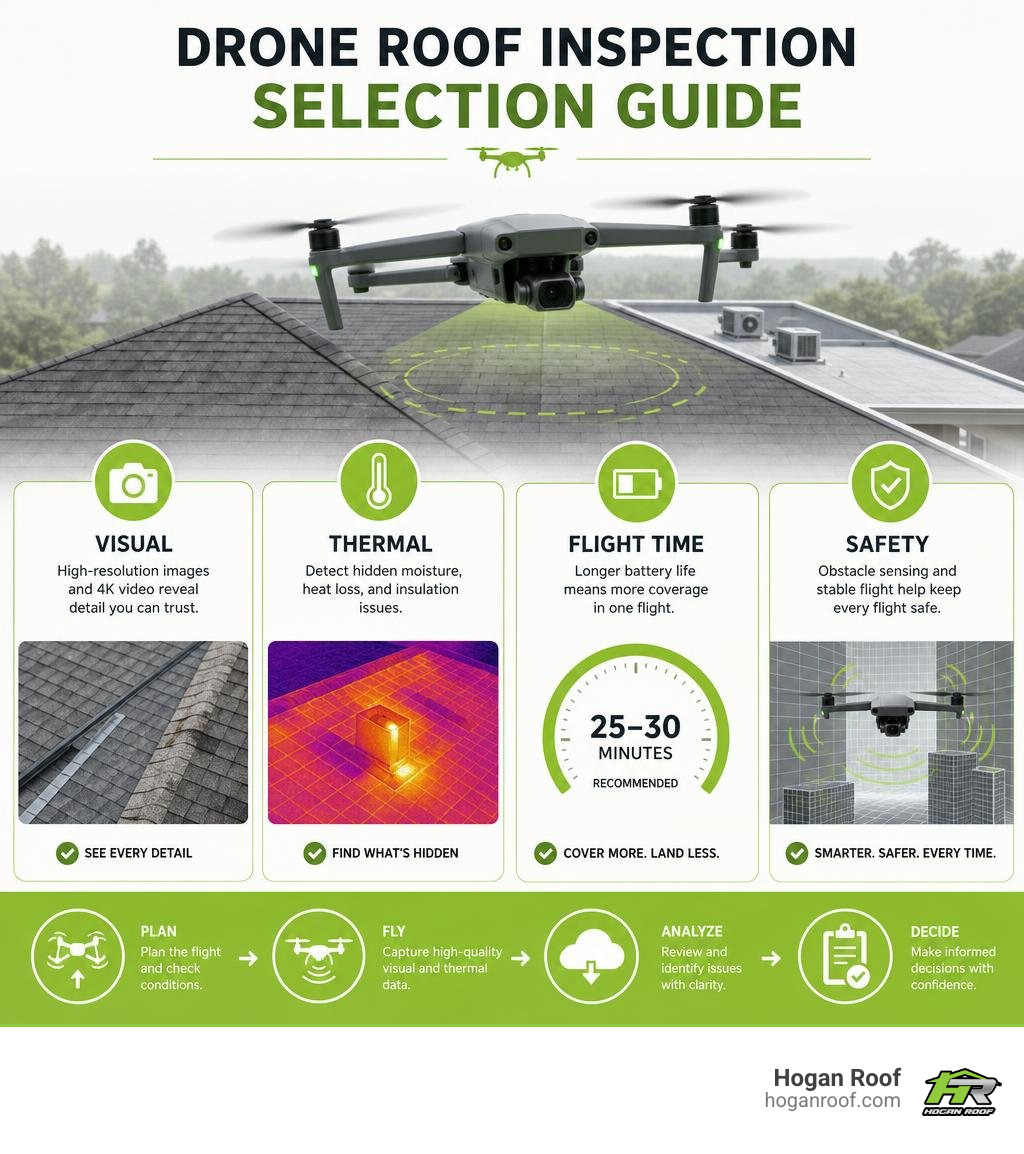
Drones for roof inspection should combine a sharp visual camera, stable flight, obstacle sensing, and enough battery time to document the entire roof safely. For most homes and small commercial buildings, a camera drone with 4K video, high-resolution still photos, and at least 25 to 30 minutes of flight time is a strong starting point; thermal imaging is most useful when moisture or insulation problems are a concern.
| Roof inspection need | Best drone capability |
|---|---|
| Missing shingles, flashing, gutters, storm damage | High-resolution visual camera and zoom |
| Steep, tall, or hard-to-access rooflines | Strong stabilization and obstacle avoidance |
| Large flat commercial roofs | Longer flight time, mapping tools, and RTK positioning |
| Possible hidden moisture or heat loss | Radiometric thermal camera |
A drone cannot replace every hands-on roofing assessment, but it can give a clear aerial view without putting a person on a steep, fragile, or storm-damaged surface. That makes it especially helpful for documenting roof condition, planning repairs, and checking areas that are difficult to reach safely.
I am Bill Hogan, owner of Hogan Roof, and I have spent more than 20 years helping residential and commercial property owners across the NY/NJ/CT tri-state area make informed roofing decisions. In this guide to drones for roof inspection , I will help you understand the features that matter before choosing a system or reviewing an aerial roof report.
Why Drones for Roof Inspection Are Essential in 2026
Rooftop evaluations have shifted dramatically in recent years. Historically, checking a building's overhead structure meant setting up extension ladders, securing safety harnesses, and walking across slopes that might be slippery or structurally compromised. Today, using drones for roof inspection gives us an immediate, comprehensive vantage point without exposing technicians to fall hazards.
Worker safety remains the primary reason aerial technology has become standard practice across our industry. Occupational Safety and Health Administration (OSHA) regulations mandate strict fall protection systems whenever workers operate at heights of six feet or higher without guardrails. By launching an unmanned aircraft, we eliminate the need for initial physical scaling, drastically reducing workplace risk.
Beyond safety, modern drones equipped with high-resolution visual cameras and radiometric thermal sensors deliver an extraordinary level of detail. Capturing crisp 4K imagery and centimeter-accurate spatial data allows property owners to see early warning signs long before they turn into costly active leaks. Incorporating these scans into routine Roof Maintenance prolongs the lifespan of both residential and commercial roofing systems.
Key Benefits of Aerial Roof Assessments
When evaluating roofs with steep pitches, delicate materials, or structural storm damage, aerial assessments offer unique operational advantages:
- Enhanced Field Safety : Keeping inspectors safely on the ground removes fall risks entirely during initial surveys.
- Rapid Completion Times : A typical residential drone inspection takes just 20 to 45 minutes to capture complete high-definition coverage, compared to hours of ladder setup and physical walking.
- Preservation of Fragile Materials : Delicate roofing structures like slate tile, clay, or vintage metal shingles can crack or dent under foot traffic. Drones capture detailed views without touching a single shingle.
- Comprehensive Storm Audits : Following major hail or wind events, drones can rapidly scan large housing developments or commercial complexes to document losses for insurance adjusters.
Top Defects Detected by Inspection Drones
Equipped with optical zoom and high-megapixel sensors, commercial inspection aircraft reveal both macro-level structural issues and micro-defects:
- Missing or Lifted Shingles : High-wind events frequently tear shingle tabs loose or lift underlayment edges along ridges and valleys.
- Membrane Splits and Cracks : On flat commercial roofs, single-ply EPDM, TPO, or modified bitumen membranes often suffer from UV degradation, split seams, or puncture marks.
- Deteriorated Flashing and Sealants : Skylights, chimneys, HVAC curbs, and vent pipes are frequent sources of water ingress when sealant joints crack over time.
- Moisture Retention and Trapped Leaks : Using infrared thermal payloads, drones highlight surface temperature variances that indicate subsurface moisture trapped beneath roof membranes.
- Gutter and Drainage Blockages : Overhead visual scans instantly pinpoint standing water, leaf buildup, and damaged drainage scuppers.
Key Factors When Choosing Drones for Roof Inspection
Selecting the right aircraft requires matching mission requirements with aircraft capabilities. A lightweight consumer quadcopter might suffice for basic photo documentation on a single-family dwelling, but complex commercial facilities demand industrial-grade stability, long battery life, and high-performance optics.
Top Features to Seek in Drones for Roof Inspection
When reviewing aircraft specifications for professional aerial surveys, keep these key criteria in mind:
- Camera Specifications : Look for a minimum resolution of 20 megapixels for still photography and 4K video recording. Mechanical shutters are preferred over electronic shutters to prevent rolling-shutter distortion during mapping passes.
- Flight Time and Battery Management : Residential jobs require a minimum flight envelope of 25 to 30 minutes per battery, whereas commercial industrial roofs need 40 to 50+ minutes to avoid frequent battery swaps.
- Omnidirectional Obstacle Avoidance : Navigating near tree branches, chimneys, utility lines, and structural gables requires 360-degree visual and radar sensing systems to prevent collisions.
- Wind Resistance : Roof edges create localized wind shears and thermal updrafts. Choose aircraft rated for wind speeds of at least 12 m/s (approx. 27 mph) to ensure rock-solid hover stability.
- Real-Time Kinematic (RTK) Positioning : For precision surveying, RTK modules provide centimeter-level positional accuracy, guaranteeing exact roof measurement outputs.
Visual vs Thermal Cameras for Roof Scans
Visual cameras excel at capturing what is visible to the human eye, such as cracked tiles, dislodged shingles, or rusted metal panels. However, many of the most destructive roofing problems lie hidden beneath the surface layer.
Radiometric thermal sensors measure surface temperature differentials across building envelopes. Trapped moisture beneath a roof membrane retains heat differently than dry insulation materials. As the building cools down during evening hours, a thermal camera with a resolution of 640x512 reveals distinct thermal signatures where wet insulation sits. Combining optical and thermal datasets through automated platforms like 100% Automatic Drone Inspection Software | SkyVisor allows inspectors to annotate defects instantly during flight operations.
Top Drones and Systems for Aerial Roof Inspections
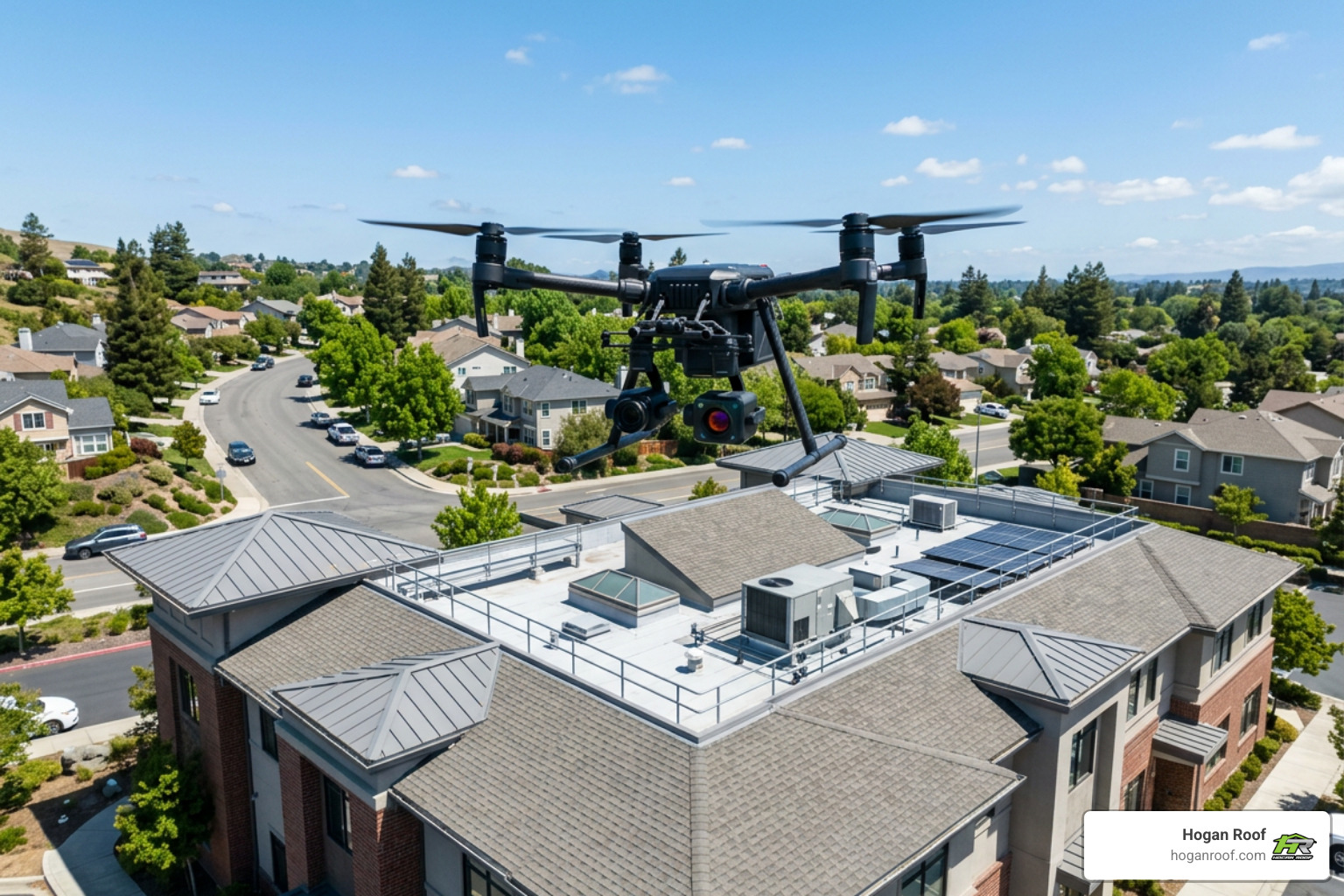
The market offers a range of aircraft designed for different inspection scenarios, from wide-area industrial mapping to autonomous indoor structural scans.
| Drone System | Best Application | Key Feature / Spec | Max Flight Time |
|---|---|---|---|
| Enterprise Docking Platforms | Autonomous continuous perimeter & roof monitoring | 37.8 mph wind resistance, RTK positioning | Up to 50 mins |
| Modular Utility Aircraft | Multi-sensor structural & line inspections | Quad-sensor payload (Thermal, Zoom, Laser) | Up to 63 mins |
| Compact Industrial Quadcopters | Commercial flat roof & thermal leak detection | Trio-sensor camera module, IP54 rating | Up to 45 mins |
| Autonomous Indoor Drones | GNSS-denied attic, shaft, & structural scans | 3D LiDAR, carbon cage, 14,000 lm LEDs | Dedicated indoor power |
Enterprise Platforms for Heavy-Duty Roof Mapping
For large industrial plants, logistics hubs, and commercial complexes, heavy-duty enterprise drones offer continuous field readiness. Enterprise systems equipped with automatic ground stations and dock units can launch scheduled, autonomous mapping routines without requiring an on-site pilot for every run.
Advanced enterprise aircraft, such as the D313 Inspection Drone | 6K Camera & Auto-Docking, feature maximum flight times of up to 50 minutes, wind resistance reaching 37.8 mph, and integrated 6K optical or thermal camera payloads. These units operate reliably in demanding environmental conditions, capturing repeatable spatial data for facilities maintenance teams.
Modular Utility Drones for Advanced Sensor Payloads
When an inspection mission demands specialized gear—such as high-output floodlights for low-light conditions, multi-spectral sensors, or long-range laser measurement—modular utility drones provide payload adaptability.
Heavy-lift utility frames like the UIS400 Drone Utility Inspection boast flight durations of up to 63 minutes and support payload capacities up to 3 kg. Equipped with quad-sensor camera arrays (incorporating thermal sensors, optical zoom, and precise laser rangefinding), these platforms allow operators to maintain a safe stand-off distance while inspecting elevated utility connections, rooftop HVAC stations, and structural trusses.
Compact Industrial Drones with Thermal Sensors
For everyday commercial and residential roofing surveys, highly portable industrial quadcopters balance rapid setup times with enterprise-grade sensor options. These compact systems easily unfold from a backpack and can be airborne in under two minutes.
Models such as the UIS220 Industrial Drone for Roof Inspections feature trio-sensor camera modules combining wide-angle visual lenses, telephoto zoom optics, and radiometric thermal capabilities. With RTK modules delivering sub-centimeter positioning accuracy, 15 km image transmission ranges, and IP54 dust and water resistance, these platforms excel at documenting thermal leaks and structural wear across diverse climatic conditions.
Specialized Autonomous Indoor and Attic Inspection Drones
Not all roof-related damage is inspected from the outside. Inspecting dark attic spaces, deep ceiling cavities, or structural roof trusses inside industrial warehouses presents unique challenges, including lack of GPS signals and cramped navigation paths.
Specialized indoor systems like the RoboAid - Autonomous Indoor Inspections utilize 3D LiDAR sensors and visual inertial odometry to navigate seamlessly in GNSS-denied environments. Surrounded by protective carbon-composite cages and powered by 14,000-lumen LED illumination arrays, these autonomous units use onboard edge AI to flag structural concrete cracking, sagging roof joists, and underlayment rot without risking inspector safety inside confined spaces.
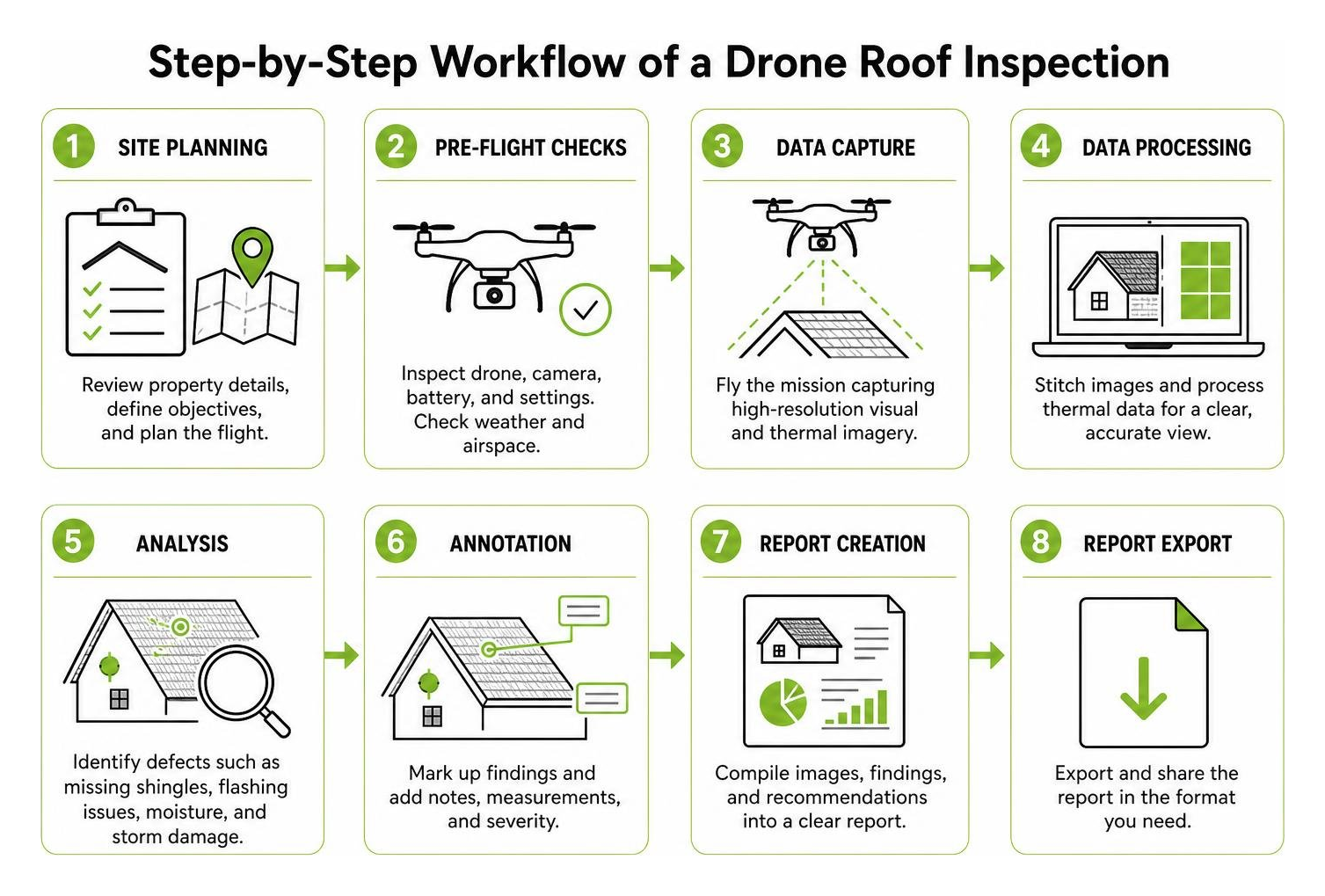
Workflow and Software for Processing Drone Inspection Data
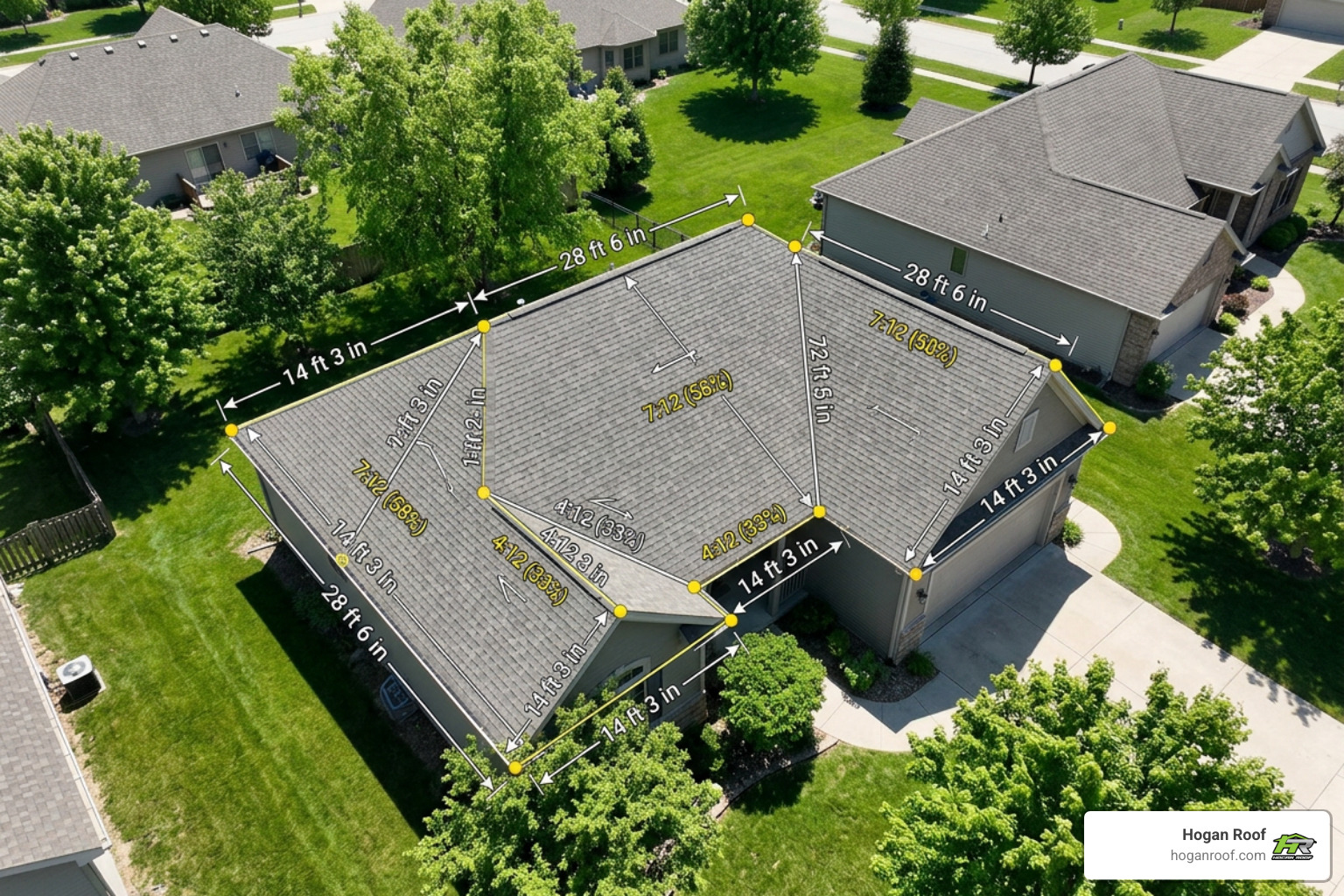
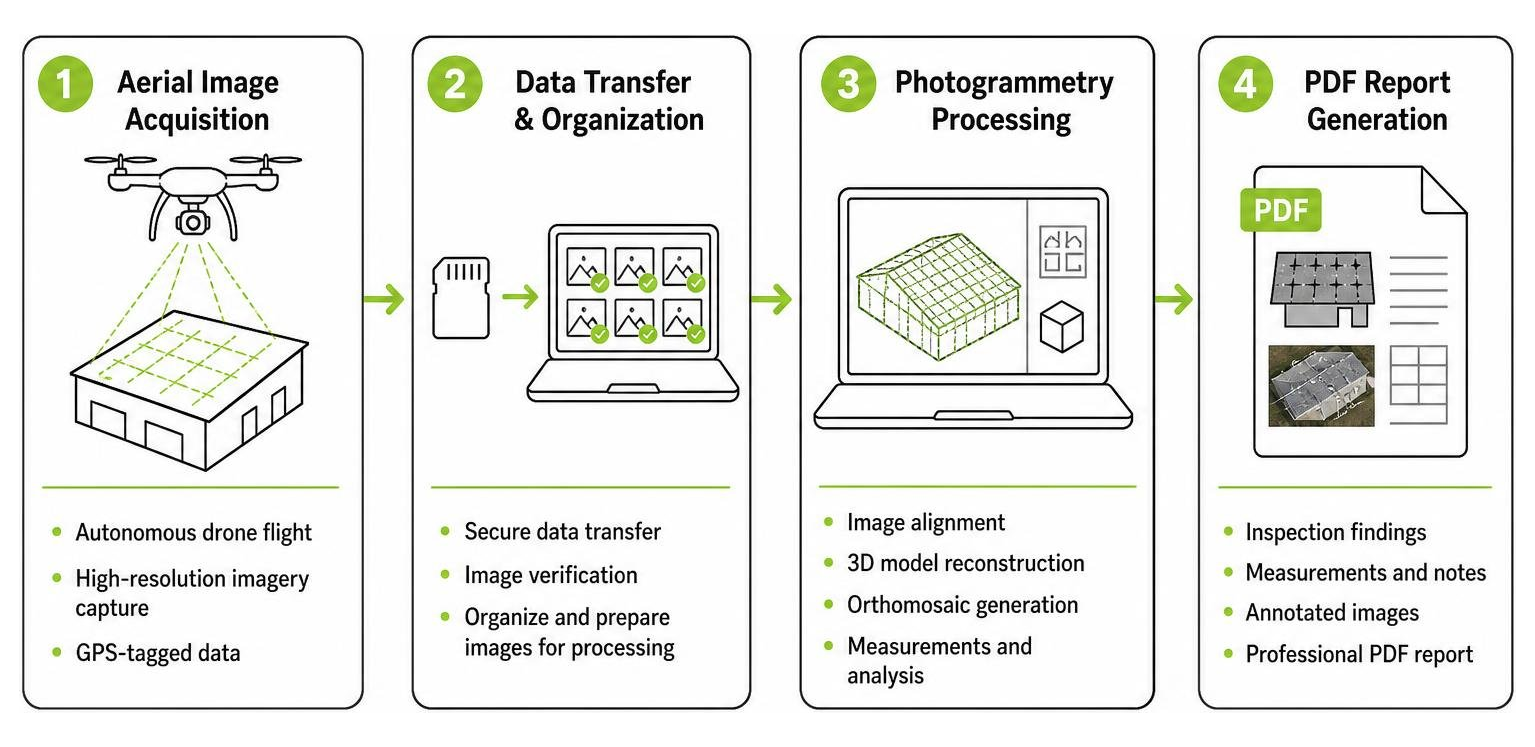
Capturing clear aerial imagery is only the first step in a successful roof inspection. Converting raw photographs into actionable repair estimates requires structured data processing workflows.
Operating Drones for Roof Inspection Legally and Safely
In the United States, flying a drone for commercial purposes—including home inspections, insurance adjusting, or construction estimates—is governed by the Federal Aviation Administration (FAA). Key compliance items include:
- FAA Part 107 Certification : Commercial pilots must hold a valid Remote Pilot Certificate by passing the FAA Part 107 knowledge exam.
- Airspace Clearance : Operators must check airspace classifications before every flight using FAA-approved LAANC (Low Altitude Authorization and Notification Capability) apps to secure real-time clearance near airports.
- Pre-Flight Site Assessments : Pilots must verify weather conditions (checking METAR reports for wind shear and precipitation) and conduct visual checks to identify surrounding trees, overhead power lines, and private property boundaries.
- Line of Sight Operations : Pilots must keep the aircraft within direct visual line-of-sight (VLOS) throughout the entire flight duration.
Data Processing Software and Accuracy Tiers
Once the flight is complete, thousands of individual aerial images are processed using photogrammetry or videogrammetry software. Platforms such as SkyeBrowse, DroneDeploy, Pix4D, Hover, and GAF QuickMeasure stitch overlapping photos into comprehensive orthomosaic maps and interactive 3D roof models.
Depending on the output requirements, different software platforms deliver varying tiers of accuracy:
- Contractor Bidding Tier (2 to 6 Inches) : Ideal for preliminary pitch, area, and material estimates when generating roof replacement proposals.
- Insurance Adjuster Tier (1 to 4 Inches) : Standard for verifying post-storm shingle damage claims, gutter lengths, and ridge cap dimensions.
- Sub-Inch Legal Tier (0.1 to 0.25 Inches) : Achieved using high-resolution videogrammetry or RTK-calibrated photogrammetry, this level of precision provides exact geometric proof required for structural litigation or warranty disputes.
Software tools like GAF QuickMeasure deliver standardized roof measurement reports starting around $18 without requiring ongoing subscriptions, while pay-per-credit platforms (such as SkyeBrowse Premium) offer rapid same-day 3D rendering for active contractors.
Frequently Asked Questions about Drone Roof Inspections
How much does a drone roof inspection cost and what can pilots earn?
For property owners, residential drone roof inspections typically cost between $100 and $300 per property, while commercial drone inspections generally start at $500 and can exceed $1,000 for large industrial complexes. On an hourly basis, professional commercial drone operators charge between $80 and $250 per hour. Independent drone pilots taking on multiple residential and commercial claims can earn substantial weekly income during peak weather seasons.
What certifications are required to fly drones commercially for roof inspections?
Any operator using a drone to collect roof data for commercial benefit must hold an FAA Part 107 Remote Pilot Certificate. Operating commercially without this license violates federal aviation regulations. Additionally, pilots often complete specialized thermography certifications (such as Level I Thermal Imaging) or structural building assessment courses to expand their reporting capabilities.
Can drones detect hidden leaks and water damage under roofing membranes?
Yes, provided the drone is equipped with a radiometric thermal sensor. While visual cameras only show surface defects, thermal imaging sensors detect subtle temperature variations caused by trapped moisture beneath roofing felts, insulation boards, and waterproof membranes. Scanning roofs during temperature transitions (such as dusk) clearly reveals heat signatures associated with wet sub-layers.
Conclusion and Expert Roofing Advice
Drones for roof inspection have transformed modern property management by delivering unprecedented field safety, rapid survey turnarounds, and highly detailed visual and thermal data. Whether you are identifying missing shingles after a summer storm, evaluating complex flat commercial membranes, or documenting structural integrity for preventative maintenance, aerial technology ensures no detail is missed.
However, aerial imagery is most effective when paired with deep roofing expertise. An aerial camera can flag a discoloration spot or a lifted flashing seam, but interpreting what those defects mean for your home's structural health requires experienced professionals.
At Hogan Roof, we bring over 20 years of hands-on experience serving residential and commercial clients across the NY/NJ/CT tri-state area. As an Owens Corning Platinum Preferred Contractor, we combine advanced inspection techniques with proven craftsmanship to keep your property protected year-round.
If you suspect your roof has suffered storm damage or want a complete assessment of your building's condition, explore our full suite of Residential Roofing options, get a fast online estimate with our Instant Roof Quote tool, or contact us directly to Explore Our Comprehensive Roofing Services.