Working With Roofers That Take Payments Without Breaking the Bank
Roofers Who Take Payments: Options That Keep Your Project Affordable
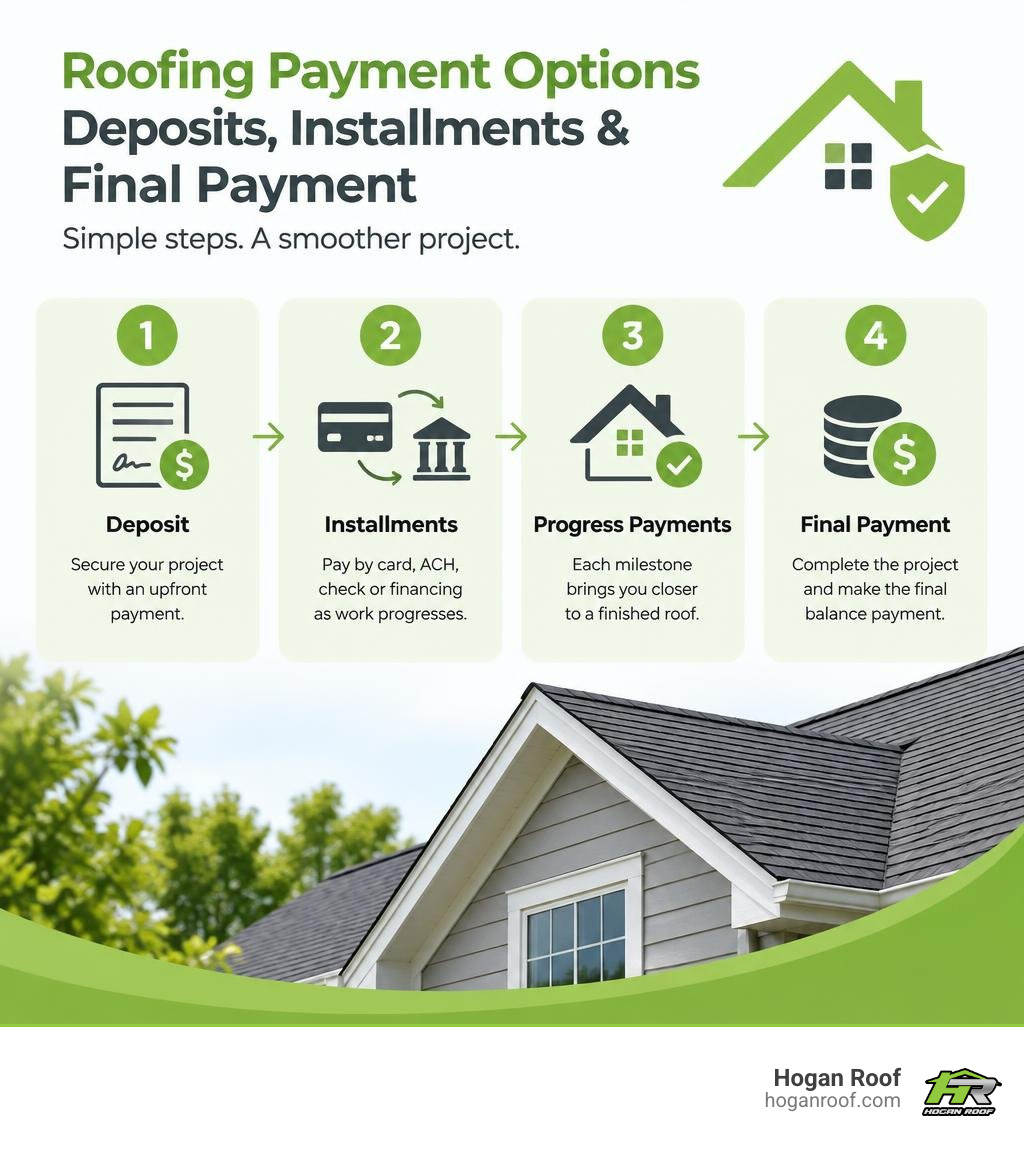
Roofers who take payments can make a needed repair or replacement easier to manage without putting the full cost on a single day. Before signing, ask for a written payment schedule that clearly shows:
- The deposit amount and when it is due
- Whether you can pay by card, ACH bank transfer, check, or financing
- Each progress-payment milestone and the final balance
- Any interest, lender fees, card fees, or late-payment terms
- The refund and cancellation policy
For many homeowners, ACH transfers offer a lower-cost digital option, while credit cards can provide convenience and potential dispute protections. Third-party financing may spread a larger roofing bill into monthly payments, but compare the rate, term, total repayment amount, and any deferred-interest rules before choosing a plan.
A trustworthy contractor should connect every payment to a detailed signed contract, not a vague verbal promise. That matters even more in the NY/NJ/CT tri-state area, where storm damage and urgent leaks can make it tempting to rush into an unclear agreement.
I am Bill Hogan, owner of Hogan Roof, with more than 20 years of experience helping homeowners and businesses understand their project costs, payment choices, and financing options. As one of the roofers who take payments serving the NY/NJ/CT tri-state area, I believe clear terms are essential before work begins.
Related content about roofers who take payments :
Comparing Standard Roofing Payment Methods: Convenience, Cost, and Security
When you embark on a major exterior project, understanding how money changes hands is just as vital as selecting the right shingles. In the past, roofing transactions were strictly paper checks, cash envelopes, or cumbersome bank visits. Today, technology has streamlined the billing experience, offering higher levels of security, speed, and tracking.
Evaluating the top methods helps homeowners balance convenience against processing surcharges and fraud safeguards:
| Payment Method | Transaction Speed | Processing Cost / Fees | Security & Fraud Protection | Best Suited For |
|---|---|---|---|---|
| Cash / Paper Check | 1 to 5 business days for bank clearing | Zero direct processing fees (risk of check-cashing fees) | Low; physical loss or theft risk, no digital audit trail | Homeowners wanting to avoid digital transactions |
| Credit Card | Instant authorization | 2.6% to 2.99% (often passed or built into overhead) | High; strong fraud shielding, zero-liability policies | Earning travel points, short-term cash flow float |
| ACH Bank Transfer | 1 to 3 business days | Low/Flat rate (e.g., $4.99 or <1% cap) | Very High; direct bank-to-bank encrypted protocols | Paying large deposits or final balances securely |
| Third-Party Financing | Instant to 48-hour approval | Interest applied (e.g., 0% promo or fixed rates) | Maximum; lender handles identity verification & escrow | Spreading major roof costs over months or years |
Modern digital portals like Online Payments for Roofers allow contractors to send secure digital payment links right alongside estimate summaries, removing the friction of manual paper invoices.
Digital Quotes and One-Click Deposits
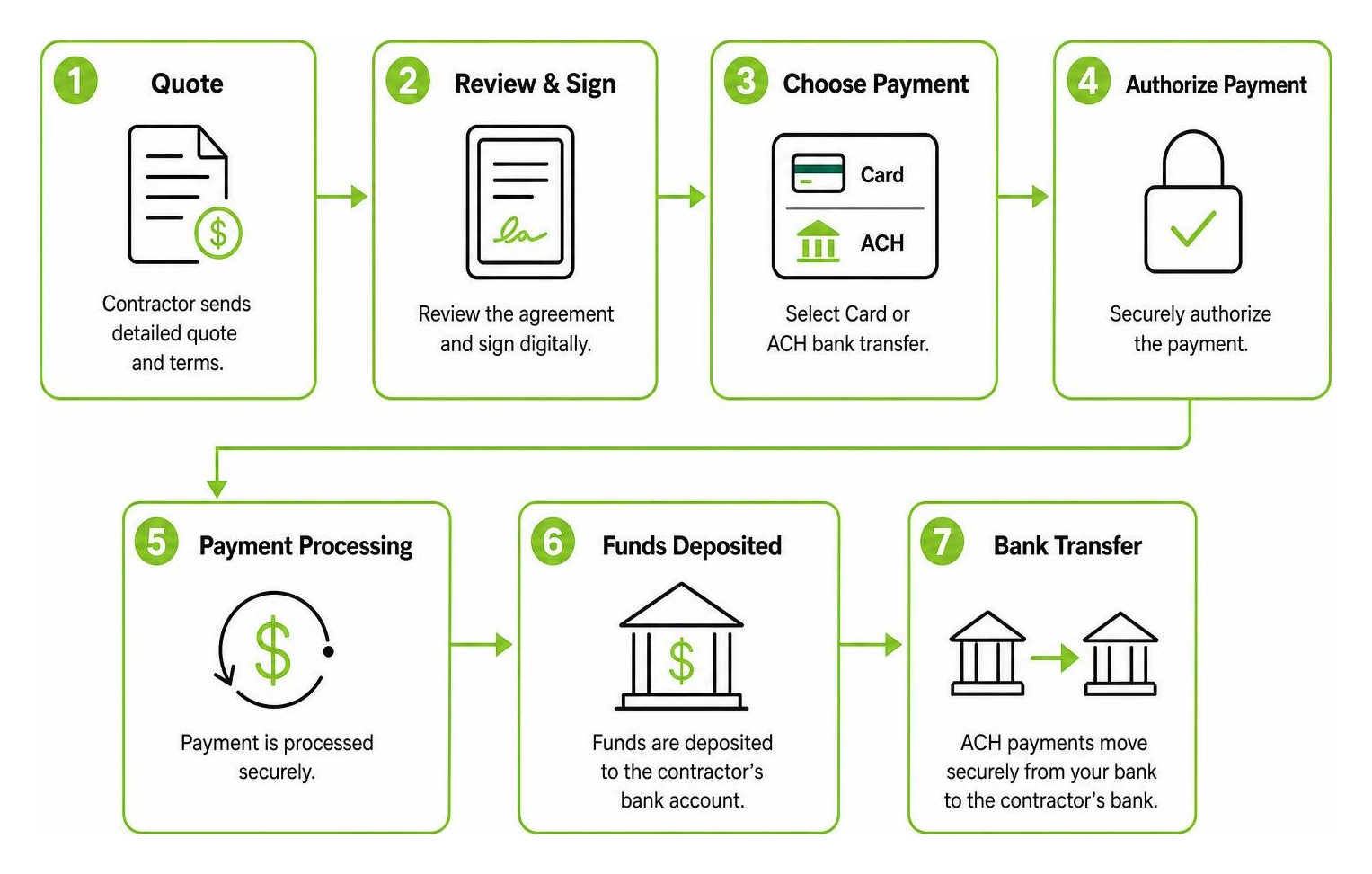
Modern roofing platforms allow contractors to tie project agreements directly to secure checkout gateways powered by infrastructure like Stripe Connect. Instead of waiting for a sales rep to pick up a physical check, you receive a digital quote via email or text.
Once you review and sign the agreement on your phone or laptop, a secure payment field activates instantly. You can choose whether to charge a debit/credit card or input your routing and account numbers for a direct ACH transfer. Because the transaction occurs through a PCI-compliant environment, sensitive banking details are encrypted and never stored on a contractor's local laptop or notebook. Funds move straight into the contractor’s commercial bank account, producing an immediate digital receipt that protects both parties.
Traditional Financing vs. Direct Contractor Billing
Choosing between third-party loan programs and structured contractor billing depends on your current liquidity and repayment horizon.
- Third-Party Financing: Involves an external consumer lending partner. The lender pays the contractor directly upon milestone sign-offs, and you repay the lending institution in monthly installments over a set period ranging from 12 months to 15 years.
- Direct Contractor Billing: Uses progressive billing milestones directly through the roofing company. Homeowners pay a standard down payment upon signing, a secondary progress draw when materials land on the driveway, and the final payment once the project passes final inspection.
Reviewing transparent pricing structures before signing guarantees you understand material grades, labor allocations, and milestone draw thresholds without unexpected hidden surcharges.
How Roofers Who Take Payments Structure Financing and Installments

When an unexpected storm compromises your roof decking or age catches up with your shingles, draining emergency savings is not always an option. Professional roofing contractors build relationships with specialized consumer lenders or design structured installment arrangements to keep projects feasible.
Exploring dedicated financing options allows you to maintain monthly household budget stability while installing a durable weather envelope overhead.
Split-Contract Models and No-Credit-Check Options
For property owners dealing with credit recovery, self-employment income fluctuations, or fixed retirement distributions, traditional underwriting criteria can occasionally pose a hurdle. Some contractors offer innovative split-contract arrangements or deferred service fee agreements.
In a split-contract structure:
- Upfront Construction Costs: The baseline expenses for raw materials (underlayment, shingles, flashing, fasteners) and immediate site labor are covered via an upfront initial payment or an insurance disbursement.
- Deferred Contractor Service Fee: The contractor’s management, overhead, and service margins are separated into interest-free monthly installments spread over 12, 24, or 36 months.
Because this arrangement functions as a direct contract service deferment rather than a traditional consumer revolving loan, it avoids hard credit pulls, high lending fees, and compounding interest charges.
Third-Party Lender Partnerships and Deferred Payment Plans
For full replacements or extensive upgrades, working with national home improvement lenders provides structured capital. Contractors partner with financial institutions to offer unsecured personal home improvement loans with lending capacities ranging from $2,000 up to $150,000.
Common structures include:
- Promotional Deferred Periods: Zero-interest or zero-payment terms for 90 to 365 days, letting you complete the project immediately and pay it off before interest accrues.
- Fixed-Rate Term Loans: Long-term loans spanning 2 to 20 years with predictable fixed interest rates (typically starting around 11.99% depending on prevailing market rates and credit profiles).
- No Prepayment Penalties: Flexible loan terms allow you to pay off the principal balance early using tax refunds, bonuses, or insurance reimbursements without incurring penalty fees.
Homeowners investing in high-durability roofing systems often utilize specialized metal roofing payment plans to balance the higher initial material cost against a lifetime 50-year service warranty.
Alternative Financial Assistance and Payment Alternatives
Beyond contractor-arranged financing and credit cards, multiple alternative avenues exist to help fund a roofing installation or emergency repair:
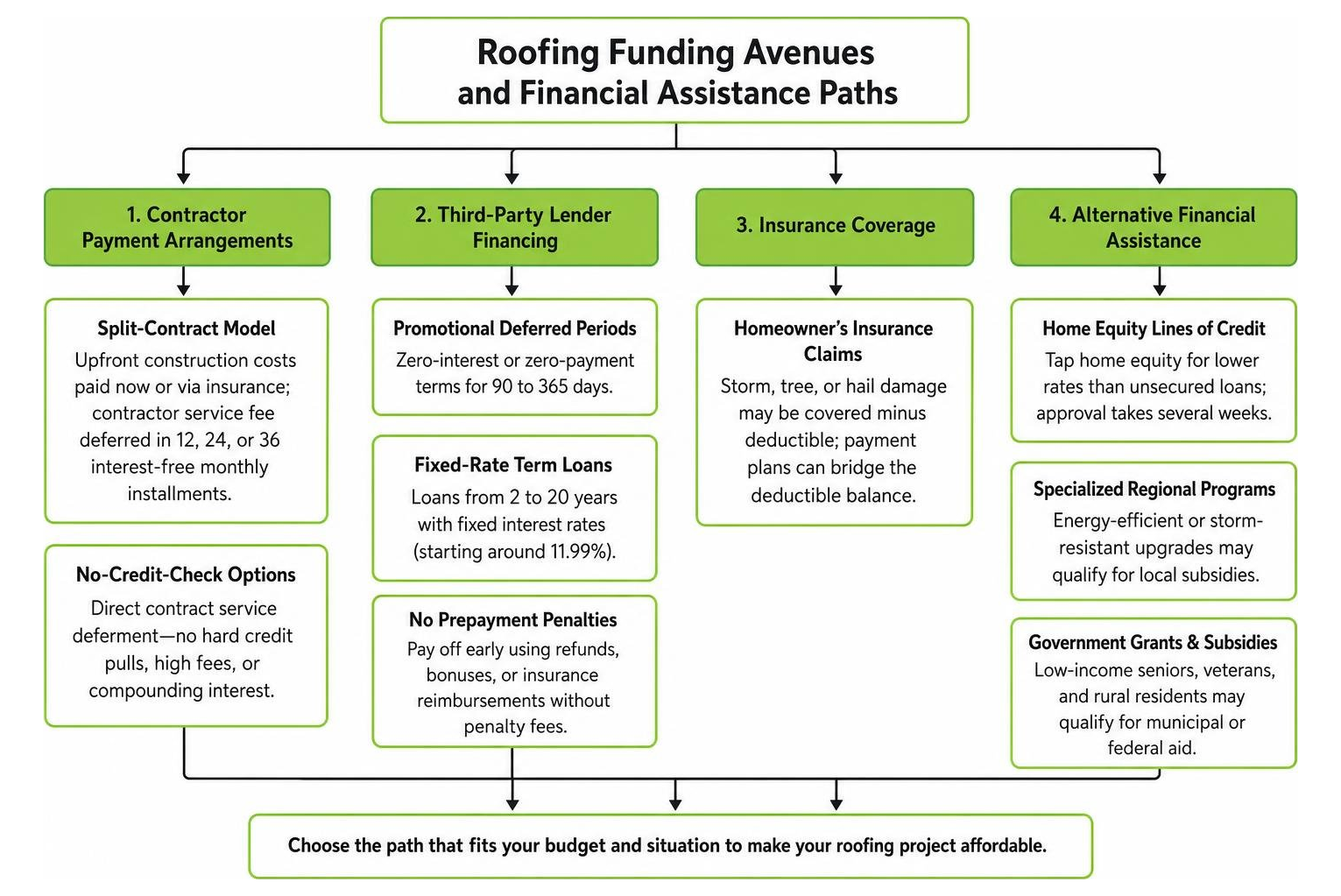
- Homeowner’s Insurance Claims: If severe wind, falling trees, or hail cause sudden structural damage, your homeowner’s policy may cover the replacement cost minus your deductible. In these scenarios, payment plans can be tailored to bridge the out-of-pocket deductible balance.
- Home Equity Lines of Credit (HELOC): Tapping into established home equity often secures lower interest rates than unsecured personal loans, though the approval process takes several weeks.
- Specialized Regional Programs: Homeowners upgrading to energy-efficient or storm-resistant metal profiles can check local metal roofing financing options for green home improvement loan subsidies.
- Government Grants and Subsidies: Low-income seniors, veterans, and rural residents may qualify for municipal or federal aid programs. Check the requirements outlined in the guide on government home repair grants to see if you qualify for non-repayable assistance.
How to Protect Yourself When Choosing a Contractor Payment Plan

While flexible billing makes home improvements accessible, financial transparency is essential to protect your home and wallet. Never sign a blank document, pay 100% upfront in cash, or accept a verbal agreement regarding payment plans.
Utilizing an instant roof quote gives you a clear baseline estimate of material requirements, roof square footage, and project scopes before formalizing payment terms.
Finding Reputable Roofers Who Take Payments in Your Area
Not all roofing companies operate with the same level of consumer protection. To ensure your contractor has the operational stability to back up their work and honor financing promises, verify the following credentials:
- Manufacturer Certifications: High-tier credentialing—such as Owens Corning Platinum Preferred Contractor status—requires verified financial solvency, ongoing safety education, and strict adherence to installation standards.
- State Licensing & Insurance: In the tri-state area (New York, New Jersey, and Connecticut), verify current municipal or state home improvement contractor licenses alongside active General Liability and Workers' Compensation coverage.
- Lien Waiver Commitments: Ensure the contractor supplies signed mechanic’s lien waivers upon receiving scheduled milestone payments to confirm that material suppliers and crews have been fully paid.
Questions to Ask Roofers Who Take Payments Before Signing
Ask these questions before finalizing any financing or payment schedule:
- "Is the financing plan a hard loan with a financial institution, or an in-house installment plan?"
- "What specific credit score is required to qualify, and will checking my eligibility affect my credit rating?"
- "Are there administrative processing fees, application charges, or card processing surcharges added to the balance?"
- "What is the exact milestone schedule for progress payments, and do I inspect the work before releasing each draw?"
- "What is your written cancellation and deposit refund policy if municipal permit issues arise?"
Frequently Asked Questions About Roof Financing and Payments
Can I get a roof replacement with no money down?
Yes. Many third-party home improvement financing programs offer zero-down promotional options for qualifying homeowners. These plans allow the roofing company to start work without an immediate out-of-pocket cash deposit, deferring the first monthly payment for 30 to 90 days. Always confirm whether interest accrues during the deferment window to avoid unexpected balloon balances.
How do card processing fees affect total project costs?
Merchant payment processing for credit cards typically incurs fees ranging between 2.6% and 2.99% per transaction. While some roofing companies incorporate these overhead costs directly into their general pricing, others may pass credit card surcharges directly to the homeowner or encourage ACH bank transfers to keep base job costs as low as possible.
What happens if I dispute a charge or need a deposit refund?
Reputable roofing contracts outline clear deposit refund terms, particularly regarding custom-ordered materials or cancellations made within statutory cooling-off windows (often 3 business days for residential contracts). When payments are processed digitally through platforms connected to merchant processors like Stripe, validated refund requests can be returned directly to the originating card or bank account with automatic digital receipts.
Conclusion
A damaged or aging roof should never be ignored due to short-term budget constraints. Leaving active leaks unattended exposes your home to framing rot, insulation damage, and hazardous mold growth—issues that cost far more to remediate down the road. By working with established roofers who provide structured milestones, secure digital payments, and flexible financing partnerships, you can protect your property without straining your savings.
At Hogan Roof, we take pride in our status as an Owens Corning Platinum Preferred Contractor with over two decades of dedicated service across the NY/NJ/CT tri-state area. We are committed to absolute pricing transparency, dependable craftsmanship, and tailored payment terms that respect your financial peace of mind.
Contact our team today to schedule your complimentary roof inspection and explore our flexible roof financing options tailored to fit your household budget.