How to Spot Shoddy Work During Your Post-Roofing Inspection
Verify Your New Roof Before Small Errors Become Leaks
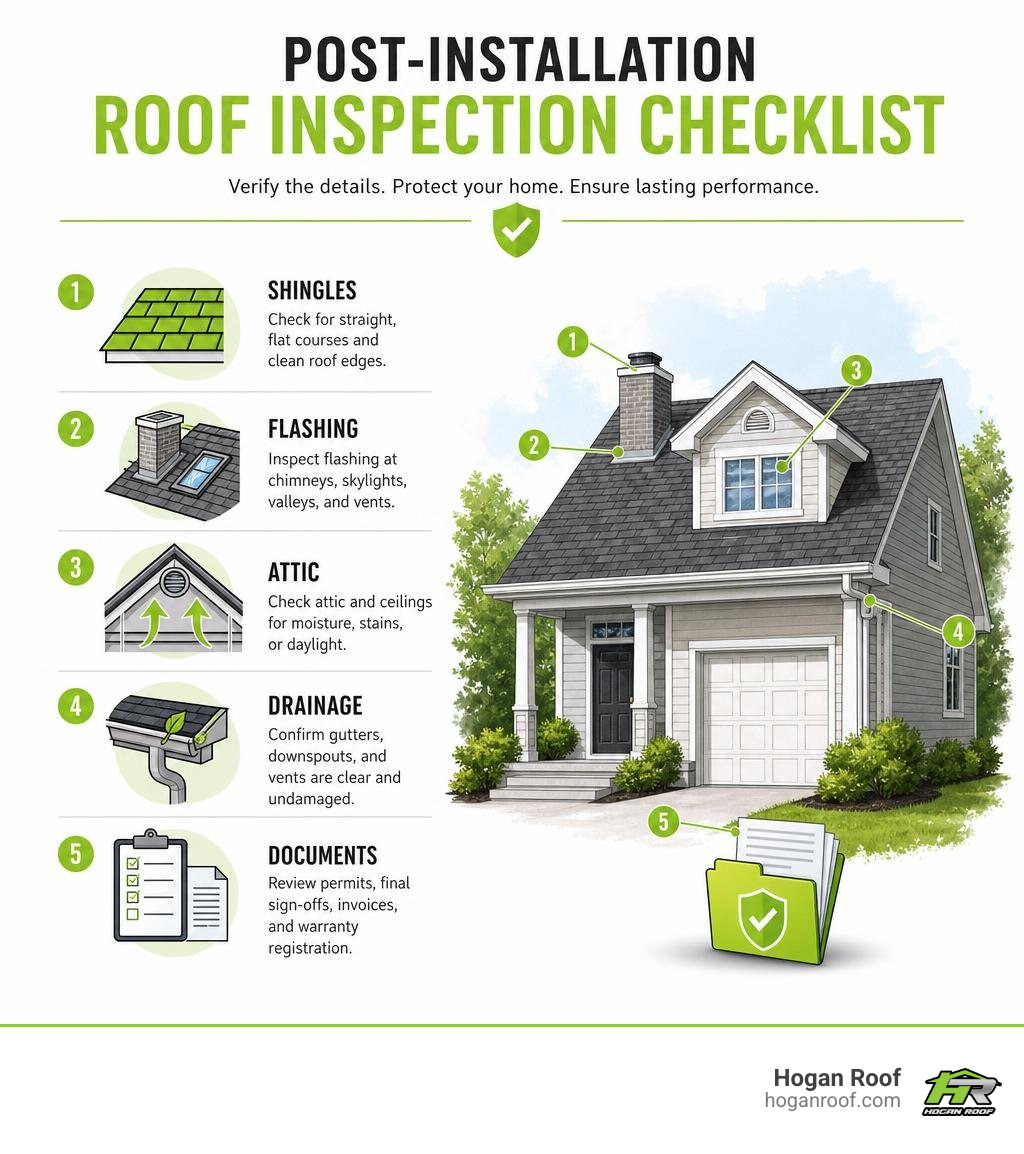
Schedule an inspection after new roof installation before you release final payment, if possible. Start with a safe ground-level walk-around and attic check, then have a qualified professional verify the details that are hard to see.
- Look for straight, flat shingle courses and clean roof edges.
- Check flashing at chimneys, skylights, valleys, and plumbing vents.
- Confirm gutters, downspouts, and attic ventilation were not blocked or damaged.
- Review permits, final sign-offs, material invoices, and warranty registration.
- Check the attic and ceilings after the first heavy rain for moisture, stains, or daylight.
A new roof can look great from the street while hiding problems with flashing, fasteners, underlayment, or ventilation. That matters because professional inspectors find at least one small defect on many roofs, and flashing problems are a common source of later leaks. A municipal inspection can confirm minimum code compliance, but a workmanship-focused inspection checks whether the finished roof matches the contract, manufacturer instructions, and sound roofing practice.
I am Bill Hogan, owner of Hogan Roof, with more than 20 years of residential and commercial roofing experience across the NY/NJ/CT tri-state area. In an inspection after new roof installation, I focus on the small details that protect your home, your warranty, and the service life of the roof.
Inspection after new roof terms to remember:
Why an Inspection After New Roof Installation Is Non-Negotiable
A total roof replacement is one of the most substantial financial investments you will ever make in your home, often running anywhere between $10,000 and $20,000 or more. Because it represents such a significant milestone, homeowners naturally want to breathe a sigh of relief the moment the crew packs up their ladders. However, assuming that brand-new shingles automatically equal a flawless installation is a dangerous gamble.
Industry data reveals that 29% of roof issues detected by professional roof inspectors stem directly from improper installation rather than natural wear and tear or storm damage. Even more surprising is that an estimated 68% of professionally inspected roofs contain at least one defect right out of the gate. Given that nearly 60% of homeowners replace their roofs under urgent or emergency circumstances, the rush to get dry can cause long-term quality control to fall by the wayside.
When you invest in residential roofing, minor contractor oversights—such as misaligned nailing strips, missing kick-out flashing, or improperly sealed valleys—will quietly allow water intrusion behind your siding and decking. According to the National Roof Certification and Inspection Association (NRCIA), approximately 30% of all homeowner insurance claims are linked directly to leaking roofs and water penetration, and over 85% of homes in real estate transactions are found to have unaddressed roof damage. Catching errors early stops small leaks from rotting your structural timbers or ruining finished ceilings.
| Inspection Metric | Municipal Building Code Inspection | Quality Workmanship Audit |
|---|---|---|
| Primary Focus | Minimum life safety and local code compliance | Craftsmanship, system longevity, and manufacturer specs |
| Inspector Type | City/Township building official | Independent roof inspector or master roofing contractor |
| Scope of Review | Broad overview (permits, structural load, egress) | Micro-level analysis (nail depth, flashing integration, alignment) |
| Timing | Tear-off, rough framing, and rough final | Post-installation, pre-final payment, or 2–4 weeks post-build |
| Warranty Relevance | Closes local permits to avoid fines | Validates extended manufacturer and workmanship warranties |
Building Code Inspections vs. Workmanship Quality Audits
One common misconception among property owners is believing that a passing grade from a municipal building inspector guarantees high-caliber roofing craft. In reality, a municipal code inspection is designed only to ensure the structure meets minimum safety thresholds and local legal requirements.
A municipal inspector checks that proper permits were pulled, minimum fire ratings (such as Class B or Class A assemblies) are satisfied, and gross structural loads are supported. They rarely climb up to measure whether every shingle nail is driven flush or verify if your contractor used dedicated starter strips instead of cut-up field shingles. A dedicated quality workmanship audit, on the other hand, evaluates the roof against exacting manufacturer installation specifications and long-term performance standards.
Protecting Manufacturer Warranties and Long-Term Value
Premium roofing materials from top manufacturers come with robust non-prorated warranties spanning 20 to 50 years. However, almost every manufacturer warranty contains strict fine print: if the roofing materials are installed incorrectly, the warranty is completely voided.
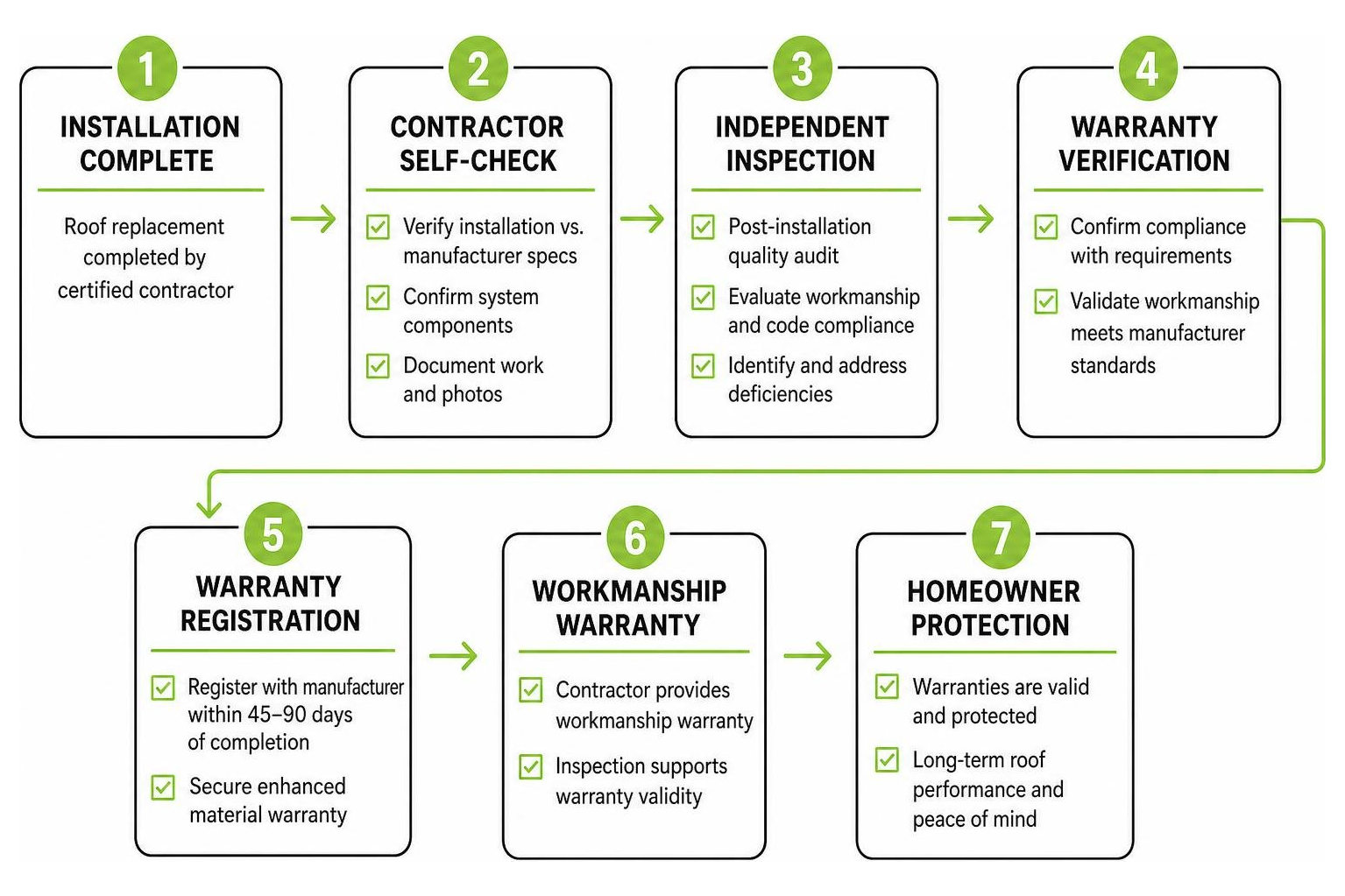
If an installer sets nails too high on a architectural shingle, over-drives fasteners straight through the fiberglass mat, or neglects attic ventilation requirements, the manufacturer can deny future defect claims. Enhanced manufacturer warranties require certified contractor installation and formal registration within a strict 45-to-90-day window following completion. A formal post-roofing evaluation confirms that every system component meets warranty registration criteria, protecting both your material coverage and your contractor's separate workmanship warranty.
The Comprehensive Post-Installation Quality Checklist
To ensure your home is fully shielded from the elements, you can use a structured evaluation framework that reviews both exterior surfaces and internal spaces. When assessing overall workmanship quality, a reliable roof maintenance protocol starts with verifying what was built on day one.
Before signing off on the job, ensure you review these critical post-installation attic checkpoints:
- Decking Flushness: Ensure newly replaced plywood or OSB sheets sit completely level with existing roof boards without raised edges or sagging spans.
- Fastener Penetration: Verify that shingle nails penetrate through the bottom of the roof decking cleanly without splintering the rafters or blowing out wide structural gaps.
- Daylight Infiltration: Look for unexpected shafts of daylight along roof valleys, sidewall transitions, and chimney chases.
- Ventilation Baffles: Confirm that insulation has not been pushed over the soffit vents, keeping continuous intake pathways unobstructed.
- Moisture and Stains: Check structural rafters and roof sheathing for dark moisture rings or condensation immediately following the first rainfall.
- Exhaust Duct Ducts: Ensure bathroom and kitchen exhaust vents terminate completely outside through dedicated roof caps rather than venting hot, humid air into the attic space.
A complete inspection also covers grounds cleanup. A quality crew will run industrial magnetic sweepers across your lawn, driveway, and landscaping beds to prevent flat tires and stray nails from injuring family members or pets.
Exterior Quality Checks During an Inspection After New Roof Installation
When conducting an exterior evaluation, visual alignment provides immediate clues about the contractor’s attention to detail. Stand across the street or use binoculars to inspect the horizontal coursing of the shingles. The courses should run straight and parallel to the eaves without noticeable waves or dips.
Every vertical joint between overlapping shingles must be offset by at least 6 inches; aligned joints create a direct path for wind-driven rain to reach the underlayment. Furthermore, verify that the starter strip extends past the metal drip edge by 1/4 to 3/8 of an inch. If the shingles sit completely flush with the drip edge, water will cling to the fascia boards; if they overhang by more than an inch, heavy winds can catch the edge and tear the shingles loose. Ridge caps must also be secured with extra-length corrosion-resistant nails that penetrate well into the roof deck without cracking the cap shingles.
Attic and Interior Moisture Verification
The underside of your roof tells the true story of its structural integrity. Stepping into the attic allows you to see whether replacement decking was properly nailed to the rafters and whether adequate airflow exists.
Poor attic ventilation traps blistering summer heat and humid winter moisture, accelerating shingle deterioration and causing premature granule loss. You can check that continuous ridge vents and intake soffits balance airflow correctly according to local building guidelines. If you notice a musty odor, damp fiberglass insulation, or visible water tracks on your rafters after a storm, the roofing system is failing to shed water properly.
Flashing, Valleys, and Roof Penetrations
Flashing is your roof's primary defense against water intrusion at transitions, yet studies show that nearly 24.3% of residential roofs have flashing problems that lead to leaks. Caulk alone is never an acceptable substitute for properly bent, corrosion-resistant sheet metal.
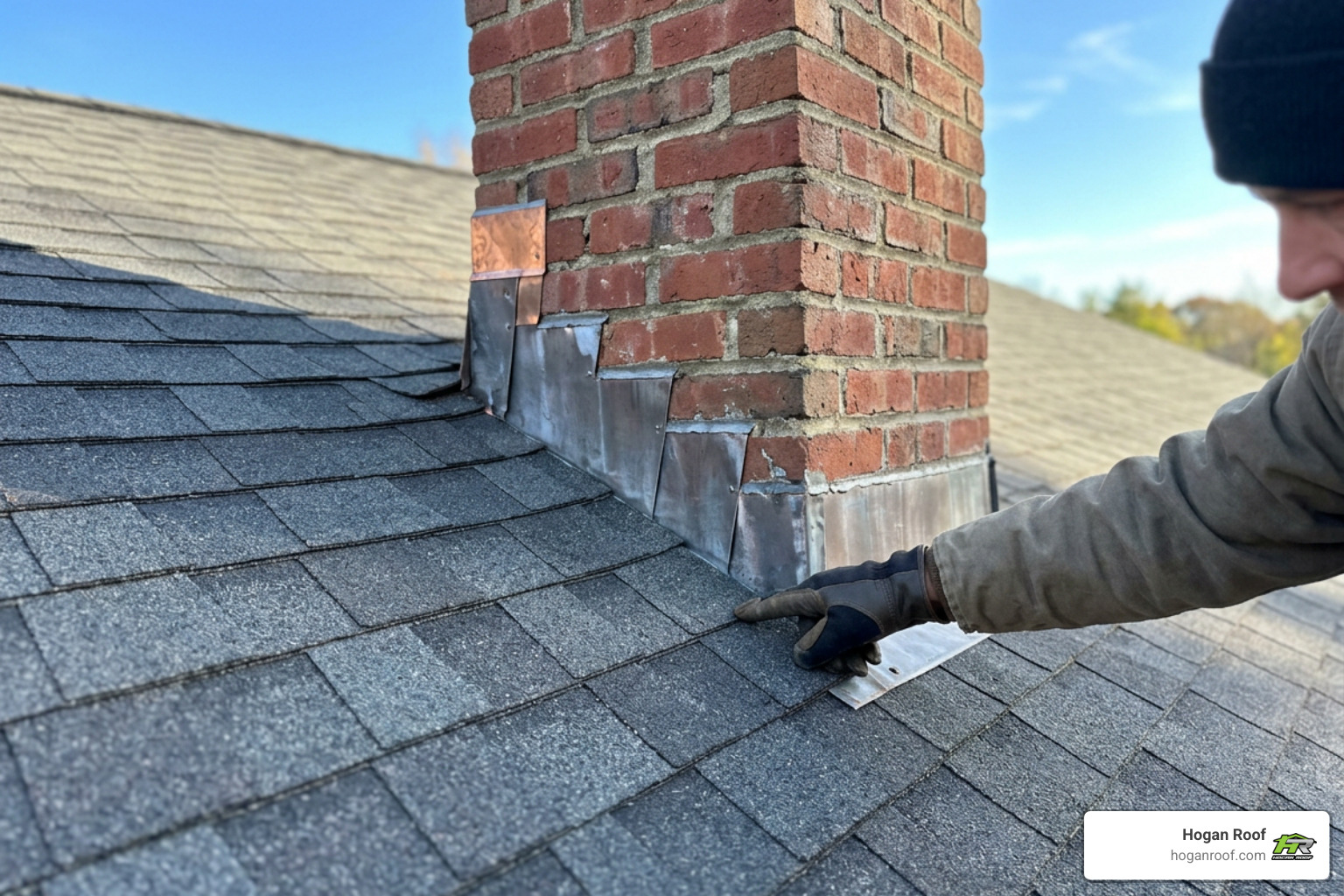
Around brick chimneys, your contractor should install a two-part flashing system: step flashing bent up the side of the brick underneath each shingle course, covered by counter-flashing embedded directly into the mortar joints. If a chimney is wider than 30 inches, the International Residential Code requires a chimney cricket (a small peaked saddle structure) behind it to divert water around the masonry.
Plumbing vent pipe boots must have undamaged, tight-fitting rubber collars that slip under the upper shingles while overlapping the lower shingles. In valleys—whether open metal or closed-cut—ensure no fasteners have been placed within 6 inches of the center water-drainage line, and confirm that kick-out flashing is installed where lower rooflines meet vertical siding to guide runoff safely into gutters.
Modern Diagnostic Inspection Methods and Timing
Proper timing is vital when planning your post-installation review. It is recommended to schedule an initial inspection within the first 2 to 4 weeks following roof replacement. This window gives the roofing materials an opportunity to settle and seal under sunlight while keeping the installation fresh in the contractor's warranty window.

Homeowners can benefit from a full range of services that leverage modern diagnostic tools, ensuring that tricky leak paths and structural defects are identified without putting anyone in harm's way.
Scheduling a Drone or Physical Inspection After New Roof Completion
While physical, hands-on inspections allow a technician to lift shingle edges and test fastener tension, steep roofs or delicate specialty materials (such as slate, tile, or composite shakes) present safety hazards and risk foot-traffic damage. In these scenarios, deploying high-resolution aerial imaging provides a comprehensive view of hard-to-reach planes.
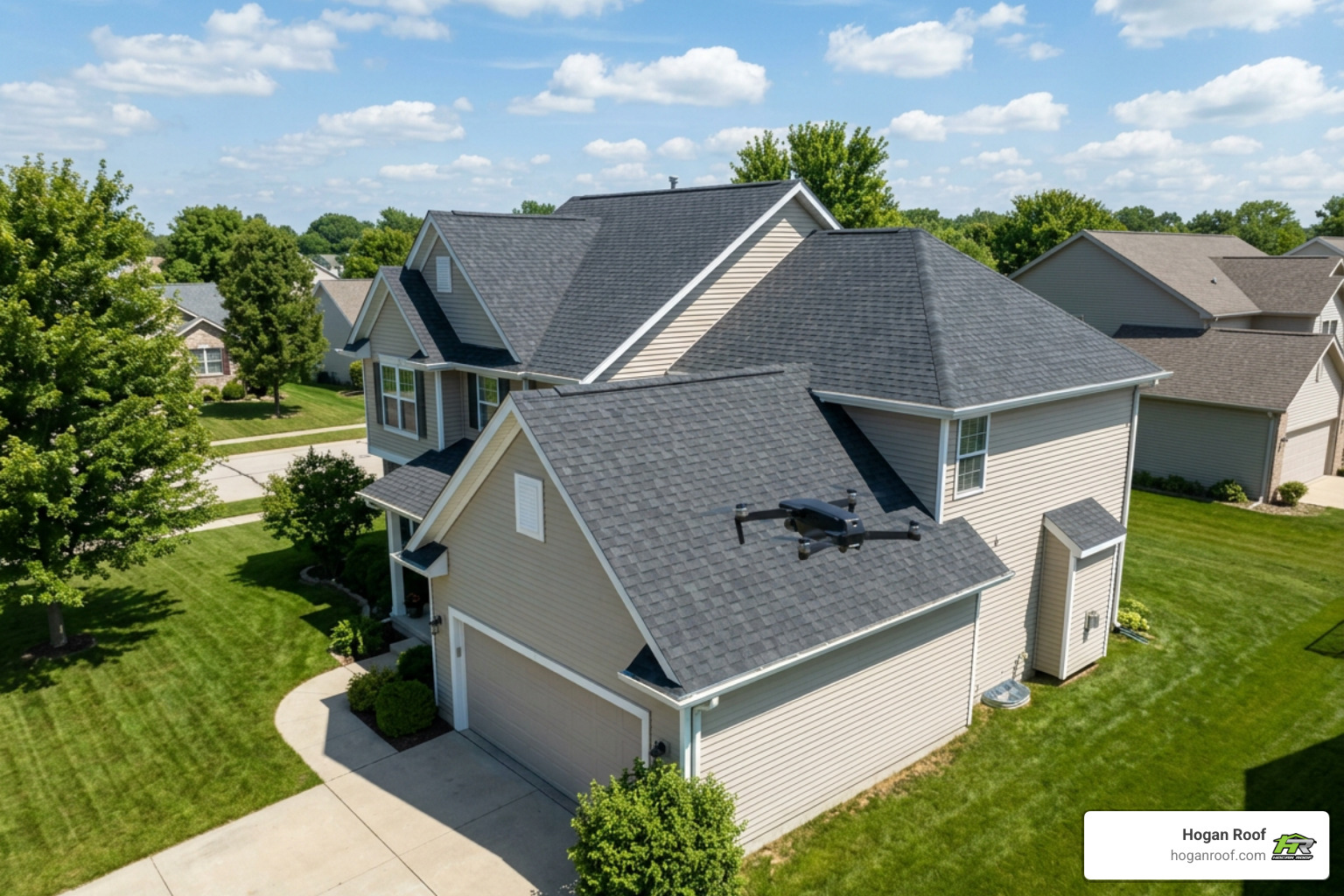
Learning about modern roof inspection with drones shows how high-definition 4K aerial photography captures crisp imagery of upper ridges, valleys, and chimney crowns without scuffing fresh asphalt granules. Contractors utilize specialized drones for roof inspection equipped with stabilized optical zoom lenses to verify nail placement along rake edges and identify missing drip edge overlaps without stepping foot on steep pitches.
Infrared Thermal Imaging for Trapped Moisture
Infrared diagnostic inspections take roof quality verification a step further by detecting issues invisible to the naked eye. Thermal imaging cameras read subtle surface temperature differences caused by trapped moisture or escaping heat.
Because wet insulation retains heat longer than dry wood and decking, a post-installation thermal scan conducted at dusk highlights trapped moisture beneath the newly laid underlayment. Thermal cameras also pinpoint areas where attic insulation was displaced during installation, preventing ongoing HVAC inefficiency and ice dam formation during freezing winter months.
Frequently Asked Questions About Post-Roofing Audits
How soon should I schedule an inspection after a roof replacement?
You should arrange an initial walk-through immediately upon completion before issuing final payment, followed by a formal check within 2 to 4 weeks. This gives self-sealing adhesive strips time to bond under the sun and allows you to observe how the roof performs during its first major rainstorm while the contractor remains contractually responsible.
What is the most common hidden mistake on a new roof?
Improperly fastened shingles and flashing shortcuts are the most frequent hidden defects. Installers in a hurry may use incorrect pneumatic nail gun pressure—either driving nails crooked, sinking them too deep into the matting, or placing them above the manufacturer's designated nail line—drastically reducing the roof's wind resistance.
Can I conduct the post-installation inspection myself?
Homeowners can safely conduct ground-level visual checks using binoculars and perform attic walk-throughs to spot moisture or daylight. However, walking on a roof is dangerous and can damage newly laid shingles. Hiring an independent, certified inspector or a Platinum Preferred roofing contractor provides objective, documented evaluations using proper safety gear and diagnostic equipment.
Conclusion
A new roof is a major milestone that should bring decades of security, energy efficiency, and curb appeal to your home. Taking the extra step to verify workmanship with a thorough post-installation audit guarantees that subtle errors, missing flashing, or ventilation oversights are corrected before they evolve into costly structural repairs.
At Hogan Roof, we bring over 20 years of hands-on experience as an Owens Corning Platinum Preferred Contractor serving property owners across New York, New Jersey, and Connecticut. Whether you require an objective post-installation audit, routine maintenance, or a total exterior overhaul, our factory-certified team is here to help. Reach out to Hogan Roof today to explore our full suite of professional roofing services and protect your home investment for years to come.