Do You Need a Roofing Permit in Suffolk or Nassau County?
Do You Need a Roofing Permit in Suffolk County or Nassau County?
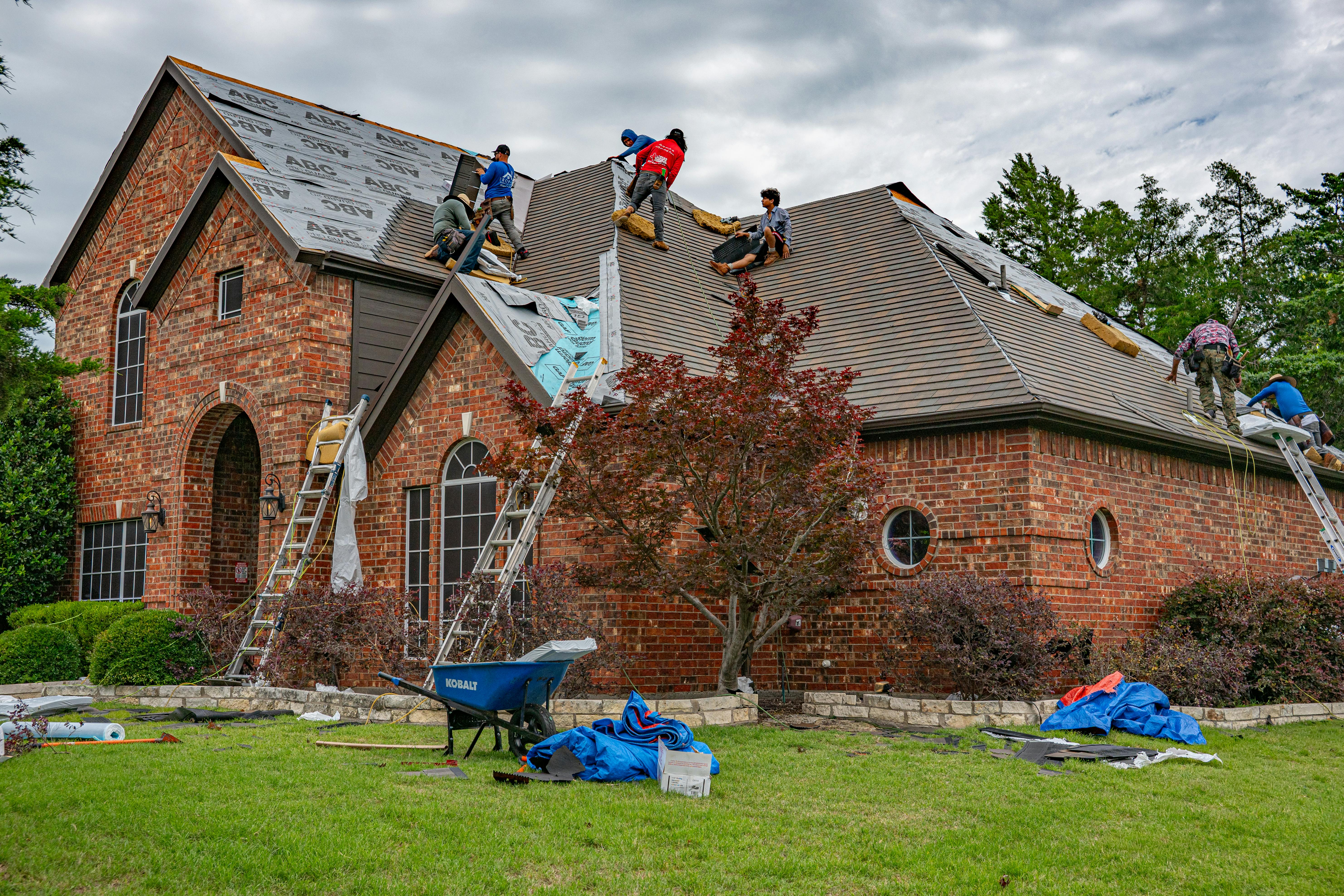
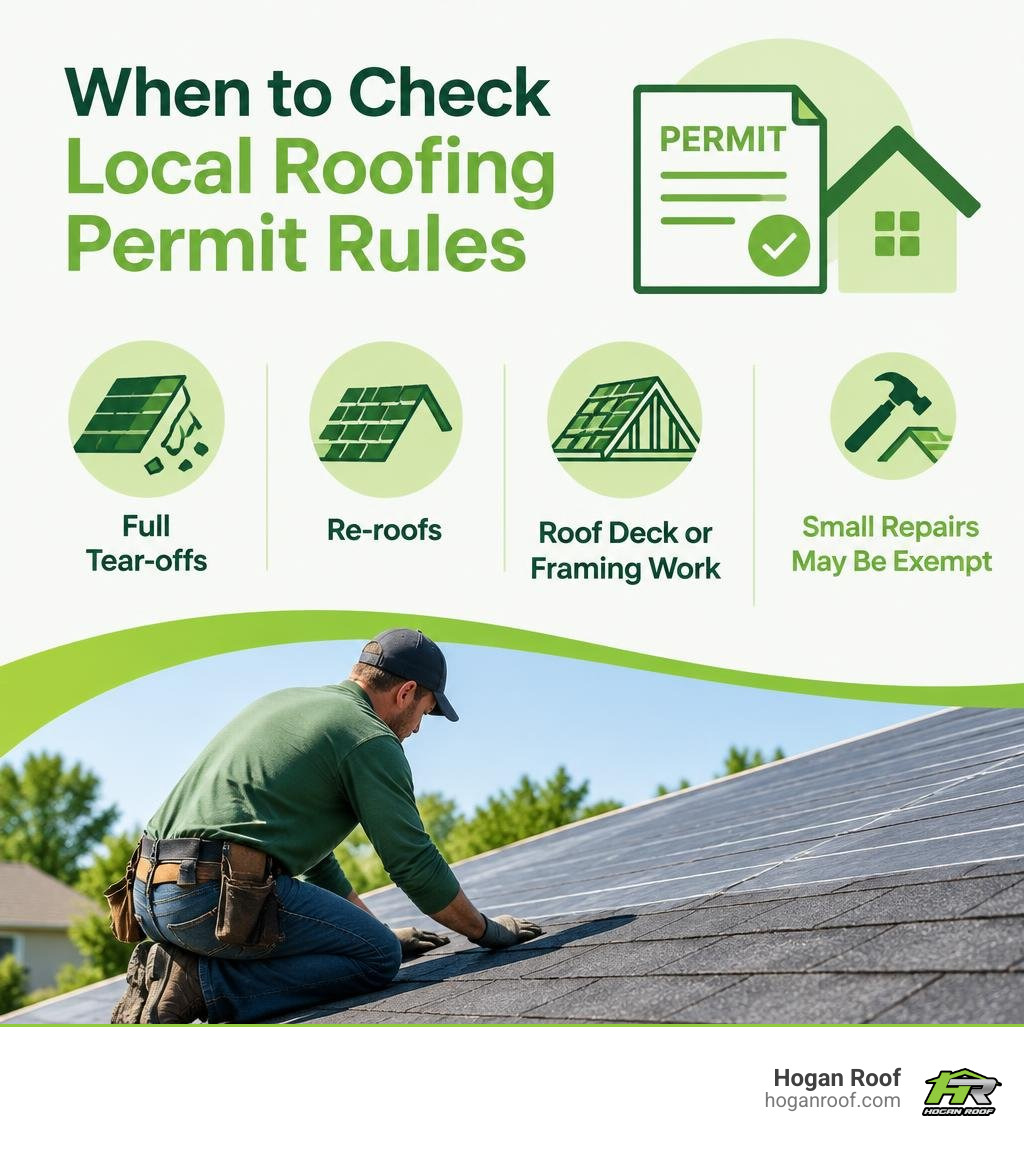
You may need a roofing permit in Suffolk County for a full tear-off, a re-roof over existing shingles, or work on the roof deck or framing. Small repairs may be exempt. Your town or village building department sets the rule, so check with it before work starts and confirm who will apply for any required permit.
The same local approach applies in Nassau County; Queens roofing permits fall under the NYC Department of Buildings. Getting the answer early can help you avoid delays and questions about the work when you file an insurance claim or sell your home.
I'm Bill Hogan, owner of Hogan Roof. After more than 20 years working on Long Island roofs, I know why homeowners searching for roofing permit suffolk county need to start with their local building department.
Requirements for a Roofing Permit in Suffolk County and Nassau Towns
Navigating local building codes across Long Island can feel tricky because authority is decentralized. In New York State, counties do not issue building permits directly. Instead, local municipal building departments in each town or incorporated village enforce the Uniform Fire Prevention and Building Code and establish local building ordinances.
Whether your project involves standard residential roofing or complex architectural alterations, local codes determine whether your scope of work requires formal review, plan filing, and municipal sign-offs.
| Project Scope | General Permit Requirement | Municipal Trigger / Scope Details |
|---|---|---|
| Emergency Leak Patching | Exempt | Replacing isolated cracked shingles or patching flashings (usually < 25% of surface area). |
| Minor Non-Structural Repair | Typically Exempt | Swapping a few damaged shingles or repairing gutter aprons without touching the deck. |
| Complete Tear-Off & Re-Roof | Varies by Town / Often Required | Stripping down to the deck; required in many jurisdictions to verify structural sheathing integrity. |
| Roof Deck Replacement | Required | Replacing plywood/OSB sheathing sheets, changing structural roof decking, or refastening major framing. |
| Framing & Structural Alterations | Required | Modifying rafters, trusses, dormers, ridge beams, or altering roof pitch and load capacity. |
| Historic / Coastal Additions | Required | Re-roofing inside regulated coastal zones or architectural historic preservation districts. |
Scope of Work: Tear-Offs, Re-Roofs, and Structural Changes
When replacing an aging roof, the scope of work dictates the level of municipal oversight:
- Full Tear-Offs: Stripping all existing shingle layers down to the bare wood sheathing allows contractors to inspect the structural foundation of the roof. Many Long Island municipalities require a permit for complete tear-offs to confirm that damaged decking is handled properly and that the new roofing system meets modern wind resistance standards.
- Overlay Re-Roofs: Installing a second layer of shingles over an existing layer is strictly regulated by building codes. Most codes prohibit installing more than two layers of roofing material because excess weight stresses rafters and trusses. Certain towns require a permit and inspection before an overlay to verify structural load capacity.
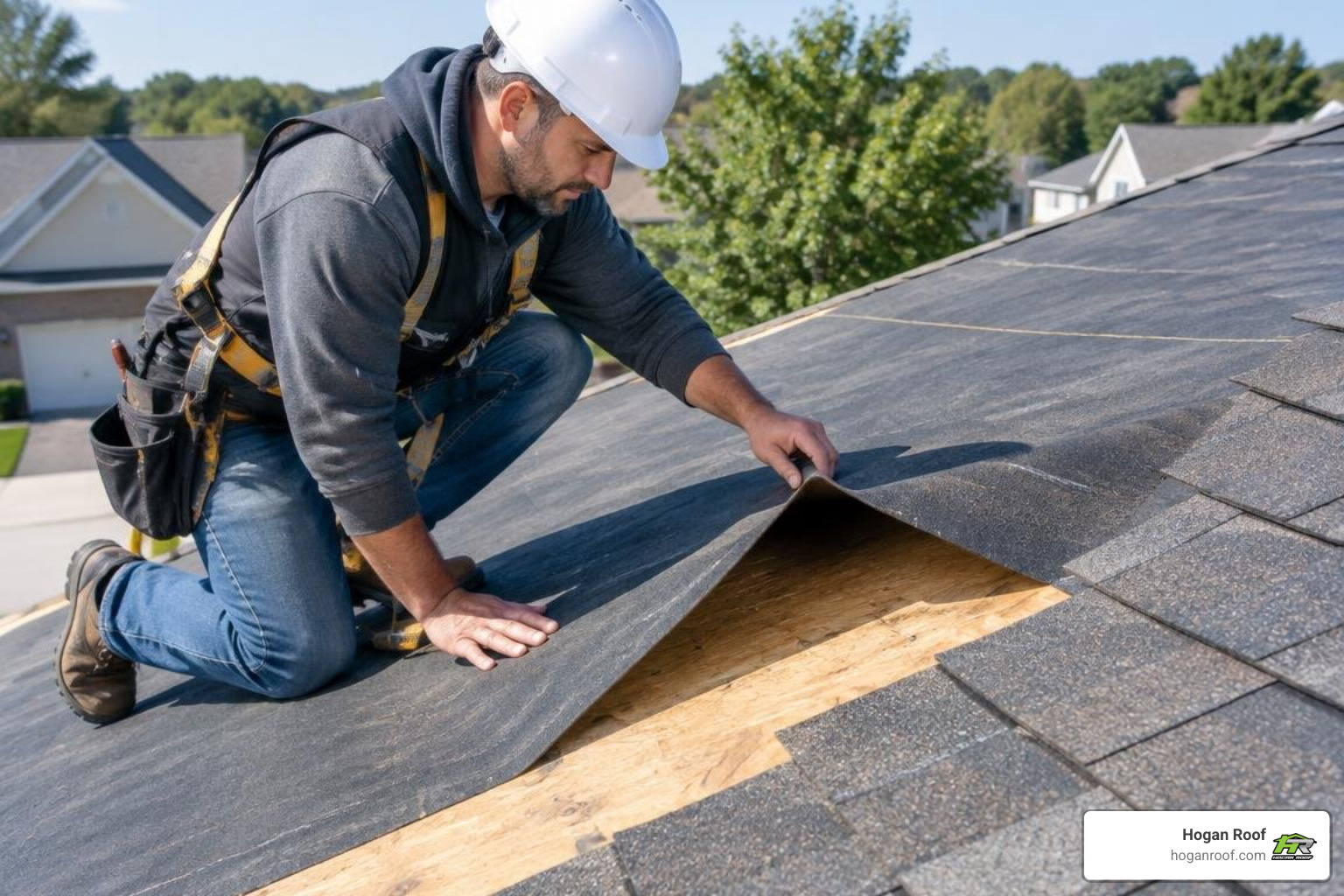
- Decking and Framing Work: Any structural alteration—such as structural roof deck replacement, sistering weakened rafters, or adding structural dormers—mandates a building permit. Municipalities must ensure that the structural plywood thickness, nailing patterns, and framing loads comply with New York State building standards.
High-Wind Hazards, Flood Zones, and Historic Districts
Homes situated along the Long Island Sound, South Shore bays, or the Atlantic coastline face strict building requirements due to severe coastal storms and high-wind zones.
If your property is situated in a designated FEMA flood zone, special structural guidelines apply. In areas such as Riverhead or coastal hamlets across Suffolk County, properties in flood hazard areas may require FEMA Flood Elevation Certificates before framing or structural alterations are permitted.
Similarly, if your property is located within a local historic preservation district, standard permit exemptions do not apply. Any alteration to the exterior—including roofing material, color, and texture—must undergo architectural review to preserve historic character. For example, the Town of Smithtown building permit guidelines specify strict documentation requirements for structures subject to special zoning or historic overlays.
How Local Municipalities Regulate Roofing Work
On Long Island, municipal zoning and building departments operate at the local town or village level rather than the county level. Suffolk County and Nassau County establish licensing frameworks through their respective consumer affairs departments, but they do not process, issue, or inspect individual residential building permits.
Town Building Departments vs. NYC Department of Buildings
Where your home is located determines which municipal entity holds jurisdiction:
- Suffolk County Towns:
Properties located in unincorporated areas fall under their respective town building department:
- Town of Brookhaven
- Town of Islip
- Town of Huntington
- Town of Smithtown
- Town of Babylon
- Town of Riverhead
- East End Towns (Southampton, East Hampton, Southold, Shelter Island)
- Nassau County Towns:
Properties fall under one of three major town jurisdictions:
- Town of Hempstead
- Town of Oyster Bay
- Town of North Hempstead
- Incorporated Villages: If your home is located within an incorporated village (such as the Village of Patchogue, Village of Garden City, or Village of Babylon), the village building department supersedes the town for building permits and code enforcement.
- Queens County: Homeowners in Queens do not deal with town halls. All structural building alterations and applicable roofing work are governed directly by the NYC Department of Buildings (DOB).
Contractor Licensing vs. Municipal Building Permits
It is vital to understand the difference between contractor licensing and municipal building permits:
- Contractor License: Issued by the Suffolk County Department of Consumer Affairs or Nassau County Office of Consumer Affairs. A Home Improvement Contractor (HIC) license proves that a contractor is vetted, bonded, and legally registered to conduct business within the county.
- Building Permit: Issued by the local town or village building department for a specific property. It grants legal authorization to execute a defined scope of construction work.
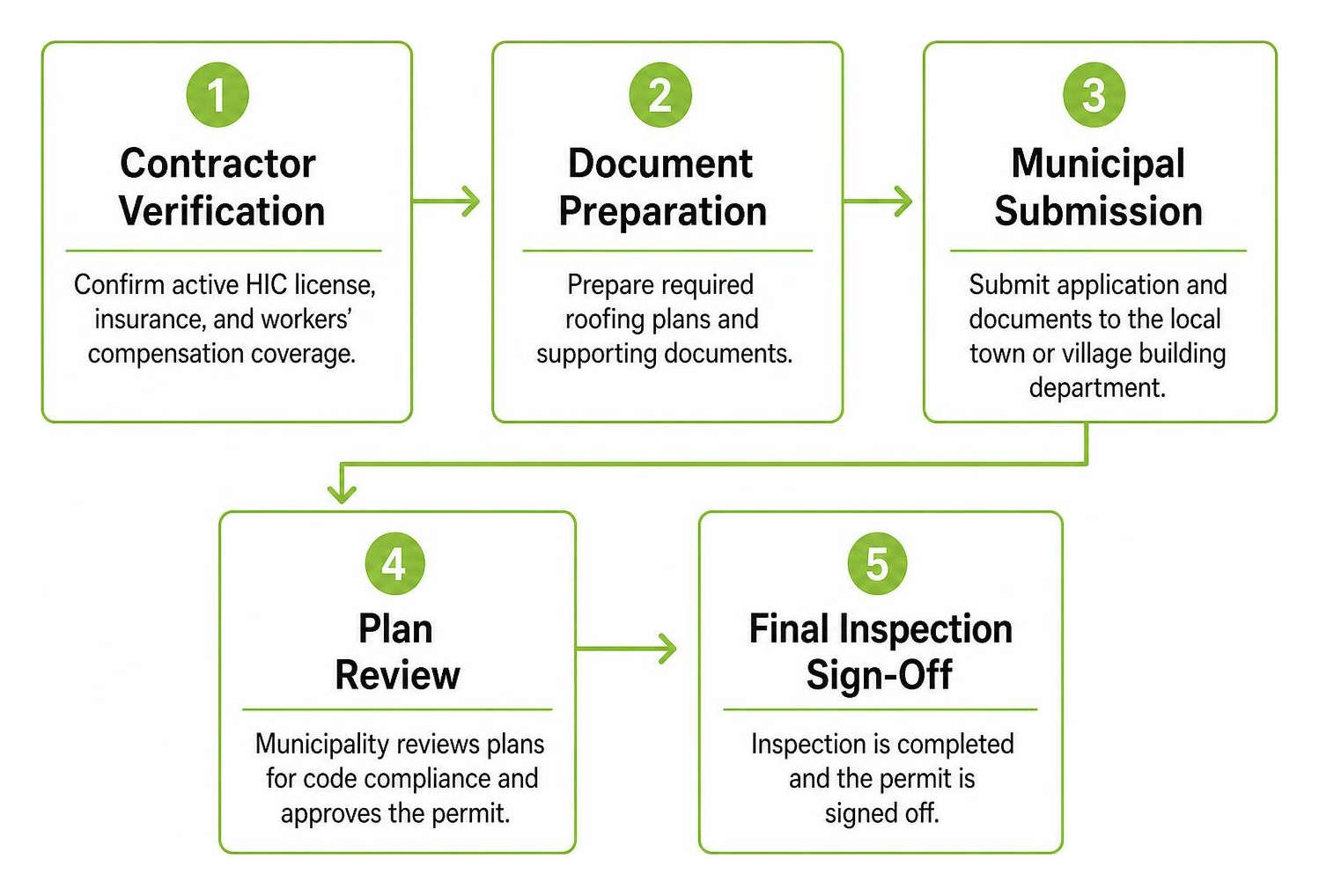
A contractor cannot pull a municipal building permit without an active county HIC license, general liability insurance, and New York State statutory workers' compensation coverage. You can explore additional context on New York local roofing licensing regulations to see how regional jurisdictions manage compliance.
How to Obtain a Roofing Permit in Suffolk County
Securing a building permit involves a coordinated process between the homeowner and the licensed roofing contractor. While the property owner must sign and notarize permit application documents, a qualified contractor manages the technical submittals, insurance certificates, and code compliance details.
What Documents Are Required for a Roofing Permit Suffolk County Application?
When filing a permit application with your local building department, the package typically requires:
- Standard Building Permit Application: Signed and notarized by the property owner and the licensed contractor.
- Suffolk County Tax Map Number: Found on your property tax bill, identifying the exact section, block, and lot.
- Property Survey / Plot Plan: Recent property survey showing the location of the dwelling and any accessory structures.
- Detailed Scope of Work: Technical description of the materials being installed, including underlayment, ice and water shield, ventilation systems, and shingle manufacturer specifications.
- Contractor Credentials: Proof of an active Suffolk County Home Improvement Contractor license and valid certificates of insurance (General Liability and NYS Workers' Compensation). Working with certified professionals ensures smooth approvals; learn more about hiring reliable asphalt shingle roofers who understand municipal paperwork.
- Disclosure Affidavits: Town-specific forms verifying property ownership and zoning compliance.
Municipal Fees, Required Inspections, and Approval Timelines
Permit fee structures vary across Long Island municipalities. Typical residential permit fees consist of a base administrative processing fee plus an additional charge calculated per square foot of construction or based on total estimated project valuation. While individual town schedules differ, general industry residential permit costs typically range from $100 to $400 for standard roofing scopes.
For broader project planning, reviewing a comprehensive roof replacement cost breakdown can help you budget for labor, materials, and municipal filing costs.
Once a permit is issued, municipal inspections may be scheduled depending on the project:
- Rough Decking / Sheathing Inspection: Conducted if structural plywood decking or framing was replaced.
- Final Inspection: Conducted upon project completion to verify that flashing, ridge vents, and materials comply with local building code.
- Certificate of Completion: Once final inspections are signed off, the building department issues a formal Certificate of Completion or Certificate of Occupancy update.
Risks and Penalties of Doing Roofing Work Without a Permit
Skipping required municipal approvals can lead to expensive complications for Long Island homeowners. Municipal building inspectors actively monitor neighborhoods, and unpermitted construction can trigger immediate enforcement actions.
- Stop-Work Orders: If an inspector observes unpermitted work in progress, a Stop-Work Order is posted on the home. All construction halts immediately, leaving your roof exposed to the elements until plans are filed, penalties are paid, and permits are granted.
- Municipal Fines and Legal Summonses: Building departments issue financial penalties for working without a permit. In many Long Island towns, penalty fees can double or triple the initial permit cost, alongside potential appearances in municipal code violation courts.
- Mandatory Removal of Finished Work: If unpermitted structural decking or framing changes were covered up without required municipal inspections, building officials can order the contractor to tear off finished shingles so inspectors can view the underlying woodwork.
Impact on Homeowner Insurance and Property Sales
The hidden dangers of unpermitted work often surface years after the installation:
- Insurance Claim Denials: If severe weather causes roof damage or interior water leaks, insurance adjusters may check municipal records. If the roof was installed without mandatory permits or code-compliant materials, the insurer may reduce or deny coverage for the claim.
- Real Estate Closing Roadblocks: When selling a home in Nassau or Suffolk County, the buyer's title company performs a municipal search to verify all open permits, certificates of occupancy, and property alterations. Unpermitted structural work or missing Certificates of Completion can delay closings, force costly retroactive filings, or cause sales to fall through entirely. Scheduling a professional roof inspection before listing your property helps identify unpermitted modifications or maintenance issues early.
Frequently Asked Questions About Long Island Roofing Permits
Who is responsible for pulling a roofing permit on Long Island?
The licensed roofing contractor is responsible for pulling the building permit. While the homeowner must sign property authorization forms, the contractor must supply their Suffolk or Nassau County Home Improvement Contractor (HIC) license, liability insurance, and workers' compensation certificates directly to the local building department. Never work with a contractor who asks you to pull a permit as an "owner-builder."
How much does a typical roofing permit cost in Nassau and Suffolk?
Permit costs vary by town and village. Most municipal building departments charge a base application fee (typically $75 to $150) plus an additional fee based on the square footage of the roof or the total project valuation. For standard residential roof replacements, total municipal permit fees typically range between $100 and $400 depending on the jurisdiction.
How long does it take for a local building department to approve a roofing permit?
Approval timelines depend on municipal staffing, seasonal volume, and project complexity. Simple, non-structural residential roofing permits in towns like Brookhaven, Smithtown, or Hempstead may be processed in 1 to 3 weeks. Projects requiring structural framing changes, zoning variances, or historical board reviews can take 4 to 8 weeks or longer.
Do small roof leak repairs require a building permit?
No. Ordinary maintenance and minor repairs—such as replacing a few wind-damaged shingles, sealing a vent pipe collar, or repairing minor flashing around a chimney—are generally exempt from permit requirements across Long Island and Queens, provided the work does not involve structural decking replacement or altering roof framing.
Conclusion
Understanding municipal building codes protects your home, your investment, and your family's safety. While minor leak repairs typically do not require town paperwork, major tear-offs, re-roofs, and structural roof deck alterations frequently require local building department approval. Because rules vary across the towns and villages of Nassau County, Suffolk County, and the NYC Department of Buildings in Queens, working with a licensed, experienced contractor ensures full code compliance from start to finish.
At Hogan Roof, we bring over 20 years of hands-on roofing expertise to homeowners throughout Long Island and Queens. As an Owens Corning Platinum Preferred Contractor based in Lake Grove, NY, our team understands local building codes, contractor licensing standards, and municipal filing requirements across every Long Island town.
Whether you need a simple maintenance check, emergency storm repair, or a complete roof replacement, we handle every detail with precision and integrity. Contact Hogan Roof today to schedule your free, comprehensive roof inspection!