How to File a Storm Damage Roof Insurance Claim on Long Island
How Do You File a Storm Damage Roof Insurance Claim on Long Island?
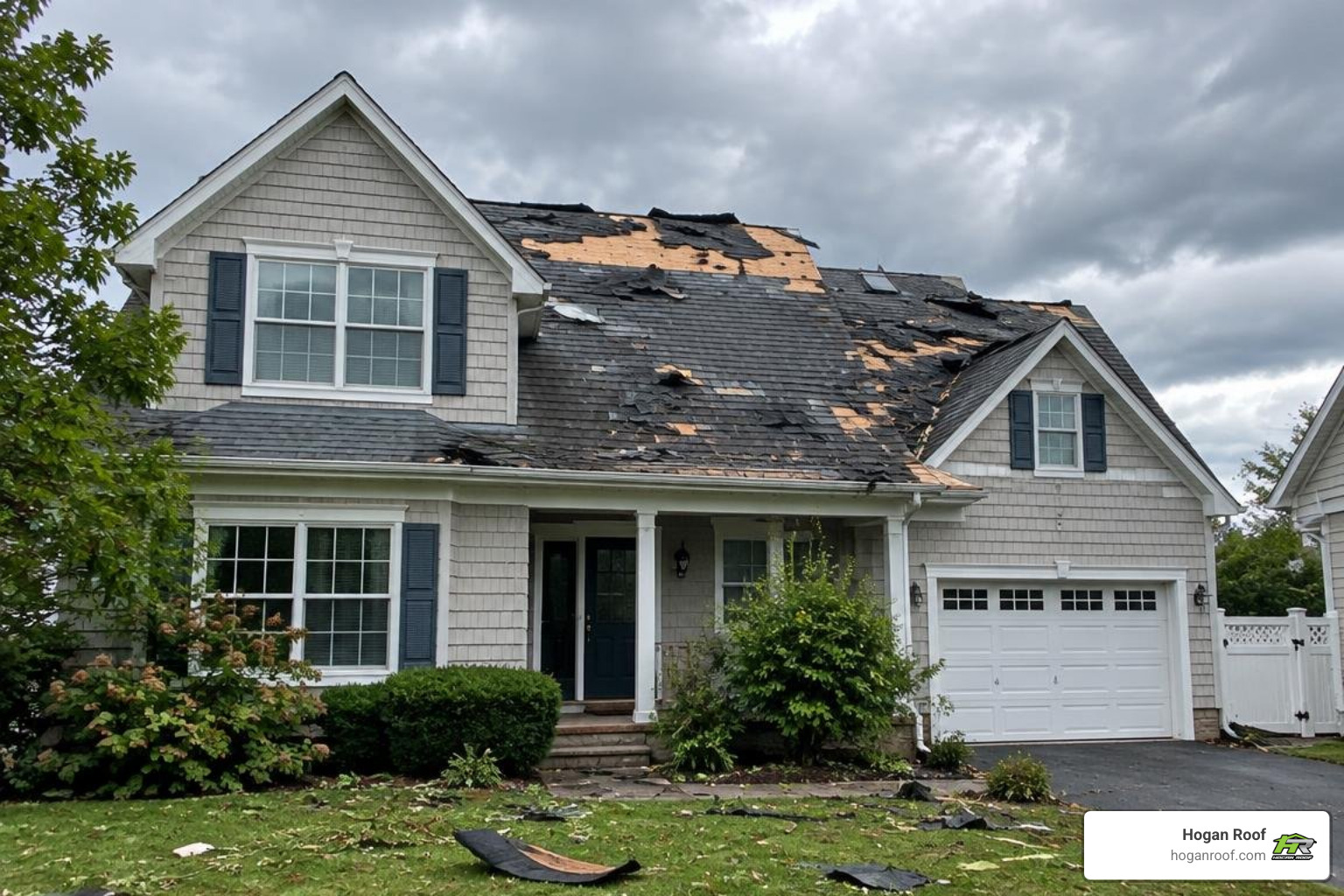
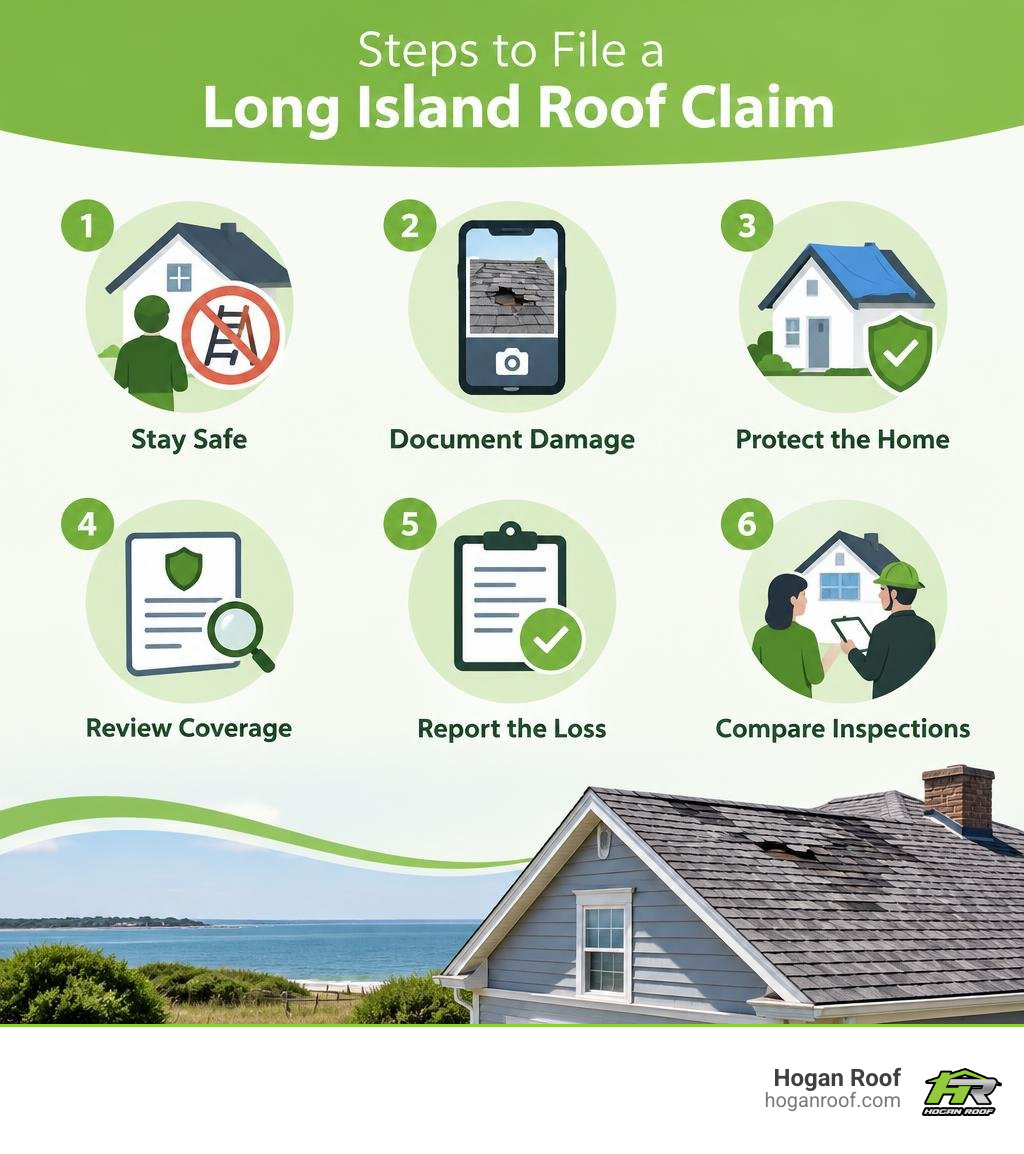
To file a roof insurance claim for storm damage on Long Island, stay off the roof, photograph the damage, and take safe steps to stop further leaks . Save receipts for temporary repairs, review your policy's roof coverage and deductible, then report the loss to your insurer promptly. Arrange a roof inspection so you can compare its findings with the insurance adjuster's estimate.
Wind, hail, and nor'easters can damage roofs across Nassau and Suffolk counties, but a claim payment depends on the cause of damage and your policy. For a 20- to 28-square asphalt-shingle roof, general 2026 claim payout estimates range from $9,200 to $34,500 ; your payment could differ substantially.
I'm Bill Hogan, owner of Hogan Roof, an Owens Corning Platinum Preferred Contractor with over 20 years of roofing experience on Long Island. I'll use that experience to walk you through the steps of a storm damage roof insurance claim on Long Island, starting with what to do right after the storm.
What Types of Storm Damage Are Covered on Long Island?
Living on an island means our homes face some of the most dynamic coastal weather in the Northeast. From violent summer thunderstorms rolling off the Sound to brutal Atlantic nor'easters, roofs across Long Island take a steady beating. Standard homeowners insurance policies (such as an HO-3 form) generally cover sudden and accidental physical damage caused by specific storm perils. However, coverage is never automatic, and insurers draw a sharp line between sudden storm impact and pre-existing maintenance issues.
Carriers frequently inspect older roofs looking for reasons to classify damage as normal wear, thermal cracking, or age-related deterioration. Understanding what constitutes a covered peril versus excluded maintenance is the first step in protecting your claim.
In recent years, Long Island homeowners insurance cost trends have pushed premiums upward by 15% to 22% in coastal zones, prompting insurers to scrutinize roof claims more strictly than ever before.
Covered Weather Perils Across Nassau, Suffolk, and Queens
When severe weather hits, property policies protect against several primary weather events:
- Wind Damage and Gale-Force Gusts: High winds can lift, crease, or completely tear shingles away from the roof deck. Broken seals allow wind-driven rain to enter your attic space. Wind also accounts for torn drip edges, damaged ridge caps, and detached rake trim.
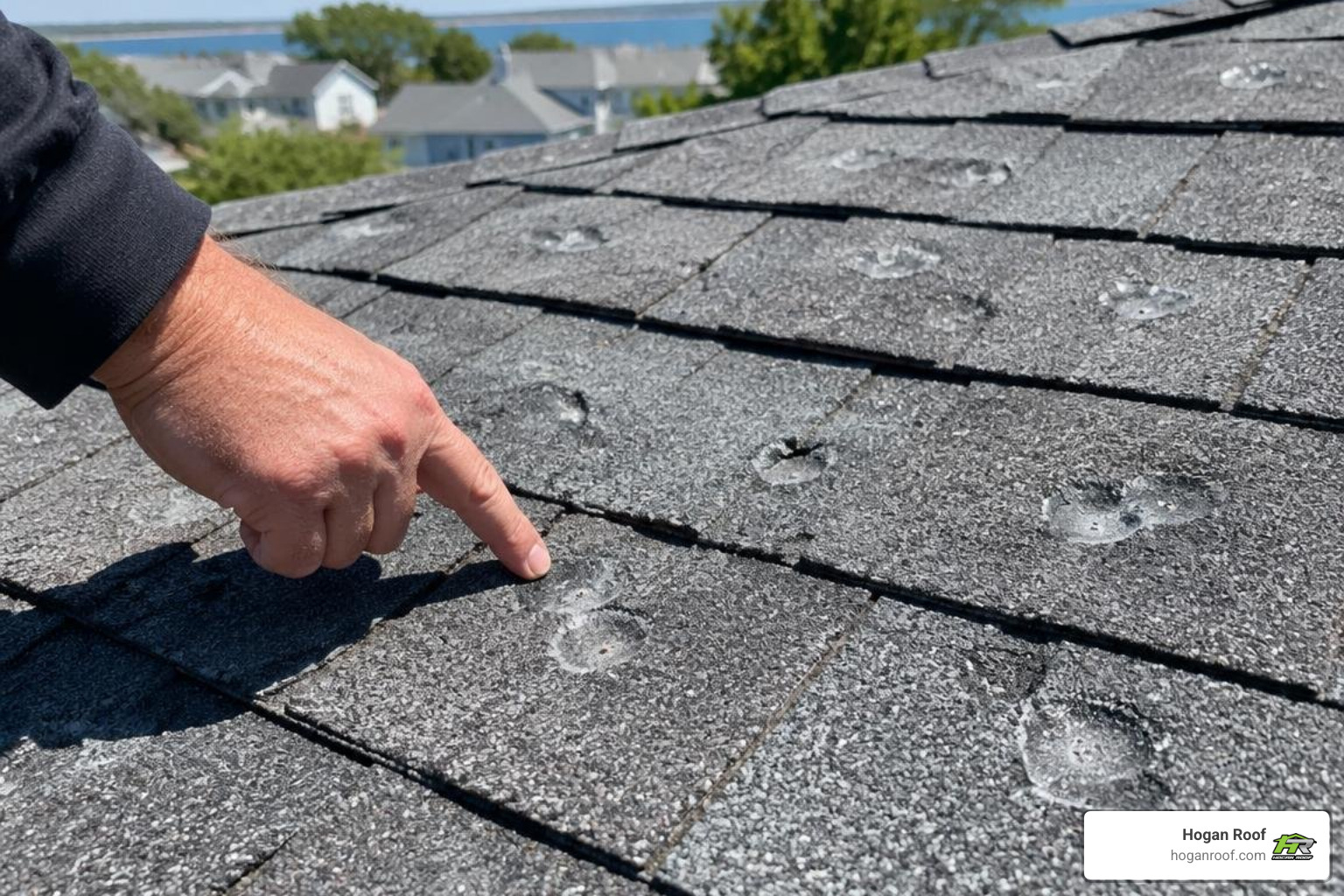
- Hail Impact: Large hailstones bruise or fracture the fiberglass mat beneath asphalt granules. This leaves dark, soft indentations that accelerate water penetration.
- Falling Trees and Flying Debris: Heavy limbs brought down by sustained winds that puncture the roof sheathing or crush structural rafters represent direct physical damage covered by standard policies.
- Nor'easters and Winter Freezes: Heavy snow accumulation and subsequent ice damming along eaves can force water backward under shingles.
For comprehensive storm restoration, our residential roofing systems are engineered specifically to withstand coastal winds and harsh seasonal shifts across Nassau, Suffolk, and Queens.
ACV vs RCV and the Impact of the ACV Roof Endorsement
The structure of your policy determines how much money you receive when a claim is approved. The two primary valuation methods are Replacement Cost Value (RCV) and Actual Cash Value (ACV).
- Replacement Cost Value (RCV): Covers the full cost to repair or replace the damaged portion of your roof with materials of like kind and quality at current market prices, without subtracting for age or depreciation. The insurer typically pays the ACV portion first and releases the withheld depreciation once repairs are finished.
- Actual Cash Value (ACV): Pays only the depreciated value of the roof at the time of the storm. If a 20-year shingle roof is 15 years old when a storm strikes, the carrier deducts 75% of its value for wear and age, leaving you to pay the remaining balance out of pocket.
Many insurance carriers now add an ACV-only roof endorsement on roofs older than 10 to 15 years. If your policy includes this endorsement, your claim payout drops significantly, shifting thousands of dollars in replacement costs onto your shoulders.
| Valuation Type | Estimated Roof Replacement Cost | Deductible (Flat) | Applied Depreciation (15-Yr Roof) | Initial Insurance Payout | Final Recoverable Depreciation | Homeowner Out-of-Pocket Expense |
|---|---|---|---|---|---|---|
| RCV Policy | $20,000 | $1,500 | $10,000 | $8,500 | $10,000 | $1,500 (Deductible only) |
| ACV-Only Policy | $20,000 | $1,500 | $10,000 | $8,500 | $0 (Non-recoverable) | $11,500 (Depreciation + Deductible) |
Understanding New York Policy Rules and Deductibles
Navigating insurance paperwork requires a working knowledge of state insurance regulations and policy endorsements. In New York, consumer claim handling is governed by 11 NYCRR Part 216 (commonly called Regulation 64). Under Regulation 64, insurers must adhere to strict operational standards, such as acknowledging a claim within 15 business days and providing clear written explanations if any part of a claim is denied or delayed.
State authorities regularly remind carriers of their responsibilities during major storms. Following major weather disasters, the state has reinforced that carriers must allow reasonable emergency mitigation, as highlighted in the New York Department of Financial Services storm response guidance.
How Hurricane and Named-Storm Deductibles Work in New York
Standard policies often carry a flat deductible (such as $1,000 or $2,500) for common perils like fire or winter tree damage. However, coastal properties on Long Island almost always include a separate hurricane or named-storm deductible .
Instead of a flat dollar amount, hurricane deductibles are calculated as a percentage of your home's total structural coverage (Coverage A Dwelling limit):
- Typical hurricane deductibles range from 1% to 5% of Coverage A.
- If your home is insured for $600,000 under Coverage A and you carry a 2% hurricane deductible, your out-of-pocket obligation is $12,000 before the insurance carrier contributes a single dollar toward roof repairs.
- In New York, this higher deductible only triggers under specific statutory conditions—usually when the National Weather Service officially declares a hurricane or named tropical system with sustained hurricane-force winds impacting the region.
If your roof sustains damage during a standard gale or winter nor'easter that is not a declared hurricane, the lower, standard flat deductible applies.
New York Claim Timelines and the Two-Year Statute of Limitations
When handling an insurance claim, time is of the essence. New York law establishes clear benchmarks for carrier responsiveness:
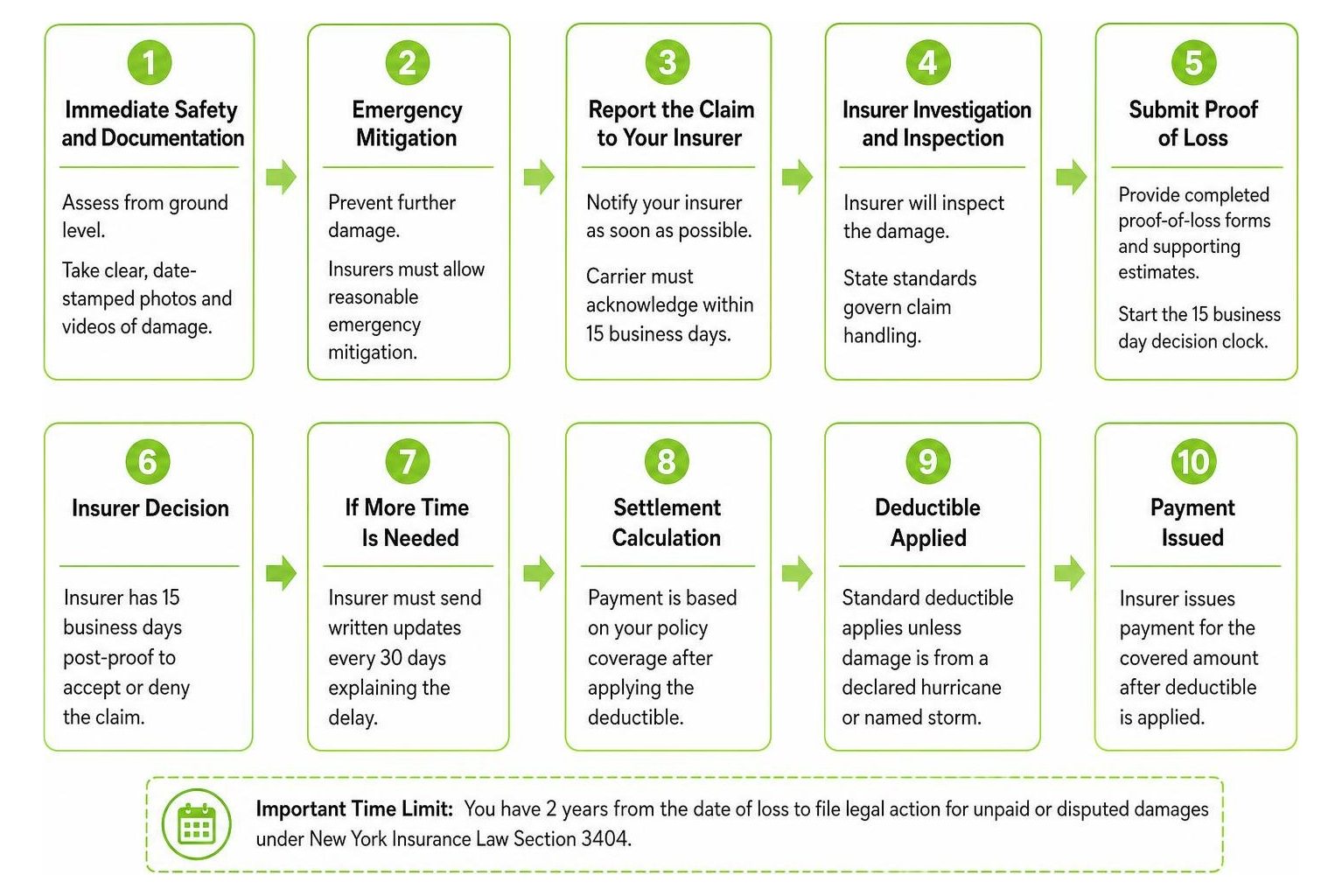
- 15 Business Days: The carrier must acknowledge receipt of your claim, provide claim forms, and start its investigation.
- 15 Business Days Post-Proof: Once you submit the completed proof-of-loss forms with all supporting estimates, the insurer has 15 business days to accept or deny the claim.
- 30-Day Written Updates: If the insurer needs more time to investigate, it must send written status letters every 30 days explaining the delay.
Homeowners must also be aware of the lawsuit limitation period. Under New York Insurance Law Section 3404 (Standard Fire Policy provisions), property owners generally have two years from the exact date of loss to file legal action against their carrier for unpaid or disputed damages. This two-year statutory clock is much shorter than the standard six-year New York breach-of-contract limit, making swift documentation essential. Review the broader framework of New York roof claim regulations and payout standards to understand your legal rights during the claim lifecycle.
Step-by-Step: How to File a Storm Damage Roof Insurance Claim on Long Island
Filing a successful claim requires methodical organization. Following a structured procedure prevents administrative delays and ensures every line item of physical damage is accounted for in the adjuster's settlement.
Step 1: Immediate Safety, Emergency Mitigation, and Photo Documentation
Your safety is the absolute priority. Never climb onto a damaged roof during or immediately after a storm. Wet shingles, compromised decking, and hidden structural weaknesses create serious fall hazards.
- Assess from Ground Level: Walk around the perimeter of your home and take clear, date-stamped photos and videos of missing shingles, dented gutters, damaged siding, and fallen tree limbs.
- Inspect Interior Ceilings and Attics: Check your attic rafters, insulation, and upper-floor ceilings for dark water stains, active drips, or sagging drywall.
- Perform Emergency Mitigation: Homeowners have an explicit duty under standard policy terms to prevent further property damage. Place buckets under active leaks, move furniture away from wet areas, and arrange for temporary tarping over exposed roof decking.
- Preserve Proof and Receipts: Keep every receipt for tarps, emergency labor, and materials. Do not discard torn shingles or damaged components until the insurance field adjuster has inspected them.
Step 2: Scheduling an Independent Contractor Inspection Before the Adjuster Visit
Before meeting with your insurance company's representative, have an experienced, local roofing contractor perform an independent assessment. Having an objective scope of work prepared by an experienced professional ensures that subtle damage is not overlooked by the carrier.
A comprehensive evaluation identifies hidden structural issues, such as cracked rafters, delaminated plywood sheathing, compromised flashing around chimneys, and bruised shingle fiberglass mats. Learning why a professional roof inspection matters helps you understand the critical difference between superficial wear and storm impact.
Modern contractors often combine hands-on physical inspections with aerial imaging. Assessing severe roof damage with drone roof inspections allows us to capture high-resolution imagery of steep, hazardous roof planes without causing further mechanical wear to loosened shingles.
Step 3: Navigating the Adjuster Inspection and Negotiating Claim Payouts
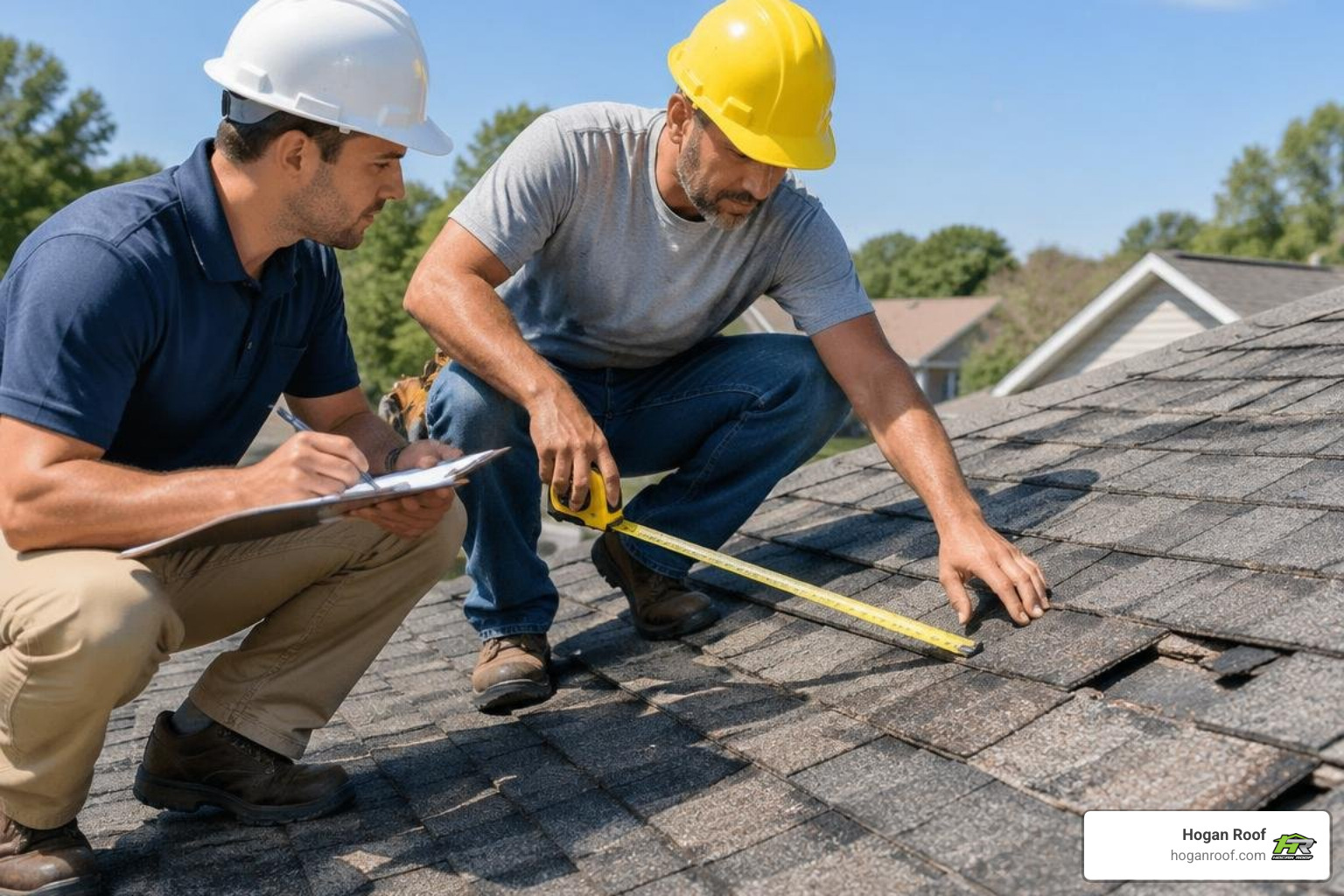
When the insurance company sends its field adjuster to evaluate your home, ask your roofing contractor to attend the walk-through. Having your contractor present ensures both parties review the same physical evidence, discuss the required construction steps, and establish an accurate scope of work.
- Review the Line-Item Estimate: Insurance adjusters use estimating software (such as Xactimate) that calculates pricing for materials, tear-off labor, disposal fees, and replacement components. Verify that all flashing, underlayment, ice-and-water shield, and ridge vents are included.
- Building Code Upgrades: New York State Uniform Building Code requirements often mandate continuous ice-and-water barrier installation and modern ventilation standards. If you have "Ordinance or Law" coverage in your policy, these mandatory code updates are covered.
- Filing Supplements: If your contractor discovers rotted decking or hidden water intrusion during tear-off that was missed during the initial walk-through, they can submit supplemental documentation directly to the carrier for additional payout approval.
- Post-Repair Verification: Once your roof replacement is completed, conducting thorough post-roofing quality inspections ensures the installation complies with manufacturer specifications before final depreciation funds are released.
Handling Claim Disputes, Denials, and Contractor Scams
Not every storm claim proceeds smoothly. Insurance companies frequently attempt to minimize payouts by offering partial slope repairs, claiming that shingles can be patched rather than replacing the entire slope, or attributing torn shingles to "improper installation" or "age-related wear."
Invoking the NY Appraisal Process for a Storm Damage Roof Insurance Claim on Long Island
If you and your insurer agree that damage is covered, but cannot agree on the total dollar amount needed to repair or replace the roof, you do not have to accept an inadequate settlement or go straight to court.
Under New York Insurance Law Section 3408 , either party can invoke the formal policy Appraisal Clause :
- Appraiser Selection: You hire an independent, qualified appraiser, and the insurance company selects its own appraiser.
- Umpire Appointment: The two appraisers select a neutral third party called an "umpire." If they cannot agree on an umpire, a local court judge in Nassau or Suffolk County appoints one.
- Binding Decision: Each appraiser assesses the loss separately. An agreement signed by any two of the three individuals (the two appraisers, or one appraiser and the umpire) sets a legally binding payout award for the loss.
For complex disputes involving bad-faith claim handling, coverage denials, or legal policy interpretations, homeowners may consult a licensed public adjuster (who works on a contingency fee basis to negotiate claims) or a property damage coverage attorney.
Avoiding Storm Chasers When Navigating a Storm Damage Roof Insurance Claim on Long Island
Major storms inevitably attract transient, out-of-state contractors—commonly referred to as "storm chasers." These operations follow severe weather events, canvassing neighborhoods with aggressive door-to-door sales tactics, offering rushed repairs, and leaving town once the storm season ends.
Protect yourself by watching for these critical red flags:
- Unsolicited Door Knockers: Avoid contractors who show up at your door immediately after a storm claiming they "noticed damage from the street" or have extra materials left over from a neighbor's house.
- "Free Roof" or Deductible-Waiver Offers: Any contractor offering to "waive," "absorb," or pay your insurance deductible is asking you to participate in insurance fraud. Under New York law, policyholders must pay their required deductible; falsifying invoices to cover a deductible violates state insurance statutes.
- High-Pressure Contracts: Never sign an "Assignment of Benefits" (AOB) or a blank contract handing over direct claim rights to an unvetted contractor before your insurer has evaluated the property.
- Lack of Local Licensing: Nassau and Suffolk counties require dedicated consumer affairs home improvement licenses. Always verify local licensing, active New York worker's compensation insurance, and general liability coverage before allowing anyone onto your roof.
Frequently Asked Questions About Long Island Storm Damage Roof Claims
How long do I have to file a storm damage roof insurance claim on Long Island?
Most insurance policies require policyholders to give prompt notice of a loss, typically within a few days or weeks of discovering storm damage. Under New York Insurance Law Section 3404, the absolute statutory deadline to file a lawsuit against your insurer for an unresolved claim is two years from the actual date the storm occurred.
Does homeowner insurance cover nor'easter and winter storm roof damage in New York?
Yes, standard HO-3 homeowner policies cover direct physical damage caused by winter nor'easters, including gale-force winds that tear shingles away, heavy snow loads that crack rafters, and interior water leaks resulting from ice dams along roof eaves. Damage caused by long-term maintenance neglect or pre-existing leaks remains excluded.
What is the difference between Actual Cash Value and Replacement Cost Value?
Replacement Cost Value (RCV) pays the full cost to repair or replace damaged roof sections at today's retail labor and material prices. Actual Cash Value (ACV) deducts depreciation based on the roof's age and condition. With an RCV policy, the insurer withholds depreciation initially and pays it back to you once repairs are completed; an ACV-only policy never reimburses that depreciation.
How does the New York appraisal clause work if my roof claim is underpaid?
Under New York Insurance Law Section 3408, the appraisal clause is a binding dispute-resolution mechanism used when you and the carrier disagree solely on the repair cost or scope of work. Each side hires an independent appraiser, both appraisers select a neutral umpire, and an agreement between any two of the three parties legally settles the claim amount without needing court litigation.
Can a roofing contractor legally waive my insurance deductible on Long Island?
No. It is illegal in the State of New York for a roofing contractor to pay, rebate, waive, or absorb a homeowner's insurance deductible. Contractors who promise to hide deductibles within inflated billing invoices commit insurance fraud, exposing both the contractor and the homeowner to potential legal penalties and claim denials.
Conclusion
Successfully filing a storm damage roof insurance claim on Long Island requires quick action, detailed documentation, and a clear understanding of your policy's terms. When severe coastal weather strikes Nassau, Suffolk, or Queens:
- Prioritize personal safety and remain off the roof.
- Capture thorough ground-level and interior photo and video evidence.
- Take immediate steps to mitigate leaks and save all emergency receipts.
- Review whether your policy pays RCV or ACV and verify your hurricane deductible percentage.
- Partner with a licensed, reputable local contractor who can assess your roof alongside the insurance adjuster.
At Hogan Roof, we are an Owens Corning Platinum Preferred Contractor with over 20 years of experience serving homeowners across Long Island and Queens. We understand the specific structural demands of coastal roofing systems and can provide an honest, thorough evaluation of your storm damage.
If your home has been hit by wind, hail, or severe nor'easter weather, explore our roofing services to schedule your free, comprehensive roof inspection today.