Roof Repair vs. Replacement on Long Island: How to Decide
Should You Repair or Replace Your Roof on Long Island?

For roof repair vs replacement , repair is usually the better choice when damage is limited to one area, the roof is still in good shape, and the decking is sound. Replacement is often the better value when leaks keep returning, shingles are wearing out across the roof, or the decking is soft or sagging. Start with an inspection: the source and extent of the damage matter more than a roof's age alone.
Asphalt shingle roofs often last 20 to 30 years , but storms and coastal weather can shorten that span. A missing shingle may need only a repair; widespread granule loss may point to a larger problem.
I'm Bill Hogan, owner of Hogan Roof. I've spent more than 20 years helping homeowners in Nassau County, Suffolk County, and Queens weigh roof repair vs replacement, and this guide will help you make that call with confidence.
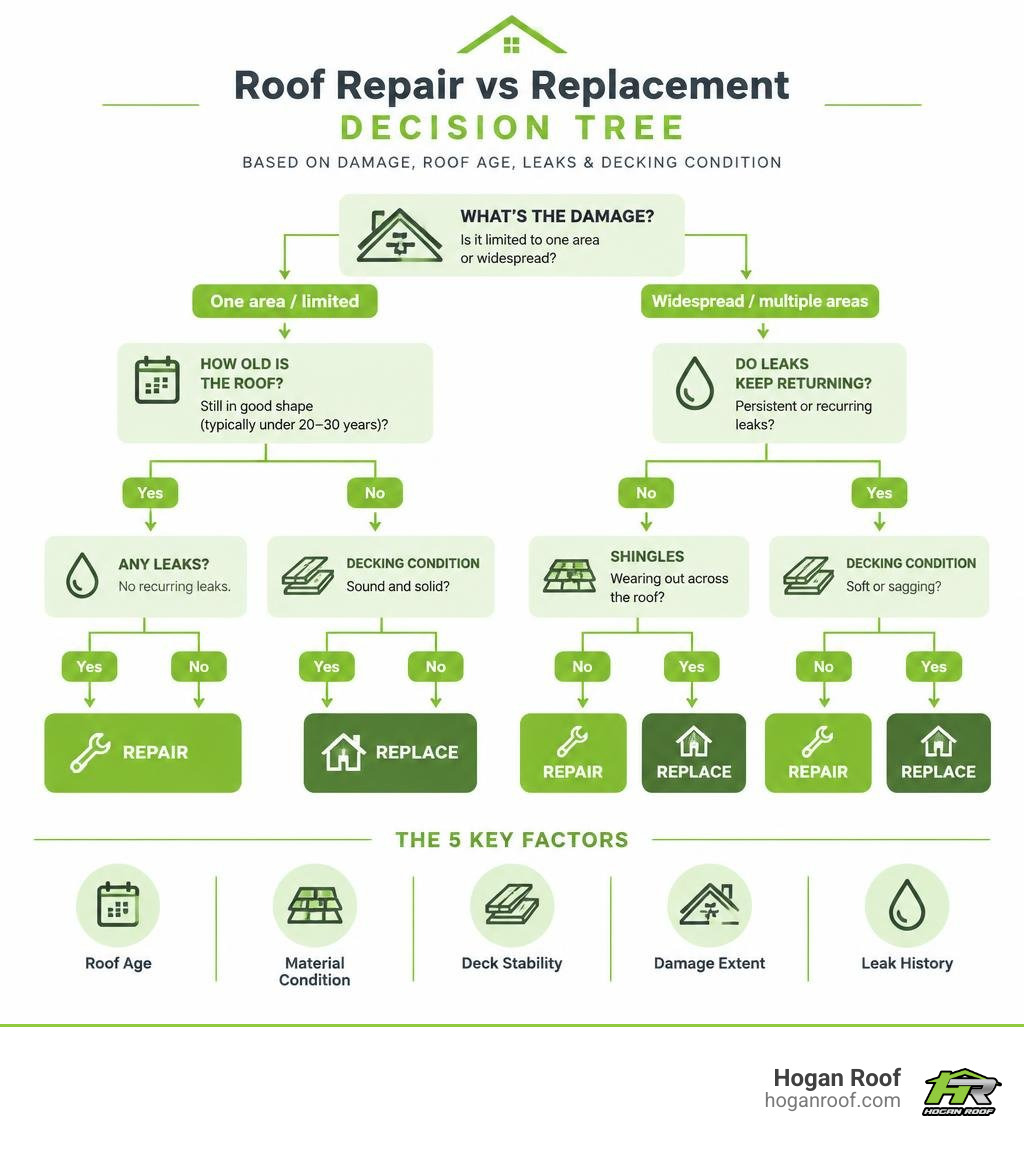
What Key Factors Drive the Roof Repair vs Replacement Decision?
Deciding whether to patch a section or invest in a full tear-off comes down to five fundamental factors: roof age, material condition, underlying deck stability, damage extent, and leak history.
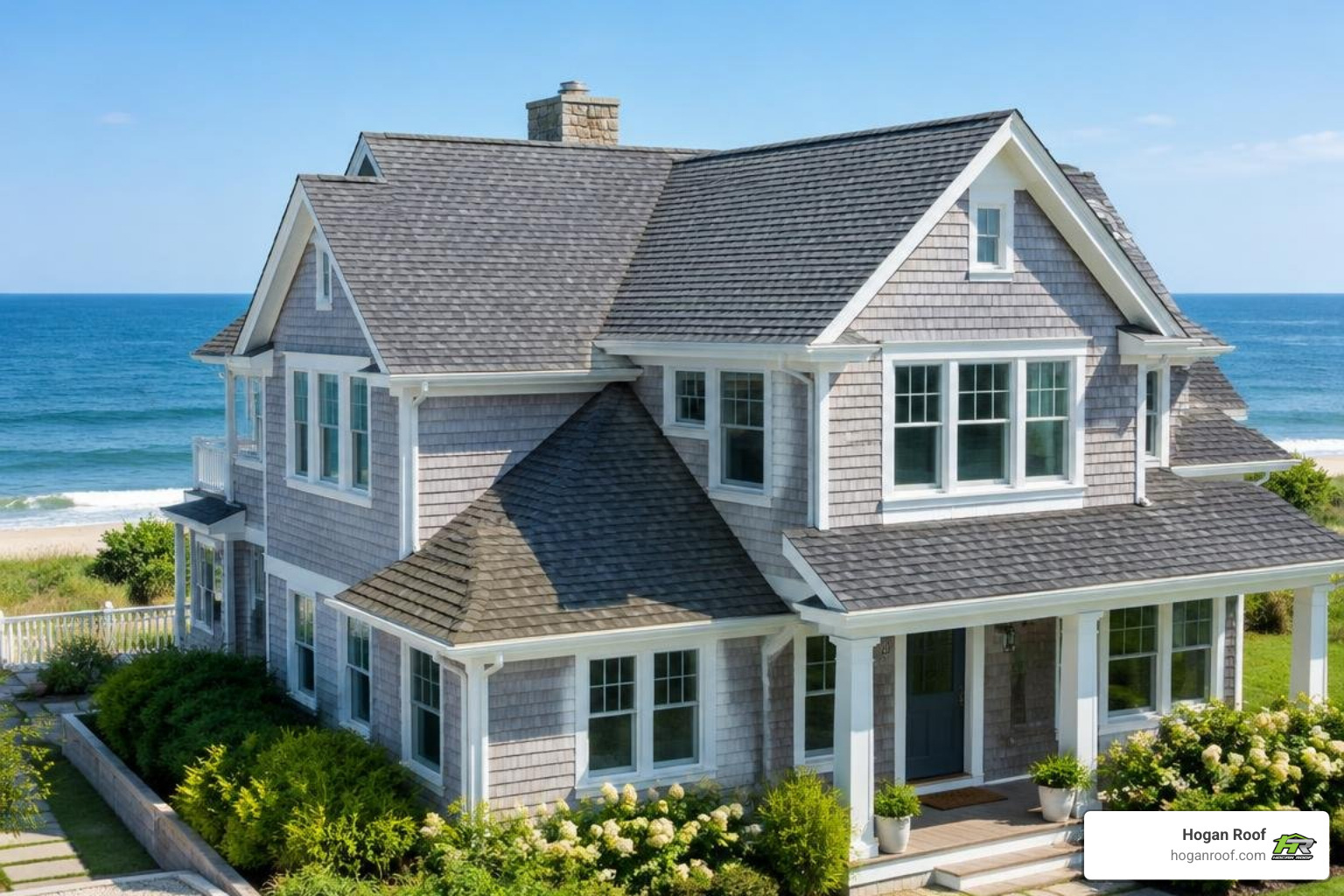
On Long Island and in Queens, our roofs endure harsh coastal nor'easters, heavy winter snow loads, salty air, and scorching summer humidity. These environmental stressors accelerate the natural aging of asphalt shingles and degrade critical flashing around chimneys and valleys.
Here is a quick decision checklist to help you evaluate your roof's condition:
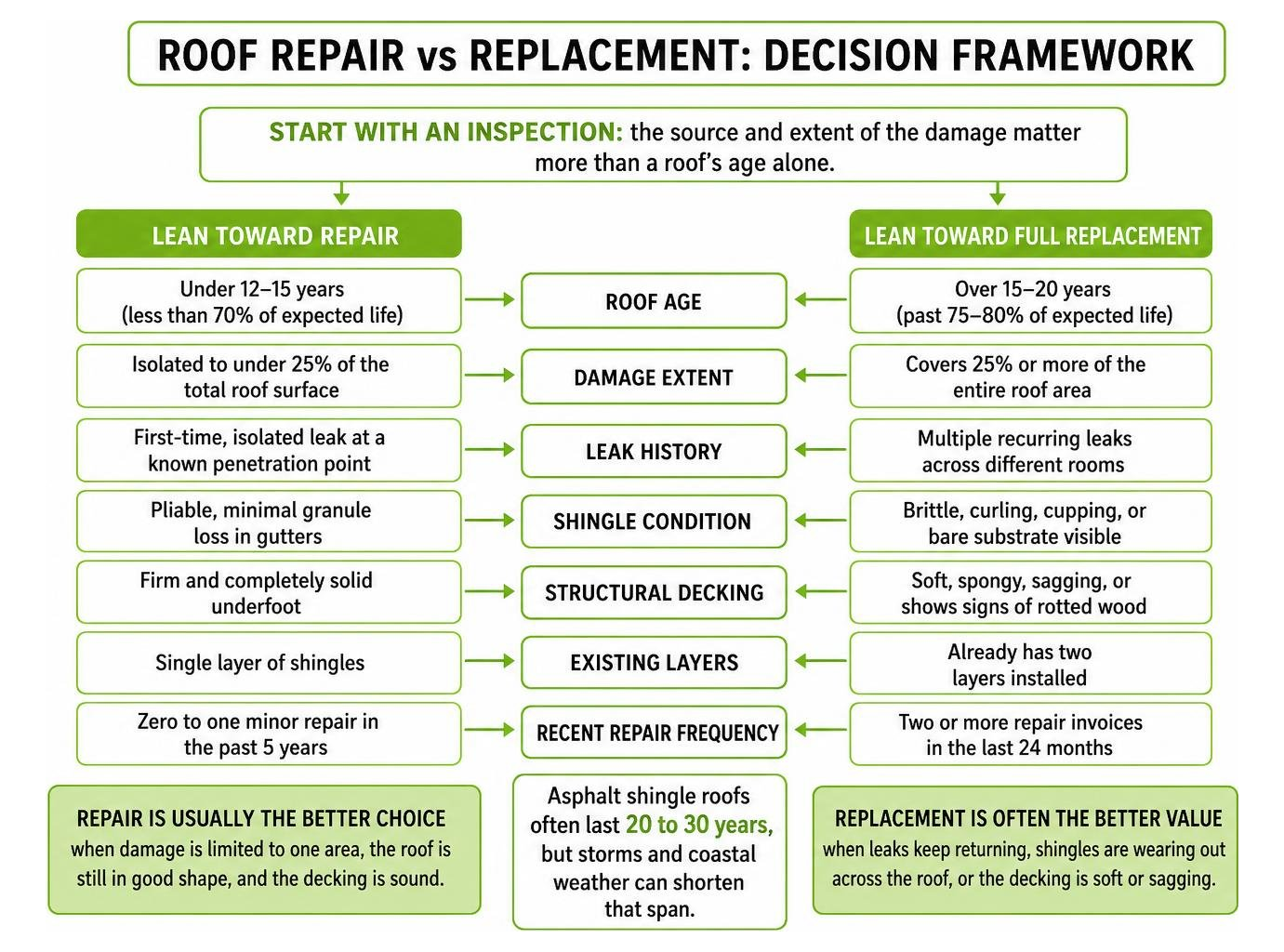
| Decision Factor | Lean Toward Roof Repair | Lean Toward Full Replacement |
|---|---|---|
| Roof Age | Under 12–15 years (less than 70% of expected life) | Over 15–20 years (past 75–80% of expected life) |
| Damage Extent | Isolated to under 25% of the total roof surface | Covers 25% or more of the entire roof area |
| Leak History | First-time, isolated leak at a known penetration point | Multiple recurring leaks across different rooms |
| Shingle Condition | Pliable, minimal granule loss in gutters | Brittle, curling, cupping, or bare substrate visible |
| Structural Decking | Firm and completely solid underfoot | Soft, spongy, sagging, or shows signs of rotted wood |
| Existing Layers | Single layer of shingles | Already has two layers installed |
| Recent Repair Frequency | Zero to one minor repair in the past 5 years | Two or more repair invoices in the last 24 months |
How Roof Age Affects Your Decision
Standard 3-tab asphalt shingles typically last 15 to 20 years, while modern architectural shingles can last 25 to 30 years under normal conditions. However, coastal exposure can shorten these lifespans. In hot, sunny climates, basic 3-tab shingles may only last 12 to 16 years, and architectural shingles around 16 to 20 years.
If your roof is in the first half of its expected lifespan and suffers minor storm damage, repairing the affected area is almost always the smarter, more economical choice. Conversely, when an asphalt roof passes 80% of its anticipated life (around 16 to 20 years), patching becomes a temporary band-aid. As shingles age, the essential volatile oils in the asphalt dry out, making them brittle. Nailing into brittle shingles during a patch job can crack the surrounding material, creating new leak paths.
Before investing heavily in patching an aging system, it helps to review an evaluating roof replacement cost breakdown to see how new materials compare across their total working lifespan.
Evaluating Visible Damage, Leaks, and Structural Decking
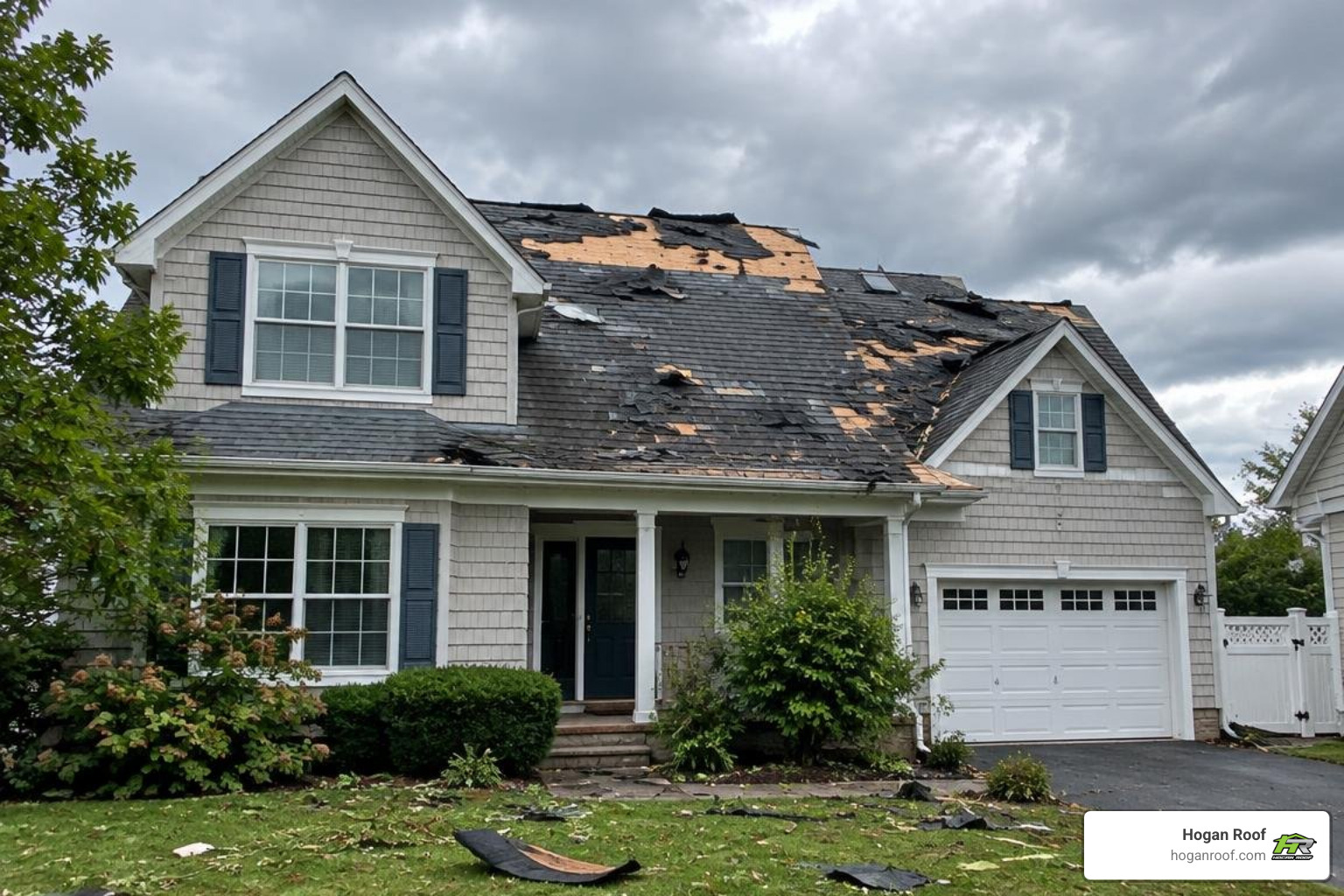
Not all leaks signal a catastrophic failure. A water spot on your drywall often traces back to a failed rubber pipe boot, loose chimney flashing, or a couple of wind-lifted shingles. These isolated problems are easily resolved with targeted repairs.
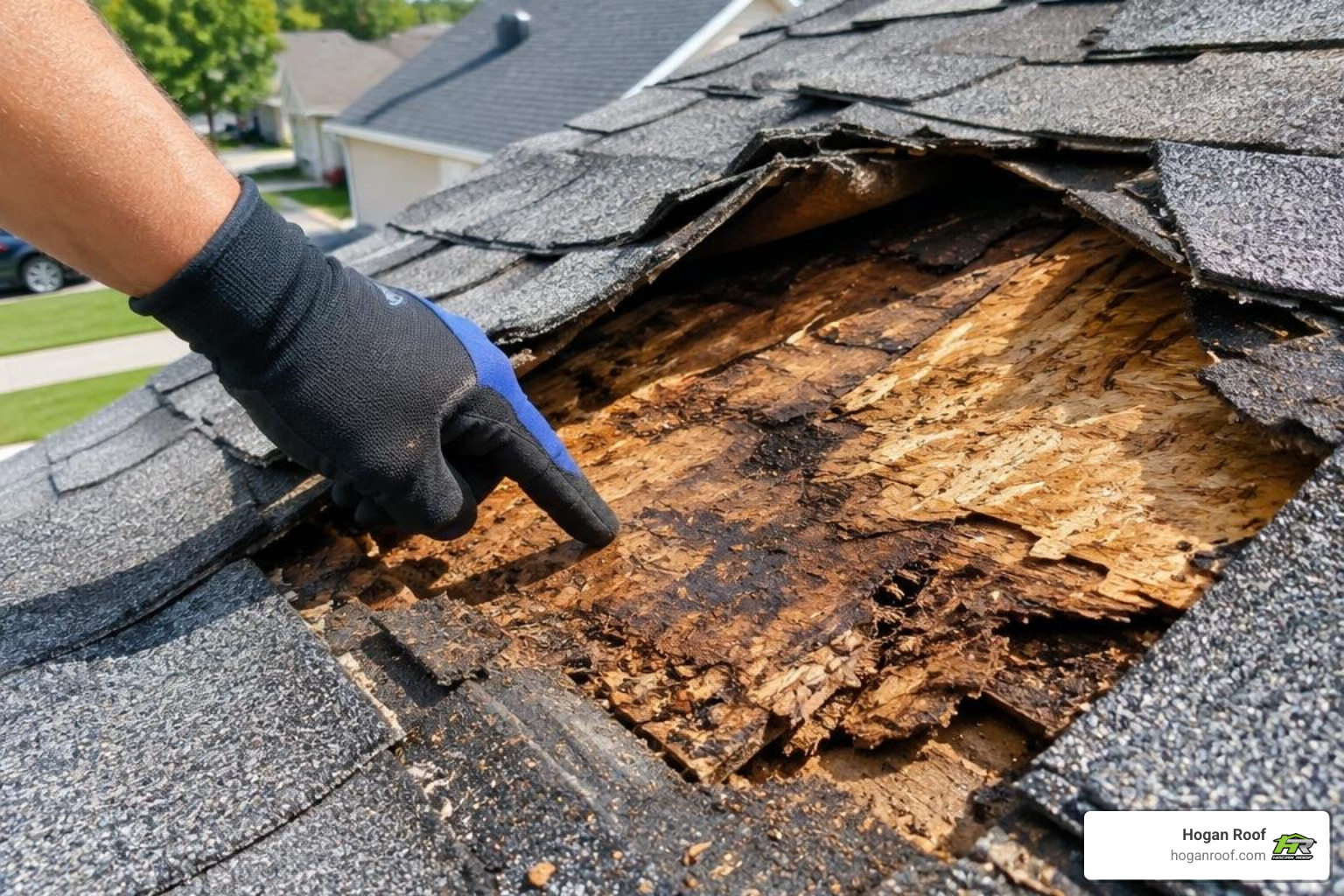
Widespread signs of wear tell a different story:
- Granule Loss: Bald patches on shingles or heavy piles of mineral granules in your gutters mean the UV protection layer is gone.
- Cupping and Curling: Edges turning upward or bubbling in the center indicate the shingle backing has broken down.
- Spongy or Sagging Decking: If your roof dips between rafters or feels soft when walked on, moisture has penetrated the underlayment and rotted the plywood or oriented strand board (OSB) underneath.
Rotted sheathing cannot hold roofing nails securely. In these situations, understanding roof deck replacement expectations is essential, as the entire roofing system must be stripped away to replace the damaged wood decking safely.
When Does Roof Repair Make the Most Sense?
Roof repairs are the ideal solution when the damage is localized, the underlying roof structure remains solid, and the roofing material still has plenty of serviceable life left.
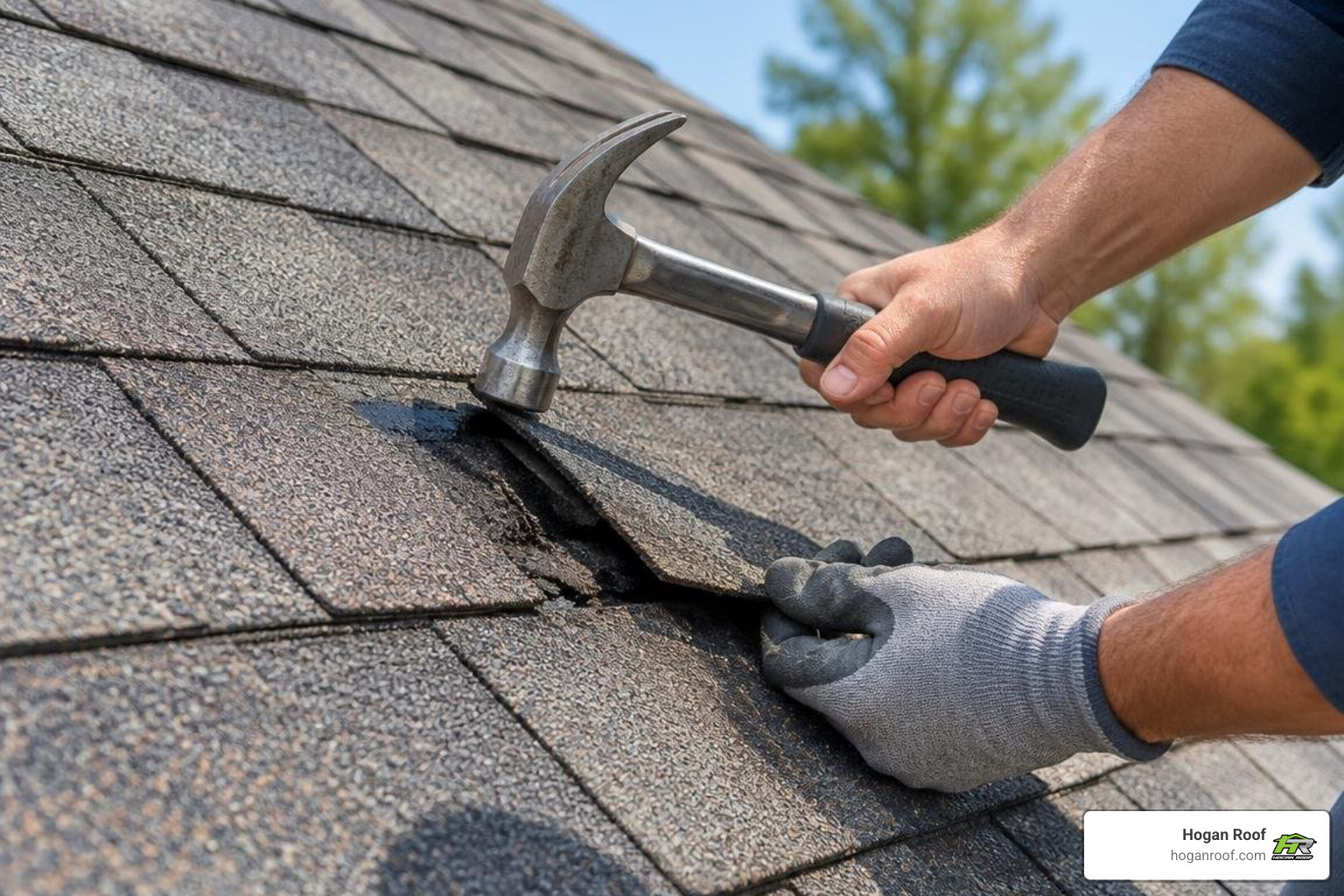
Common scenarios where a repair makes the most sense include:
- A sudden storm blows off a few shingles on a 7-year-old roof.
- Tree branches scrape and scuff an isolated section on a single roof slope.
- Flashing around a skylight or vent stack has separated and simply needs resealing or replacing.
- Ice damming caused minor, localized water intrusion along a single eave without rotting the deck.
A properly executed repair on a structurally sound roof can easily last 5 to 10 years or longer , effectively protecting your home until the entire system reaches natural retirement age.
Understanding the 25 Percent Rule for Roof Repair vs Replacement
In the roofing industry and regional building codes, the 25 percent rule serves as a vital benchmark:
- Surface Area: If storm or impact damage covers less than 25% of the entire roof area, and the roof is within the first 70% of its lifespan, a targeted repair is usually the most cost-effective solution.
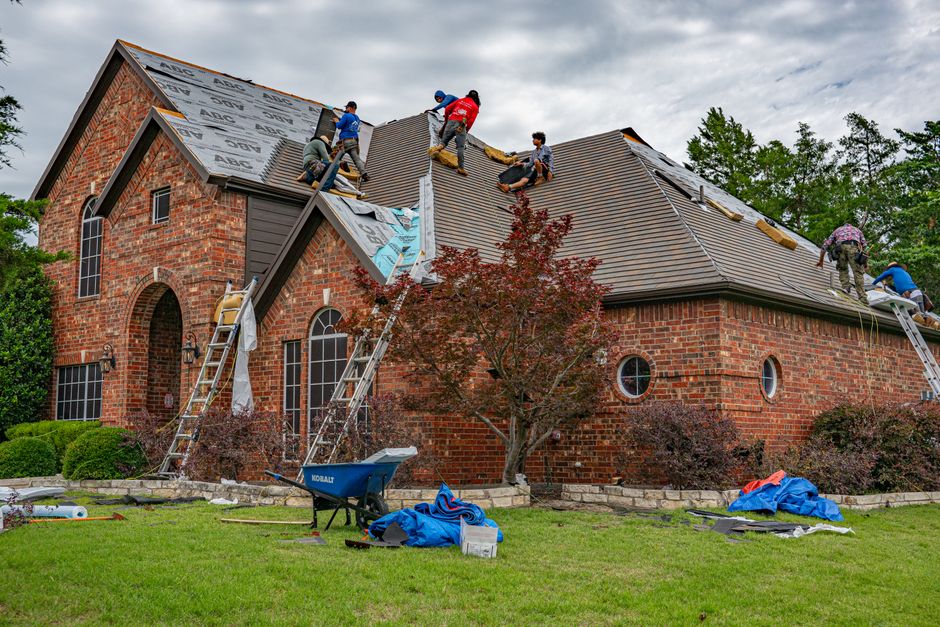
- Replacement Threshold: If damage exceeds 25% of the roof's total surface area, building codes often require a full roof replacement rather than a partial patch.
- Repeat Failure Rule: If you have paid for two or more repairs within a 24-month window , your roof is signaling widespread system fatigue. Homes with multiple repair claims in two years almost always require a full replacement within 3 to 5 years.
Patching one spot only to have an adjacent section fail six months later turns into an endless game of whack-a-mole that wastes money.
When Is Full Roof Replacement the Better Investment?
While a patch fixes an immediate leak, a complete roof replacement delivers a total reset of your home's exterior defense.
A full replacement is the better investment when:
- Multiple Layers Exist: Building codes generally limit residential roofs to a maximum of two layers. If your home already has two layers of shingles, code prohibits adding another; a full tear-off down to the decking is mandatory.
- Widespread Granule Loss or Brittleness: When shingles across multiple slopes are failing, isolated patches cannot halt progressive water intrusion.
- Energy Efficiency Upgrades: Modern asphalt shingles and cool-roof ventilation systems reflect solar heat much better than older shingles, reducing attic temperatures and cutting summer air-conditioning costs.
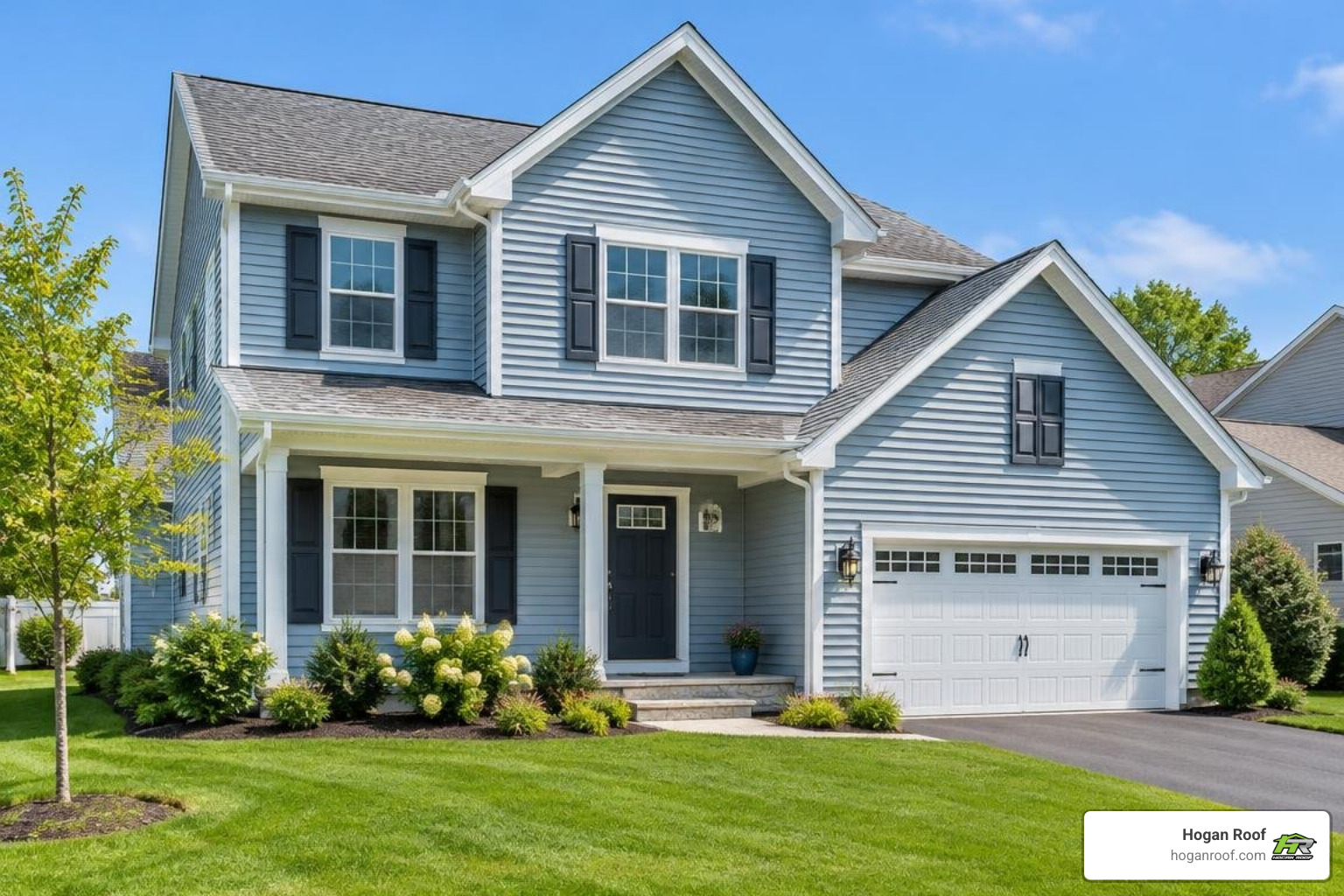
- Curb Appeal and Resale Value: If you plan to sell your home within the next few years, prospective buyers and home inspectors will scrutinize an aging or mismatched roof. A new roof offers immediate curb appeal, smooths real estate negotiations, and ensures buyer mortgage approvals pass without contingencies.
Cost Differences: Roof Repair vs Replacement Breakdown
Understanding typical industry pricing helps put your options in perspective. While every home's architectural complexity, pitch, and size differ, standard industry ranges provide a helpful baseline:
- Average Roof Repair Costs: Most minor to moderate roof repairs range between $300 and $1,000 , with complex repairs involving structural flashing or masonry work reaching up to $3,000 .
- Average Roof Replacement Costs: An average residential roof replacement typically ranges between $5,000 and $10,000 , and can reach $16,000 or more for larger homes or specialized architectural materials.
- Material Costs Across the Industry:
- Standard asphalt shingles: $1.00 to $4.00 per square foot (lifespan: 12 to 30 years).
- Standing seam metal roofing: $10.00 to $16.00 per square foot (lifespan: 30 to 50 years).
- Natural slate roofing: $10.00 to $30.00 per square foot (lifespan: 50 to 150 years).
To determine if a repair makes financial sense, apply the 30 percent cost ratio rule : if an estimated repair costs more than 30% of the price of a full replacement , and your roof is past two-thirds of its expected lifespan, replacing the roof delivers a far superior long-term return on investment. You can learn more about project budgeting by estimating roof replacement costs accurately.
Insurance Coverage and Deductibles on Long Island
Navigating insurance after severe weather can feel overwhelming. Homeowners insurance policies typically cover sudden, accidental physical losses—such as tree branches falling during a storm, high wind uplift, or hail impact. Policies generally do not cover normal wear and tear, age-related deterioration, or deferred maintenance.
Key insurance factors include:
- Replacement Cost Value (RCV) vs. Actual Cash Value (ACV): Newer roofs are often covered under RCV policies, which pay the full cost to repair or replace damaged materials without factoring in depreciation. For roofs older than 15 to 20 years, many insurers shift coverage to ACV, which deducts depreciation from the claim payout.
- Deductible Compounding: If you experience multiple separate storm events, each repair requires paying your policy deductible. If a full replacement qualifies under a single major storm claim, you pay that deductible once to reset the entire system.
- Matching Considerations: Some states and policies include provisions requiring uniform exterior appearance. If an insurer approves replacing half a roof slope but matching shingles are discontinued or visibly faded, this can trigger approval for a full roof replacement.
How to Get an Accurate Inspection Before Making a Final Choice
You should never have to guess whether a repair or replacement is right for your home. A proper evaluation starts with a comprehensive, multi-point professional inspection.
Modern roofing assessments often utilize advanced aerial technology. Discover how drone roof inspections save time and money by allowing technicians to capture ultra-high-resolution imagery of steep pitches, delicate valleys, and chimney flashing safely and thoroughly.
A thorough inspection should examine:
- Shingle pliability, granule adhesion, and seal-strip integrity.
- Attic ventilation, moisture levels, and signs of daylight through the deck.
- Valley flashing, step flashing, drip edges, and pipe boots.
- Wood decking firmness across all slopes.
- Gutter drainage and downspout clearance.
Understanding why getting a professional roof inspection saves thousands comes down to uncovering hidden water damage before small leaks ruin your drywall, insulation, and home framing.
Frequently Asked Questions About Roof Repair vs Replacement
How do I decide between roof repair and roof replacement?
Base your decision on four critical criteria: the overall age of the roof, the extent of surface damage (using the 25% rule), the condition of the wooden roof decking underneath, and your repair history over the last 24 months. If your roof is relatively young, the decking is solid, and the damage is isolated, repair is the most practical choice. If the system is older, repairs are frequent, or the deck is spongy, replacement is the better long-term investment.
How long do roof repairs typically last?
A high-quality repair performed by a professional roofer on a structurally sound roof typically lasts 5 to 10 years or longer . However, on an old roof with brittle shingles, a repair may only hold temporarily before surrounding sections fail.
What is the 25 percent rule in roofing?
The 25 percent rule states that if visible damage or required repairs exceed 25% of the total roof surface area, replacing the entire roof system is more practical and structurally reliable than partial patching. In many jurisdictions, local building codes also mandate a complete replacement once damage surpasses this threshold.
Does insurance cover roof repair or replacement differently?
Yes. Homeowners insurance covers sudden, accidental peril damage (like wind, fallen trees, or hail) but excludes gradual wear and aging. Repair claims cover only the specific storm-damaged section and require your deductible. If storm damage is widespread, your policy may cover a full roof replacement under a single deductible, often restoring full Replacement Cost Value coverage upon completion.
Should I get multiple opinions before deciding on roof repair or replacement?
Yes. Getting professional written estimates from licensed contractors helps you confirm the true extent of the damage, verify whether underlying decking is rotted, and ensure you are not being pushed into an unnecessary full replacement when a straightforward repair would resolve the issue.
Making the Right Call for Your Long Island Home
Choosing between repairing a leak or replacing your entire roof doesn't have to be stressful. By weighing your roof's age, checking the stability of the decking, and applying the 25% and 30% rules of thumb, you can make a cost-effective decision that keeps your home safe and dry through every coastal storm.
At Hogan Roof, we bring more than 20 years of dedicated roofing experience to homeowners across Nassau County, Suffolk County, and Queens. As an Owens Corning Platinum Preferred Contractor , our team provides transparent, detailed assessments without pushing unnecessary replacements.
Ready to find out exactly what your roof needs? Schedule a free professional roofing inspection with the Hogan Roof team today!