A Comprehensive Guide to Comparing Siding Options for Long Island Homes
What Siding Does for Long Island Homes
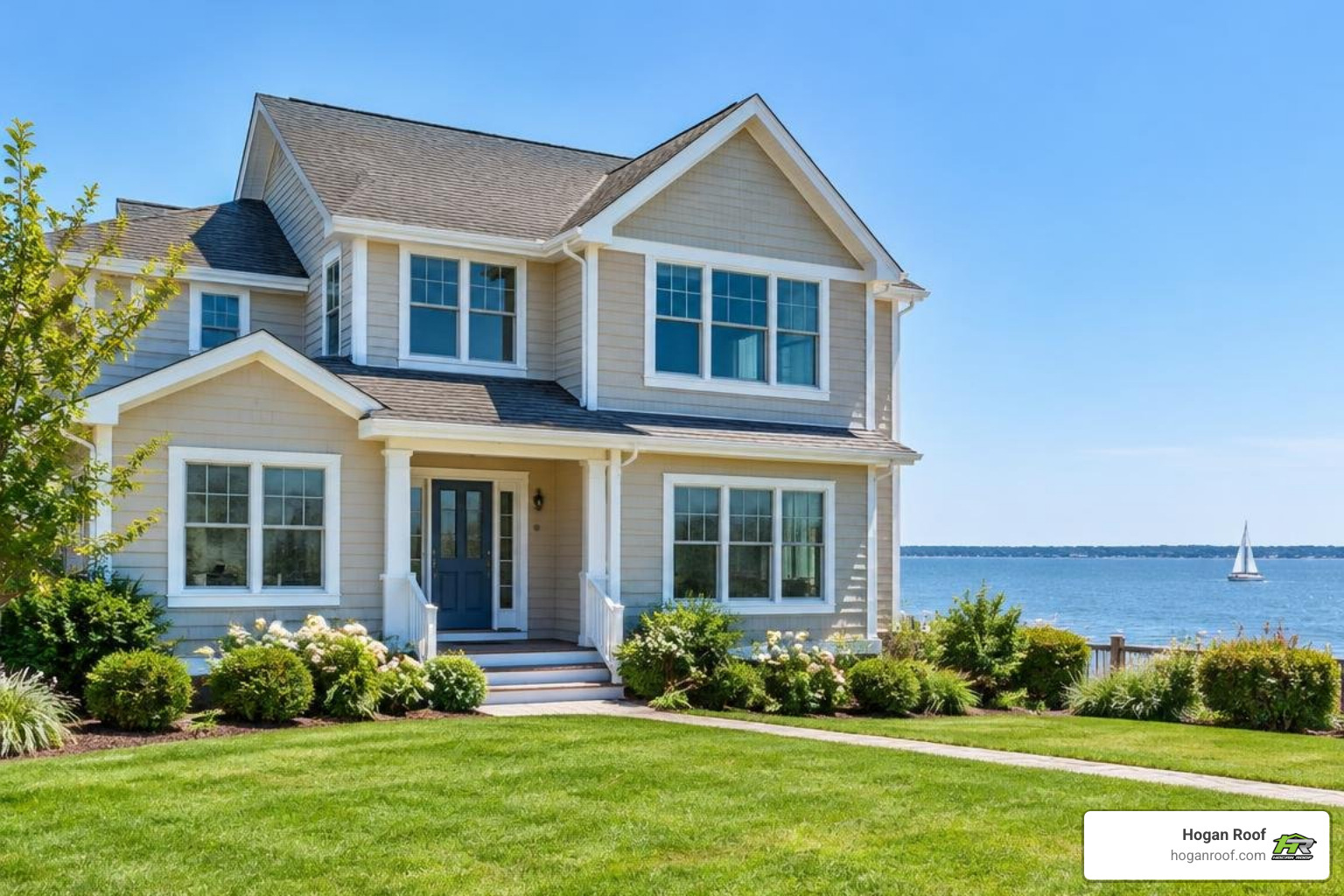
Siding is the outer layer that protects a home's walls and gives it a finished look. On Long Island, it works with housewrap and flashing to manage rain and coastal moisture. Vinyl is affordable and easy to maintain; fiber cement offers a durable, wood-like look; wood brings natural character but needs regular care; and aluminum resists salt-air corrosion. The best choice depends on your budget, home style, and how much upkeep you want.
I'm Bill Hogan, owner of Hogan Roof. For more than 20 years, I've worked in roofing, siding, and gutters for homeowners in Long Island's Nassau and Suffolk counties and Queens.
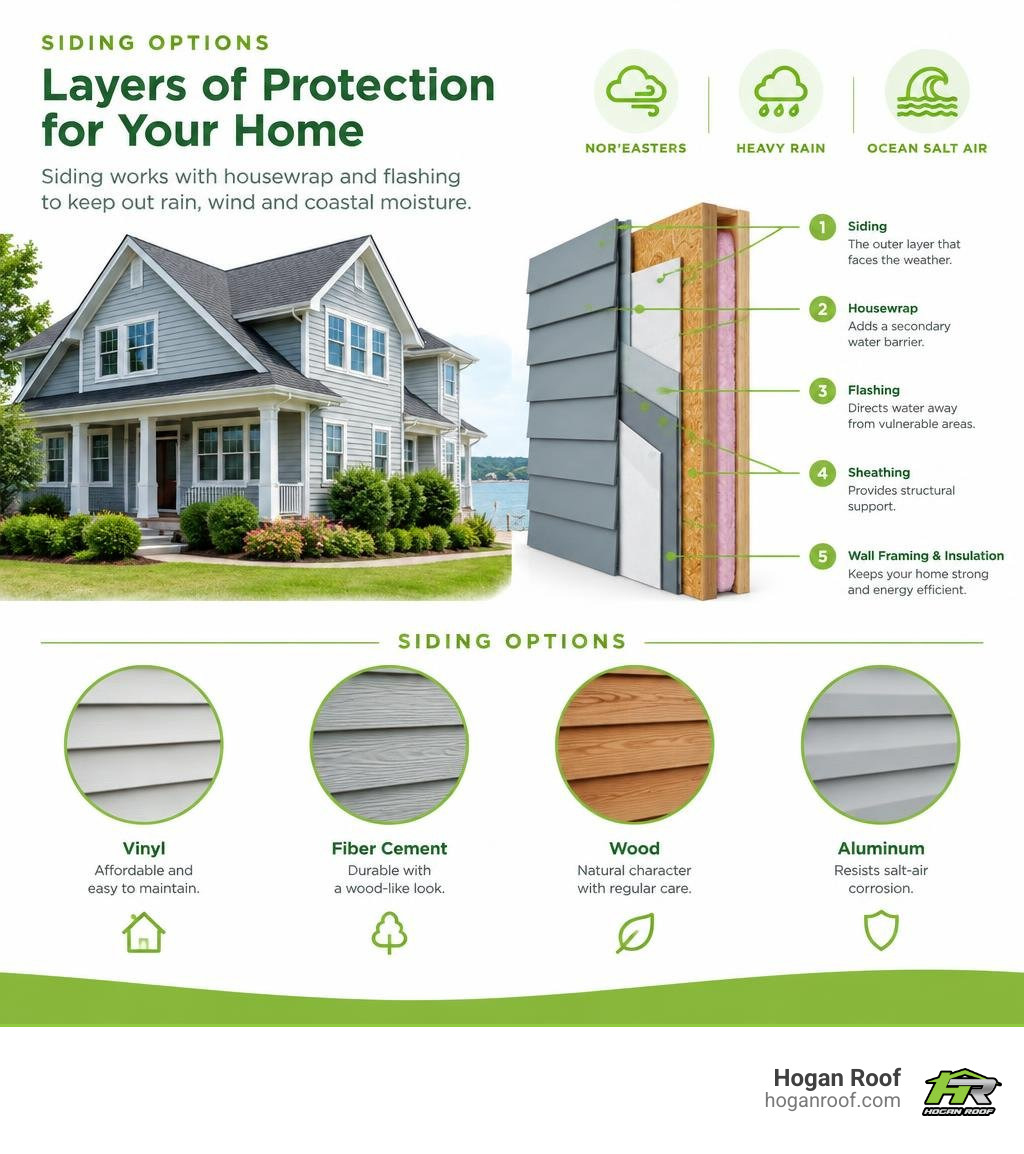
Whether you are contending with nor'easters, driving summer rain, or ocean salt air, understanding the engineering behind siding (construction)) empowers you to make the right investment. When exploring what is siding, think of it as your house's primary coat of armor. Alongside your roofing and gutter systems, quality wall cladding acts as a water-shedding barrier while defining your home's unique architectural personality.
Comprehensive Comparison of Exterior Siding Materials
Every home has different structural needs, aesthetic goals, and environmental exposures. To help you choose the right exterior cladding, here is an overview comparing the most widely installed options.
| Siding Material | Average Lifespan | Estimated Cost per Sq. Ft. (Installed) | Maintenance Frequency | Typical R-Value Rating |
|---|---|---|---|---|
| Standard Vinyl | 20–40 Years | $3–$12 | Low (Annual wash) | 0.60 |
| Insulated Vinyl (EPS Backed) | 50+ Years | $6–$14 | Low (Annual wash) | 3.96 |
| Fiber Cement | 30–50 Years | $5–$14 | Low to Moderate (Paint every 10–15 yrs) | 0.50 |
| Natural Wood / Cedar | 20–40 Years | $3–$15 | High (Treat every 4–9 yrs) | 0.80–1.00 |
| Engineered Wood | 20–40 Years | $3–$14 | Moderate (Paint every 8–12 yrs) | 0.60–0.80 |
| Aluminum | 30–50 Years | $3–$15 | Low (Wash; paint every 10–15 yrs) | 0.61 |
| Stone & Brick Veneer | 100+ Years | $7–$30 | Extremely Low (Periodic mortar check) | 0.40–0.80 |
Vinyl and Insulated Solutions
Polyvinyl chloride (PVC) is the most widely installed cladding in the country because it provides an outstanding balance of cost, durability, and versatility. High-performance vinyl panels are engineered with impact-resistant additives and color-fast chemistry that withstand heavy winds and seasonal humidity swings.
For maximum thermal performance, insulated vinyl features a contoured layer of expanded polystyrene (EPS) foam fused directly to the back of the panel. This backing bridges the gap between wall studs, eliminating thermal bridging and boosting the assembly's energy rating to an average R-value of 3.96—nearly triple that of standard exterior cladding.
Homeowners interested in lower utility bills often explore upgrading your exterior with the best vinyl siding in Nassau County or discover the year-round advantages of protecting your home with quality vinyl siding in Nassau County NY.
Fiber Cement and Engineered Wood
Fiber cement combines Portland cement, silica sand, and cellulose fibers. This blend produces an ultra-dense, dimensionally stable plank that resists rot, termites, and woodpeckers while carrying an elite Class A fire rating. According to Consumer Reports siding buying guide, advanced composite and fiber cement claddings withstand extreme winds exceeding 150 mph and endure rigorous UV exposure without early degradation.
Engineered wood utilizes real wood strands bonded with specialized resins, waxes, and zinc borate treatments. This creates a lightweight, easy-to-install board that looks like authentic timber while providing heightened resistance to fungal decay and insect infestations.
Natural Wood and Cedar Shakes
For classic, timeless character, natural wood—specifically Western red cedar and white pine—remains a cherished exterior material across our local coastal neighborhoods. Cedar contains natural tannins and oils that resist moisture and decay, but it still demands regular care. Depending on sun exposure and coastal storm patterns, wood requires resealing or staining every four to nine years to prevent cracking, cupping, or moss growth.
When planning a restoration, understanding mastering cedar shingle siding replacement for your home is essential, as is carefully understanding the real cost to re-shingle your home siding to budget for materials, staging, and labor.
Aluminum and Steel Metal Panels
Metal cladding offers exceptional resilience in harsh environments. Aluminum is especially popular along coastal areas because it naturally forms a microscopic aluminum oxide film upon contact with oxygen. This natural barrier prevents the deep, structural corrosion that often plagues untreated steel.
Steel siding provides unmatched impact resistance against windblown debris and hail, but aluminum remains the champion for salt-air stability. Homeowners looking into metal options can review a homeowner's guide to choosing and buying aluminum house siding as well as the average cost breakdown to replace aluminum siding.
Architectural Profiles and Aesthetic Trends
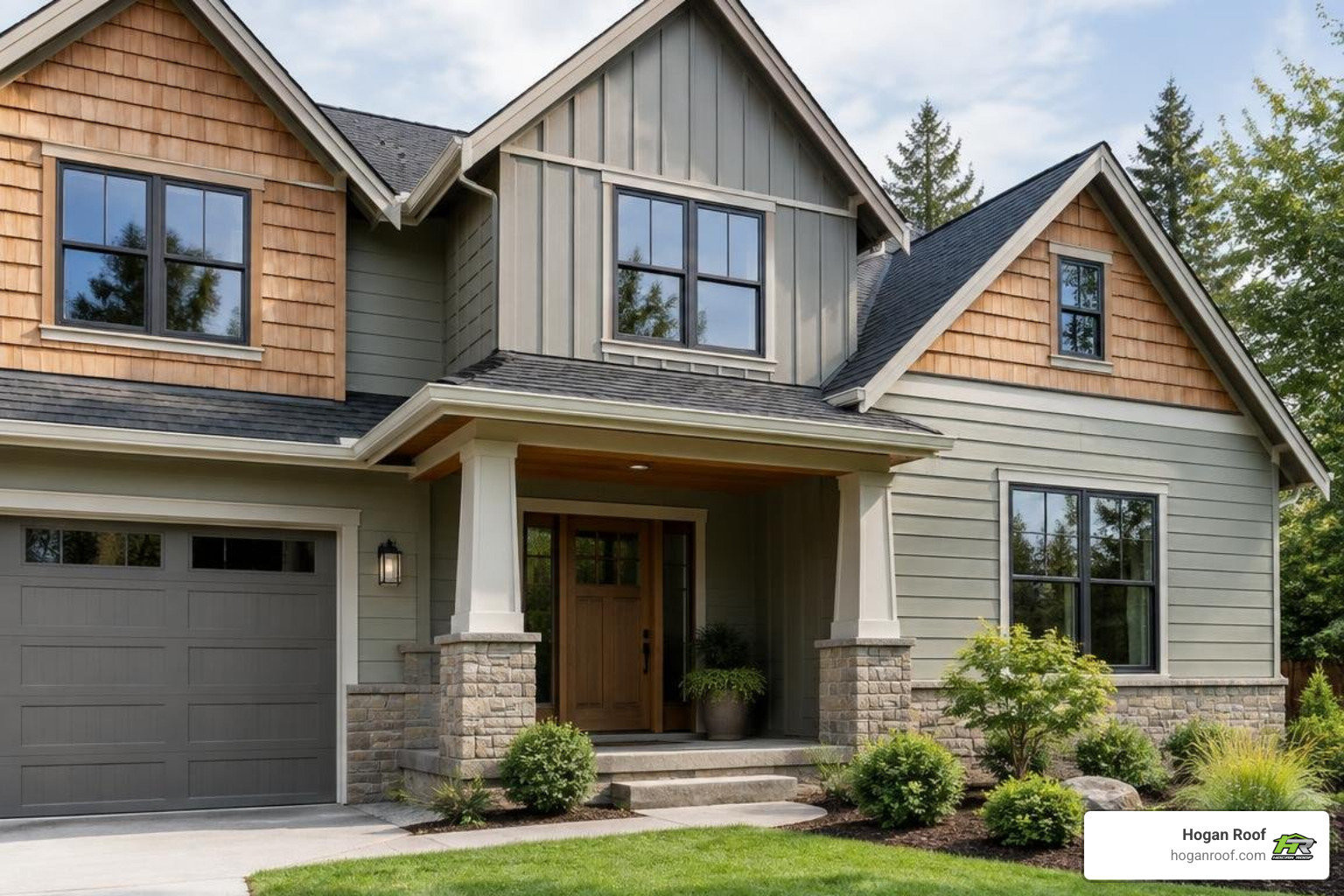
The architectural profile you select shapes the look, texture, and curb appeal of your home. Combining different panel designs and profiles brings visual interest to an exterior facade.
Distinctive Siding Styles and Visual Profiles
- Traditional Lap (Clapboard): Horizontally overlapping planks that create clean, familiar shadow lines suitable for almost any residential design.
- Dutch Lap: Planks with a distinctive beveled top edge that produce deeper, more pronounced horizontal shadows.
- Board and Batten: Wide vertical boards separated by narrow wooden or composite strips (battens) measuring 25 to 50 mm wide, offering a striking vertical appearance popular on modern farmhouses and Carpenter Gothic architecture.
- Cedar Shingles and Shakes: Available in clean, straight-edge courses or staggered lines that create a textured, handcrafted look.
- Vertical and V-Groove Panels: Sleek vertical grooves that give split-levels and contemporary ranches a crisp, geometric look.
Color palettes have shifted away from plain beige. Many homeowners now choose deep blues, forest greens, warm charcoal, and sophisticated putty neutrals. You can explore modern palettes with our guide on how to brighten your home with trending Long Island vinyl siding colors.
Architectural Compatibility for Regional Homes
When selecting a profile, match the design to your home's architecture:
- Coastal Colonials: Crisp horizontal clapboard or clean shingle siding with bright white corner trim.
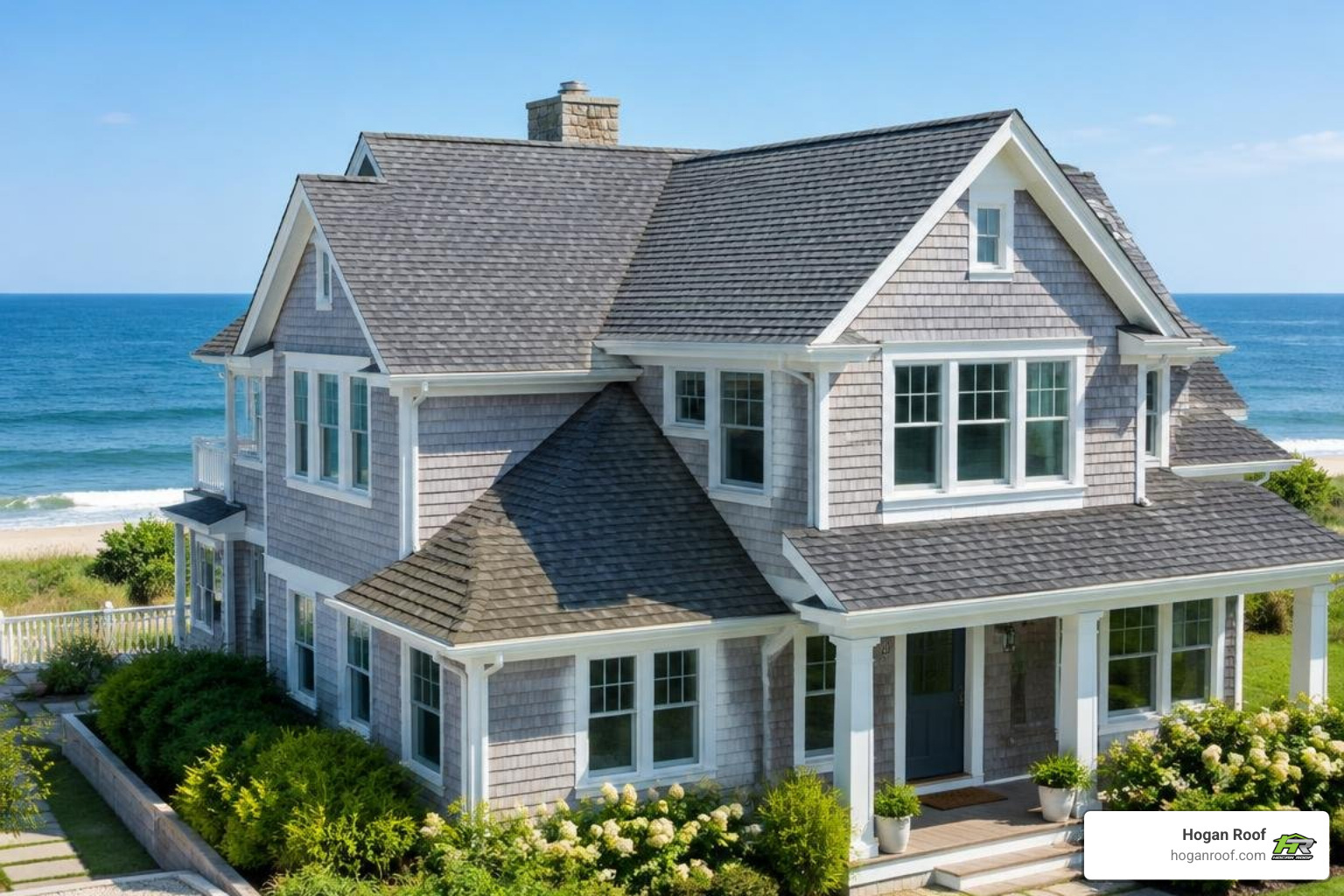
- Cape Cods: Shake or shingle siding on exterior walls, frequently accented with contrasting shutters.
- Ranches and Split-Levels: A blend of horizontal lap siding on lower stories paired with vertical board and batten on upper gables.
- Modern Farmhouse Renovations: Broad vertical board and batten paired with dark, modern window frames.
- Outdoor Living Transitions: Using siding on covered patio ceilings or outdoor kitchens creates a unified, finished aesthetic that ties your indoor and outdoor living spaces together.
Investment Analysis: Installation Costs and Long-Term Value
Investing in new cladding delivers one of the highest returns on investment in home remodeling. Beyond instant curb appeal, a tight exterior envelope lowers heating and cooling bills and protects structural framing.
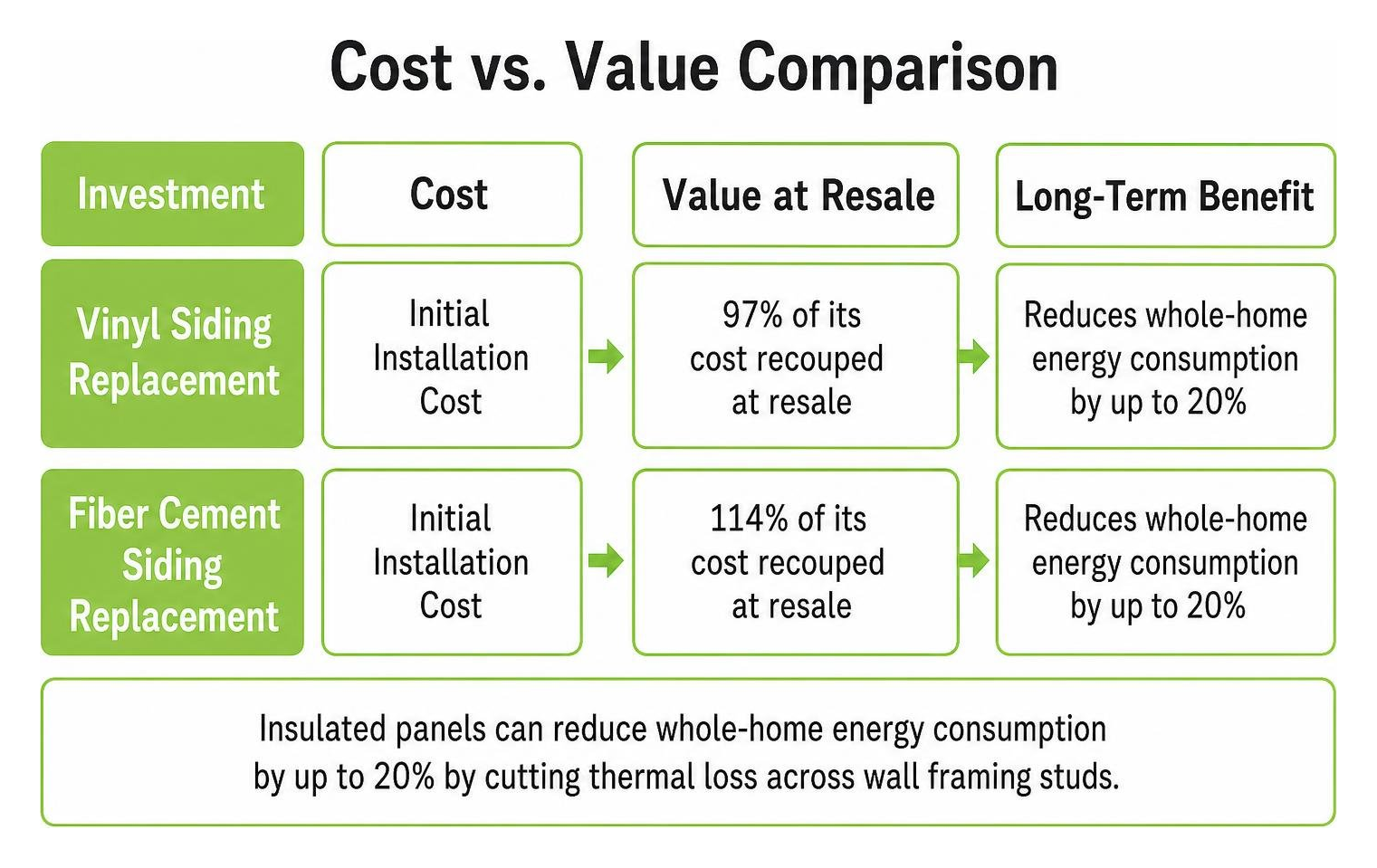
Industry remodeling data shows that:
- Vinyl Siding Replacement typically recoups 97% of its cost at resale.
- Fiber Cement Siding Replacement recoups 114% of its cost at resale.
- Insulated panels can reduce whole-home energy consumption by up to 20% by cutting thermal loss across wall framing studs.
Nationwide, average installations run around $18,000 for standard vinyl and over $21,000 for fiber cement, depending on square footage, home layout, and teardown requirements. For a complete look at project variables, explore everything you need to know about mobile and house siding replacement and the complete guide to upgrading your Long Island siding.
Installation Integrity and Long-Term Maintenance
No siding material can protect a home if it is improperly installed. Cladding is part of an integrated, multi-layered moisture management system designed to let walls breathe while keeping water out.
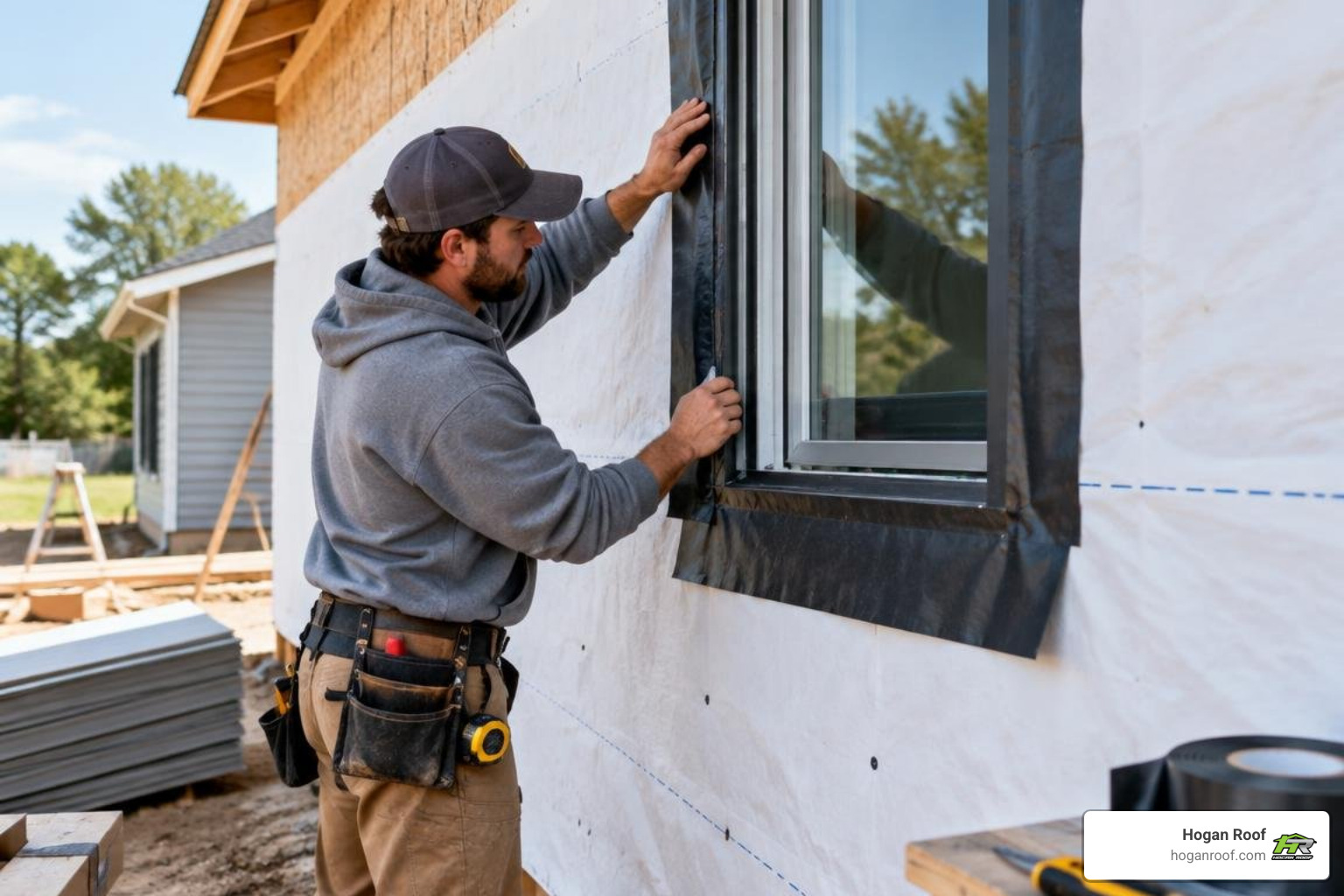
- Water-Resistive Barrier (Housewrap): Installed over clean sheathing with properly taped seams to block liquid water while allowing indoor vapor to escape.
- Integrated Flashing: Metal flashing installed above window and door frames, along roof intersections, and at wall base starter strips to channel water outward.
- Thermal Expansion Fastening: Vinyl and metal panels expand and contract with seasonal temperatures. Fasteners must be driven straight into the center of the pre-punched nail slots, leaving a 1/32-inch gap between the nail head and panel so the siding moves freely without buckling.
- Joint Staggering: Butt joints must be staggered across wall courses so seams do not align, preventing water pathways.
For existing systems showing wear, see our guides on a simple guide to repairing loose or dented aluminum siding and don't slip up: essential steps for vinyl siding repair on Long Island.
Identifying Hidden Rot and Sheathing Damage
Before applying new cladding, sheathing must be inspected for hidden water intrusion. Installers test the wall by tapping a hammer across the surface. A sharp, solid sound confirms sound framing, while a dull, soft thud suggests rotted sheathing or moisture damage that must be replaced.
Homeowners can learn more about how materials behave over time by comparing siding materials with This Old House and reading their guide to all about siding.
When to Repair vs. Replace Damaged Siding
While localized storm damage or loose panels can often be repaired, full replacement is usually the smarter long-term choice if:
- Panels are brittle, cracked, or showing deep UV fading across multiple walls.
- The siding is more than 20 to 25 years old and reaching the end of its design life.
- Moisture or mold has spread behind the walls, causing interior paint to peel or drywall to soften.
- You want to add continuous exterior insulation to lower high heating and cooling costs.
To better understand general maintenance needs, read The Spruce's house siding installation and buying guide.
Vetting and Selecting a Qualified Contractor
Your siding's performance depends entirely on the skill of the team installing it. Taking shortcuts during installation can void manufacturer warranties, trap moisture inside walls, and lead to premature failure.
When vetting potential contractors, always:
- Verify Local Licensing and Insurance: Ensure the company holds active licenses in your jurisdiction and carries general liability and workers' compensation coverage.
- Look for Factory Certifications: Reputable installers maintain recognized industry credentials and manufacturer certifications.
- Demand Detailed, Written Estimates: Estimates should clearly outline teardown, disposal, sheathing repairs, underlayment, trim accessories, and labor warranties.
- Ask for Local References: Look for established local experience and completed projects in your neighborhood.
Before signing a contract, read our resources on what homeowners should know before installing vinyl siding in Suffolk County, the ultimate guide to Long Island siding company services, and how to choose the right vinyl siding in Suffolk County.
Frequently Asked Questions About Residential Cladding
What is the most durable exterior cladding for coastal weather?
Aluminum and fiber cement offer exceptional durability in coastal settings. Aluminum naturally resists salt-air corrosion thanks to its protective oxide layer, while fiber cement provides superior wind and impact resistance against severe nor'easters without rotting or swelling.
How much energy savings can insulated wall systems provide?
Insulated vinyl siding with fused EPS foam backing can reduce home energy consumption by up to 20%. It provides continuous exterior insulation across wall studs, eliminating thermal bridging and achieving an average R-value of 3.96.
How often do exterior surfaces require maintenance cleaning?
Most siding materials should be washed once a year using a soft-bristle brush, mild household detergent, and a gentle garden hose rinse. Avoid spraying high-pressure water directly into horizontal seams or trim gaps, which can force moisture behind the wall assembly.
Conclusion
Upgrading your home's exterior cladding is one of the most effective ways to boost curb appeal, enhance weather protection, and lower energy costs. Whether you prefer low-maintenance insulated vinyl, durable fiber cement, or classic cedar shakes, selecting the right material and working with an experienced installer ensures your home stays protected for decades.
At Hogan Roof, our team brings more than 20 years of exterior remodeling experience to homeowners across Long Island (Nassau County and Suffolk County) and Queens. As an Owens Corning Platinum Preferred Contractor, we take pride in delivering top-quality craftsmanship, clear communication, free inspections, and flexible financing options.
Ready to protect and transform your home? Contact Hogan Roof today for an expert siding consultation and free inspection!