What Should Long Island Homeowners Know About Allura Siding?
How to Compare Allura Fiber Cement Siding for Your Home
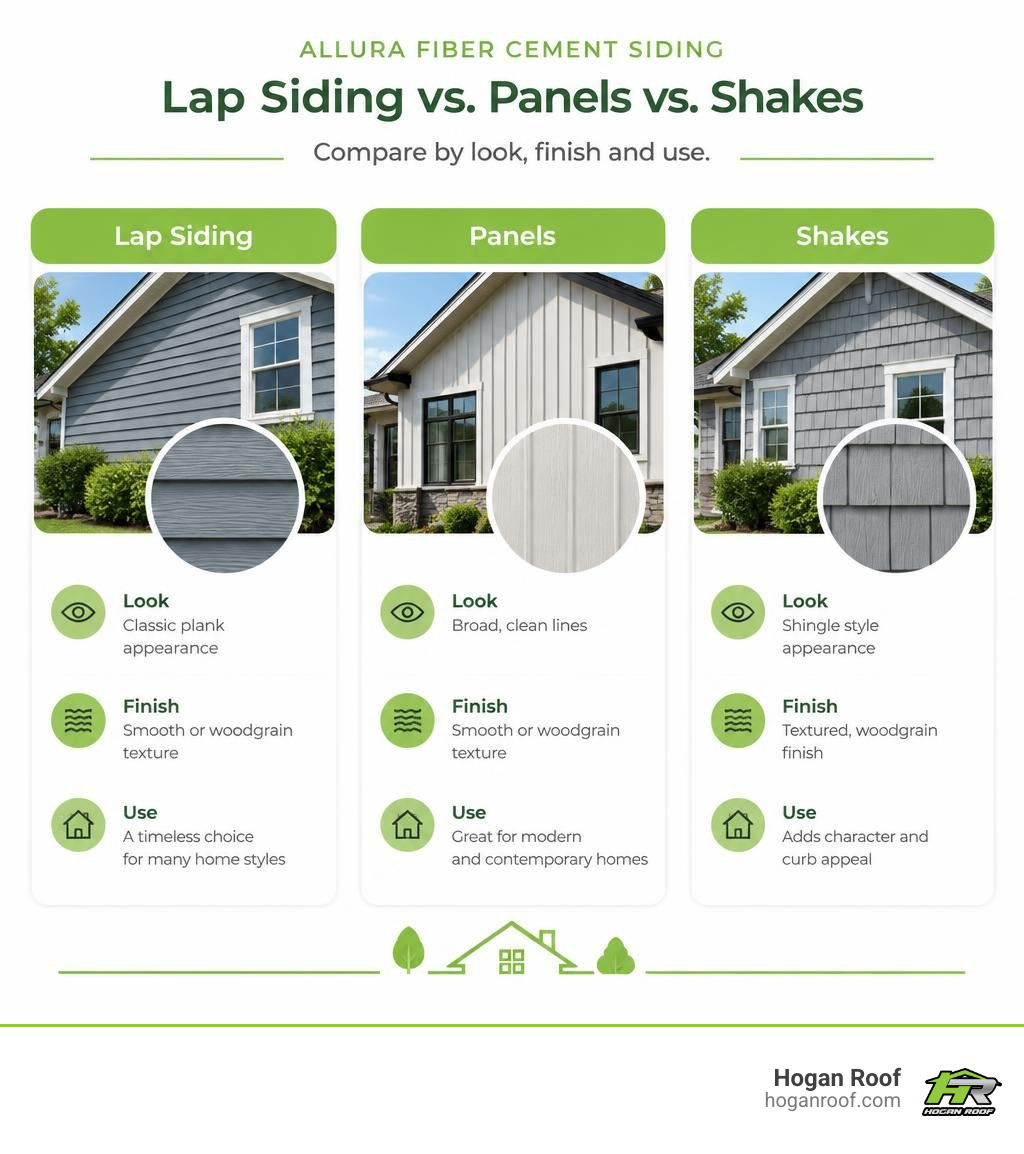
Allura fiber cement siding comes in lap boards, panels, and shakes , with trim and soffit options to match. Choose lap siding for a classic plank look, panels for broad, clean lines, or shakes for a shingle look. Then compare textures, finishes, warranty terms, and installation needs for the products you like.
I'm Bill Hogan, owner of Hogan Roof, and I've spent more than 20 years working on roofing and siding projects across Long Island and Queens. I use that experience to help homeowners compare Allura fiber cement siding options and plan their next siding project.
Know your allura fiber cement siding terms:
Allura fiber cement siding: Which products can Long Island homeowners compare?
Allura makes a range of fiber cement exterior products, so homeowners can coordinate the main siding profile with details around the home. The lineup includes lap siding, panels, shakes, trim, soffit, and backerboard. Review the Allura fiber cement product catalog for current product details and availability.
| Product | Profile and typical use | Available sizes | Finish options | Stated warranty information |
|---|---|---|---|---|
| Lap siding | Horizontal plank profile for traditional or contemporary exteriors | 5/16-inch thick and 12 feet long; widths from 5-1/4 to 12 inches | Primed, solid colors, stains, and factory-prefinished options, depending on availability | Product and finish terms vary; verify the warranty for the exact selection |
| Panels | Broad surface for modern or vertical applications | 4 by 8, 4 by 9, and 4 by 10 feet | Options vary by product and region | Allura lists a 30-year warranty for panels |
| Shakes | Shingle-style appearance for accents or larger wall areas | Sizes vary by product | Options vary by product and region | Allura lists a 30-year warranty for shakes |
| Trim | Exterior trim for corners, windows, doors, and other details | Sizes vary by trim product | Options vary by product | Check the warranty for the selected trim |
| Soffit | Finish for the underside of roof overhangs | Sizes and configurations vary | Options vary by product | Allura lists a 30-year warranty for soffit |
| Backerboard | Substrate for tile applications, rather than exterior wall siding | Product-specific | Not applicable to exterior siding finishes | Allura lists a 20-year warranty |
Warranty statements can differ across product pages and product types. Some listings state a 50-year limited transferable product warranty, while Allura's catalog gives a 30-year warranty for plank, panel, shakes, and soffit products. Factory-applied solid-color finishes may have a separate 25-year limited warranty. These are not interchangeable promises: confirm the current terms, exclusions, transfer rules, and coverage for the precise product and finish before purchase.
Availability and colors can vary by region, and a product shown online may not be stocked locally. Use Allura's dealer locator to identify nearby sellers, ask about samples, and request a project-specific quote. For broader planning, compare siding options for Long Island homes.
Which Allura fiber cement siding lap styles and sizes are available?
Allura lap siding is available in two main textures: Traditional Cedar, which has a wood-grain appearance, and Smooth, which has a flatter, more streamlined look. Both use a clapboard-style profile. Standard boards are 5/16 inch thick and 12 feet long, with widths of 5-1/4, 6-1/4, 7-1/4, 8-1/4, 9-1/4, and 12 inches.
The board width is not the same as the amount of wall it covers. Each course overlaps the one below it, so the exposed coverage depends on the width and installation exposure. Ask the dealer or installer to calculate quantities using the selected profile and the manufacturer's current coverage chart. For reference, one 5/16-inch by 8-1/4-inch by 12-foot board weighs about 17.36 pounds, so handling and staging deserve some planning.
Lap boards may be sold primed and ready for finishing or with factory-applied finishes. Depending on product and regional availability, choices can include solid colors and wood stains. If you're considering a specific shade, request a physical sample: screens can make online colors look different from the finished product.
How does Allura fiber cement siding compare across finishes?
Primed siding gives you flexibility to select a paint color after installation, but it needs to be finished according to Allura's instructions. Factory-prefinished boards arrive with their color already applied, which can help create a consistent appearance from board to board. Some prefinished products use five-sided coverage, including the edges and ends, and may reduce the need for on-site finishing work. Touch-up requirements still apply if boards are cut or damaged.
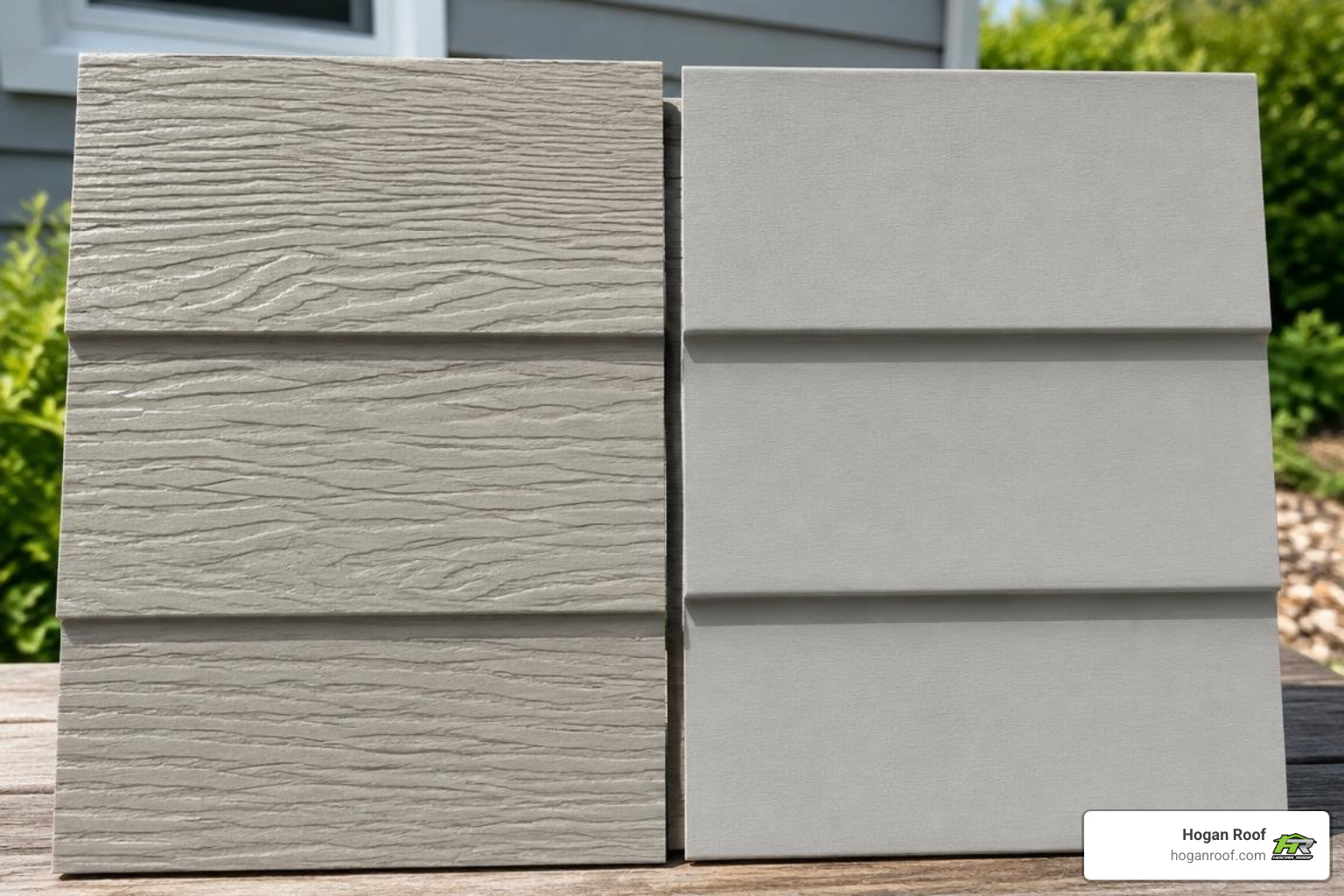
Color images online are only a guide; monitor settings and digital reproduction can shift how a shade appears. We recommend reviewing a physical sample in outdoor light and alongside proposed trim, fascia, and soffit colors. As you plan a project, planning a siding upgrade can also help you think through the home's overall exterior.
Allura styles, benefits, and considerations for Long Island homes
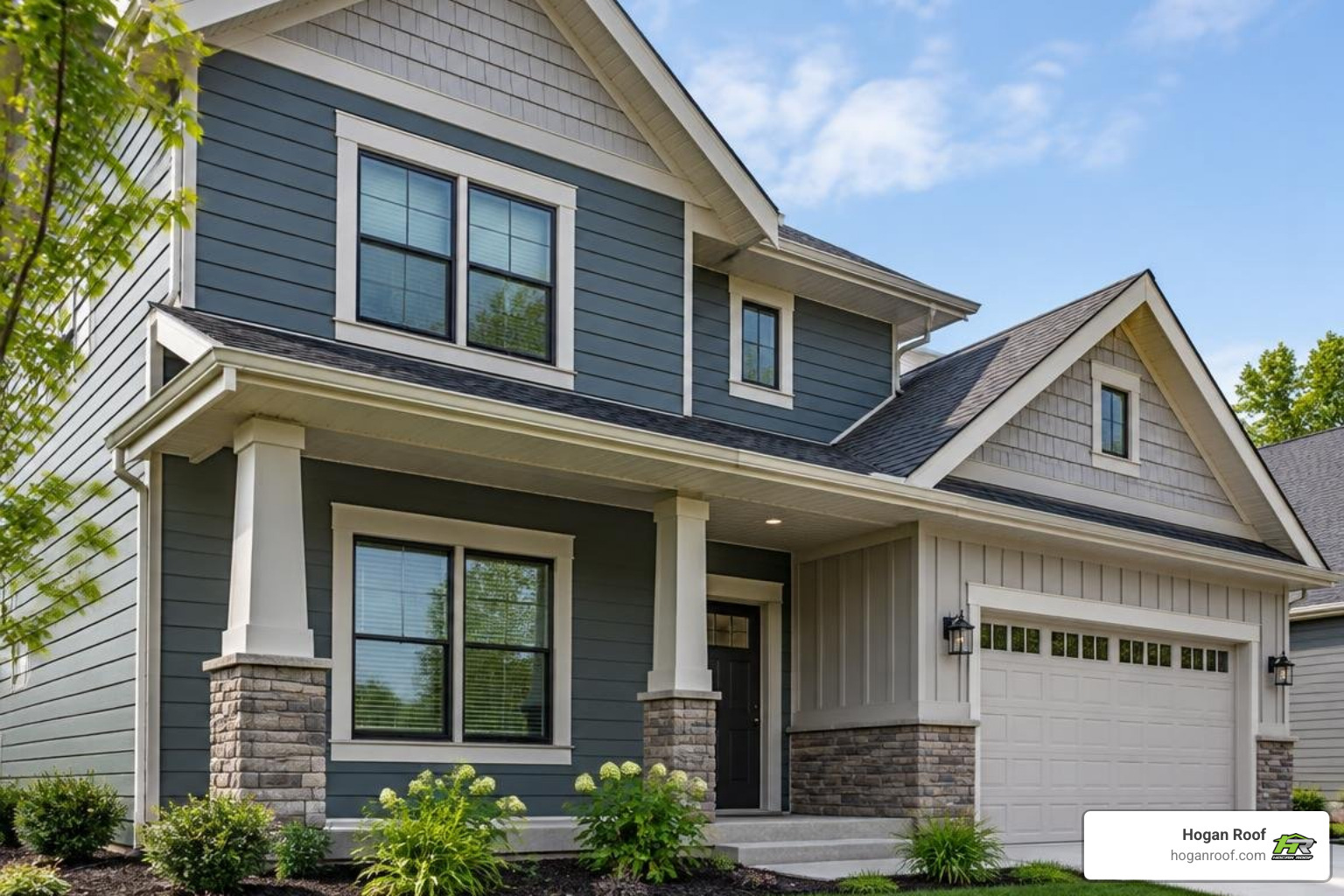
The product range can suit different architectural looks. Lap siding gives a familiar horizontal plank pattern, panels create broad expanses with fewer visible seams, and shakes add a shingle-like texture. Coordinating trim and soffit can make transitions around windows, corners, and roof overhangs feel intentional.
Fiber cement is made from cement, silica or sand, cellulose fibers, water, and selected additives. Allura products are autoclaved, or cured with pressurized steam. The material is designed to resist rot and wood-boring insects, and product information describes resistance to salt spray, ultraviolet exposure, and freeze-thaw cycles. Those properties may be useful in Long Island's varied weather, but good installation and water management remain essential.
Allura siding has a Class A flame-spread rating. This is a fire-performance classification, not a promise that a complete wall assembly is fireproof. Always consider the applicable building requirements for the full assembly.
Fiber cement is also heavier and more brittle than many homeowners expect. A standard 12-foot lap board weighs around 17 pounds, and boards can crack or chip if they are dropped, bent, or poorly supported. Cutting creates silica dust, so the product is not a casual cut-and-hang material. Repairs may also require matching the existing profile and finish. Fiber cement can be a lower-maintenance choice than wood, but it still needs periodic inspection, cleaning, and finish care.
For help weighing appearance and practical needs, see our guide on choosing the right siding for a Long Island home.
Which Allura fiber cement siding finish suits your project?
Primed boards are a good fit when you want to choose a paint color on site. Factory-prefinished boards can offer a more uniform factory-applied color and a finished appearance sooner. Allura also lists solid colors and natural wood stains for certain products, though the selection depends on the siding type and local availability.
Think about the whole exterior before settling on a finish. A siding color should work with the roof, windows, trim, fascia, and soffit, not just look appealing on a small screen. Samples help you compare colors in the light around your home. If you choose a prefinished product, keep its recommended touch-up paint available for cut edges and any installation damage.
How to install and maintain Allura lap siding correctly
Fiber cement siding needs a properly prepared wall assembly. Allura's installation manual calls for a weather-resistant barrier and correctly integrated flashing to direct water out and away from the structure. Framing, sheathing, and fastening must meet the manual and local building requirements. Professional installation is a sensible choice because small errors around joints and water transitions can cause problems behind the siding.
For lap siding, install a level starter strip at the bottom of the wall so the first course sits at the intended angle. Follow the product-specific instructions for the starter, course exposure, and fastening pattern. Each lap course must overlap the one below by at least 1-1/4 inches. On framing spaced 16 inches on center, stagger butt joints by at least two stud bays rather than lining joints up in neighboring courses.
Use corrosion-resistant fasteners, such as the approved hot-dipped galvanized or stainless steel types, and drive them perpendicular to the siding, flush with the surface without crushing or overdriving the board. Fastener type and penetration depend on the framing and assembly. Do not guess at nail placement or joint treatment: use the current Allura installation manual for the chosen product and have the installer check local code requirements.
Joint spacing and treatment can depend on the product, installation condition, and current manufacturer instructions. The manual should govern the gap, flashing, and sealant details; do not assume one spacing rule applies to every joint. For project planning, our guide to siding replacement covers factors to consider before work begins.
What clearances and flashing details matter?
Keep the siding away from surfaces where water, snow, or debris can collect. Allura requires at least 6 inches of clearance between siding and the ground. Maintain 1 to 2 inches between siding or trim and the roof, and 1 to 2 inches above decks, walkways, steps, driveways, and other solid surfaces.
Clearances work together with flashing and the wall's drainage plane. Step flashing is needed where a roof meets a wall, and kickout flashing helps direct roof runoff away from the wall and into the gutter. Window and door openings, penetrations, and wall transitions also need properly lapped flashing. The weather-resistant barrier should be integrated with these details so water drains toward the exterior instead of behind the siding.
How should siding be stored, handled, and cut?
Keep boards covered, dry, and off the ground in their original packaging on a clean, flat, level surface. If boards become saturated, lay them flat and allow them to dry fully before installation. Carry long boards on edge and support them along their length; avoid bending them, dragging them across a stack, or letting them slide against finished surfaces.
Cutting fiber cement can release respirable crystalline silica. The manufacturer's guidance calls for cutting outdoors in a well-ventilated area, using suitable dust collection such as a HEPA system, and following appropriate respiratory-protection requirements. Diamond-tipped blades designed for fiber cement are recommended for saw cuts. Use wet cleanup methods or a HEPA vacuum for dust; never dry sweep or blow dust around with compressed air. Seal cut edges of primed products as directed, and use the specified touch-up product for prefinished boards.
What painting and maintenance does Allura siding require?
Primed boards need a compatible finish applied according to the product instructions. Allura's manual specifies 100% acrylic latex paint or primer for sealing cut edges of primed products. Water-based stains may be permitted for some siding, but oil-based paints and stains should not be used on Allura fiber cement siding, soffit, or trim. For factory-finished products, use the manufacturer's approved touch-up paint.
Inspect the exterior periodically for damaged boards, failed sealant or flashing, finish wear, and places where water may be collecting. Clean the surface as needed using methods suitable for the product, and repaint when the finish instructions and the siding's condition indicate it is time. The right maintenance schedule depends on exposure, finish, and installation quality, so check the product-specific guidance rather than relying on a fixed repainting interval.
Frequently Asked Questions about Allura siding
How much does Allura fiber cement siding cost, and where can homeowners buy it?
There is no universal price per board. Cost depends on the profile, width, finish, local availability, quantity, delivery, and labor. A material-only price also does not represent the full project cost, which can include removal, wall preparation, flashing, trim, and installation.
Use Allura's dealer locator to find sellers near you and request a quote based on the home's measurements and selected products. Ask whether the quoted price includes delivery and finishing, and confirm that the product and color are available for your area.
What warranty applies to Allura siding?
Warranty coverage depends on the product and finish. Allura materials include a 50-year limited transferable product warranty claim in some product information, while the product catalog states a 30-year warranty for plank, panel, shakes, and soffit. Solid-color finishes may carry a separate 25-year limited warranty. Read the written warranty for the exact product before buying, and keep purchase documents and installation records. Installation that does not follow the manufacturer's requirements may affect coverage.
Can Allura siding be painted or stained?
Yes, primed boards are ready for paint, and water-based stains may be suitable for certain products. Follow the current instructions for the particular board and finish, including requirements for cut edges. Do not use oil-based paint or stain on Allura siding, soffit, or trim. Factory-prefinished boards should be touched up with the specified product.
Conclusion
Allura offers several ways to shape a home's exterior, from cedar-textured lap boards to smooth siding, panels, and shakes. The best fit depends on the profile, finish, budget, local availability, and ability to meet the installation and clearance requirements. Careful product selection and professional installation help protect both the appearance and performance of the siding.
At Hogan Roof, we provide siding services for homeowners in Long Island, including Nassau County and Suffolk County, and Queens, NY. We offer free inspections and financing options to help you plan your project. To discuss your home's exterior, explore our siding services.