Roofing Financing Solutions That Help Contractors Grow Business
Financing Options That Help Roofing Contractors and Homeowners Move Forward

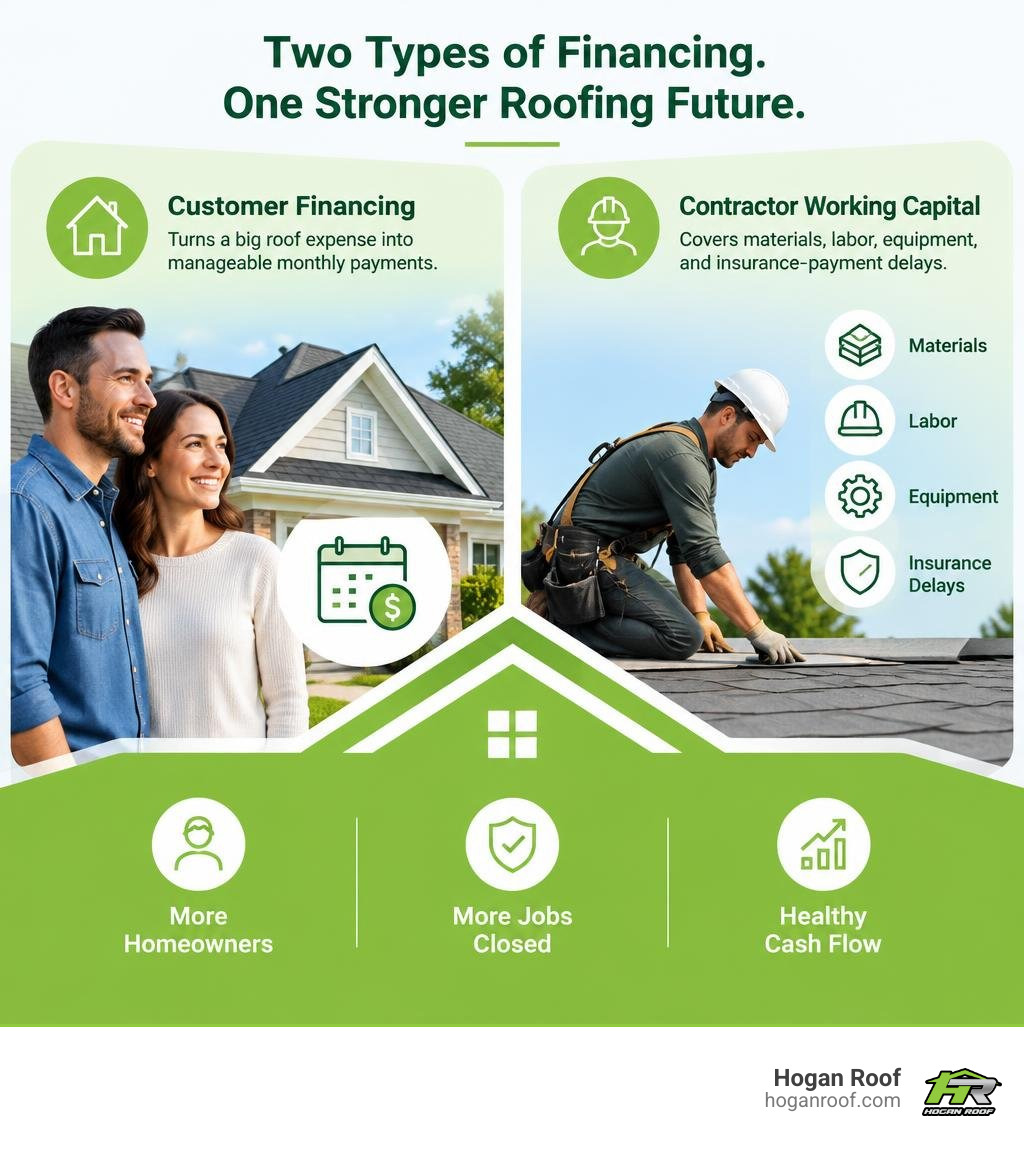
The best approach to financing for roofing contractors has two parts: offer homeowners manageable monthly payment options, and keep enough business capital available for materials, labor, equipment, and insurance-payment delays. Together, these tools can help a roofing company close more jobs without putting cash flow at risk.
For homeowners, financing can turn a large roof expense into a clear monthly payment. For contractors, a business line of credit, working-capital loan, or equipment loan can cover upfront costs while a project is in progress. This matters because materials can represent 40% to 50% of a roofing project's total value, often due before customer or insurance funds arrive.
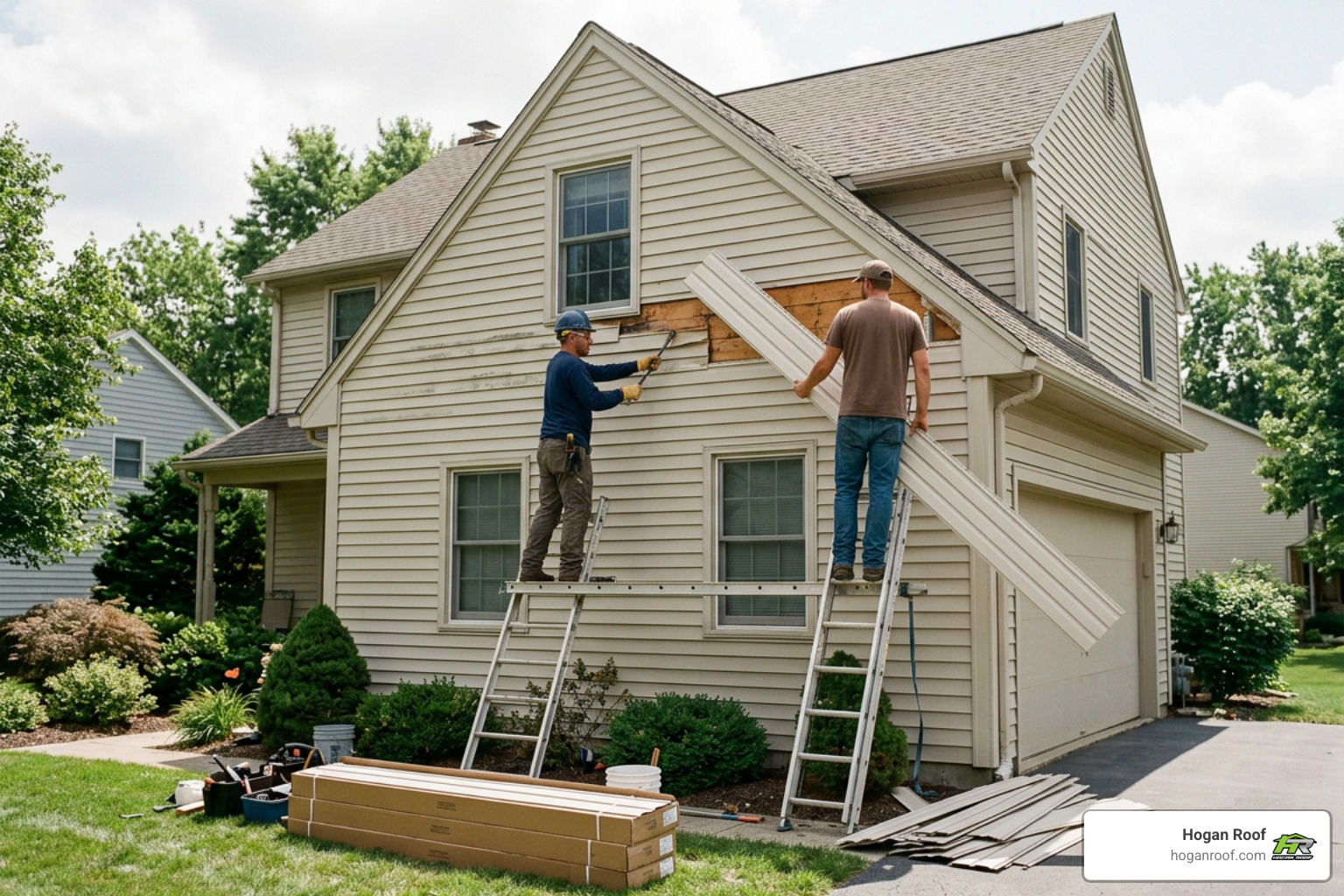
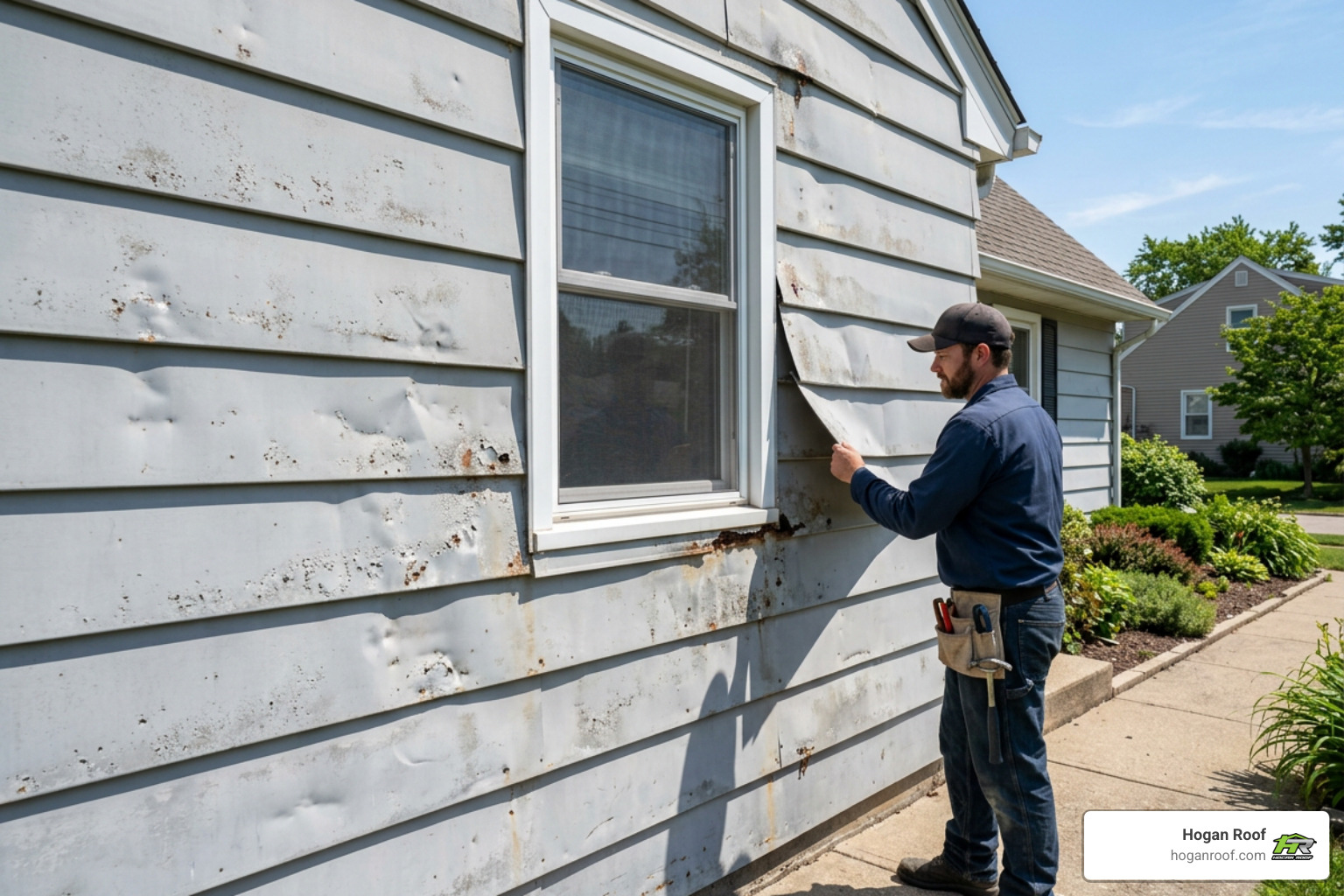
A new roof averages about $11,000, so price can stop an otherwise ready buyer from moving ahead. Clear financing choices can reduce that barrier, support needed repairs, and make it easier to include related work such as gutters or siding.
I am Bill Hogan, owner of Hogan Roof, with more than 20 years of experience helping residential and commercial property owners across NY, NJ, and CT make practical roofing decisions. At Hogan Roof, I have seen how transparent pricing and financing for roofing contractors and their customers can help protect homes while keeping projects on schedule.
Financing for roofing contractors terms to learn:
Why Customer Financing Is a Growth Engine for Roofing Businesses
According to the National Roofing Contractors Association (NRCA), the U.S. roofing industry employs over 220,000 workers and generates more than $56 billion in annual revenue. About 80% of roofing businesses are small enterprises operating with fewer than 10 employees. In such a competitive market, customer financing serves as a direct growth engine rather than a mere payment method.
When a homeowner faces an unexpected roof replacement, an upfront $11,000 bill creates hesitation. Presenting a manageable monthly installment shifts the conversation from total sticker price to affordability. This boosts closing rates significantly. In addition, customer financing expands buying power. Instead of choosing the bare minimum patch job, property owners can comfortably upgrade to premium architectural shingles, impact-resistant systems, or integrated seamless gutters and siding. Homeowners looking for trusted crews often search for roofers near me with financing for every budget so they can complete essential exterior work without draining personal savings.
Overcoming Homeowner Sticker Shock and Insurance Delays
Emergency roof leaks and severe weather events do not wait for ideal household financial timing. High insurance deductibles can stall urgent repairs, leaving properties vulnerable to structural water damage.
Contractors who present tiered estimates ("good, better, best") give clients control over their budget. Modern consumer lending platforms offer soft credit pulls that evaluate eligibility without impacting the homeowner's credit score. Integrating tools like an interactive loan calculator for your next major home project lets clients visualize their monthly payments right away, removing financial anxiety and accelerating contract signing.
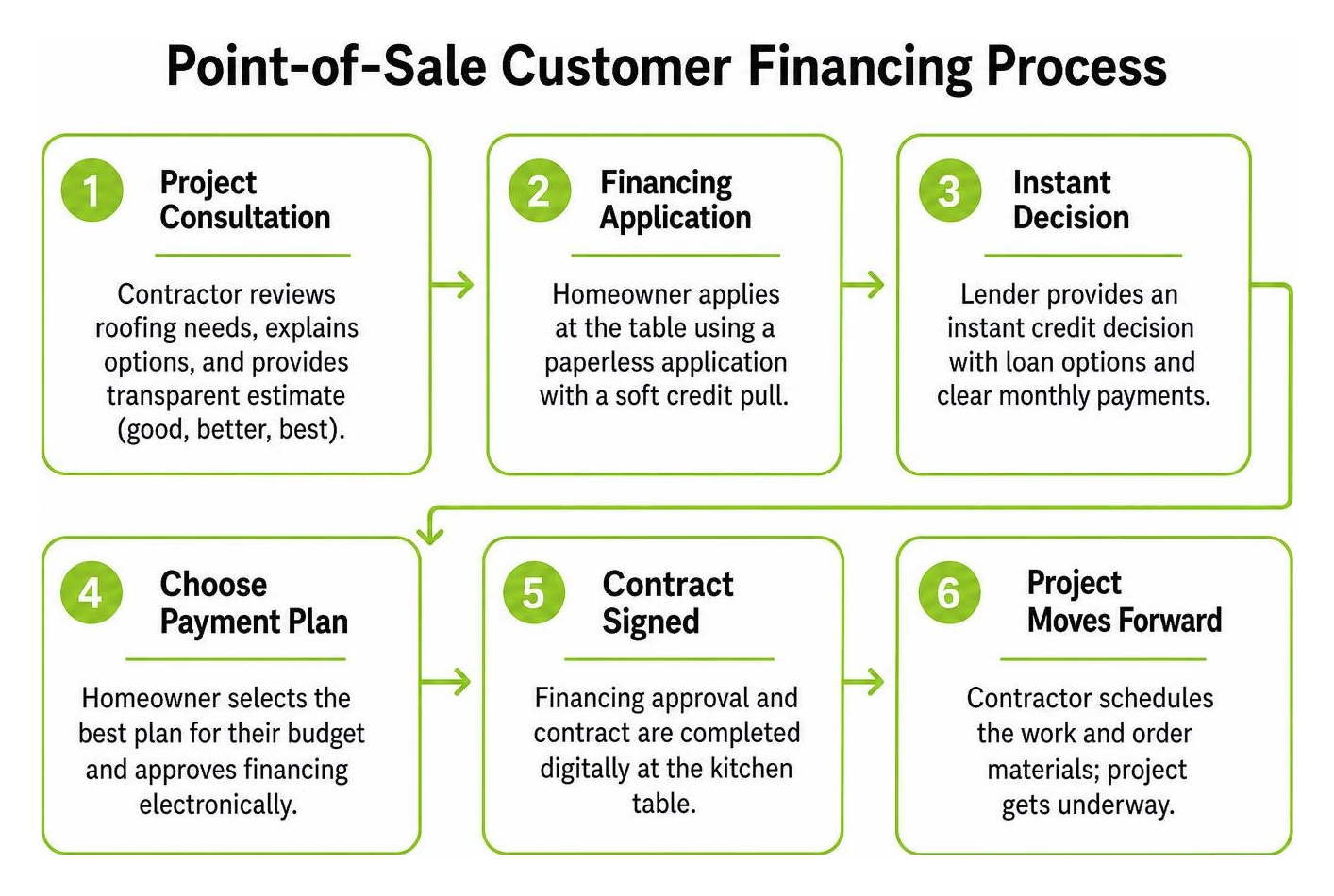
Integrating Point-of-Sale Payment Plans at the Kitchen Table
The traditional method of dropping off a paper estimate and waiting weeks for a callback is obsolete. Today, top-performing roofing companies secure agreements directly at the kitchen table using digital, paperless applications on tablets and mobile phones.
Many specialized lending programs offer zero-dealer-fee options and instant credit decisions in just a few minutes. Whether clients are exploring premium metal roofing payment plans or evaluating local metal roofing financing options, paperless point-of-sale financing provides approvals on the spot, allowing crews to schedule work immediately.
Core Business Capital and Financing for Roofing Contractors
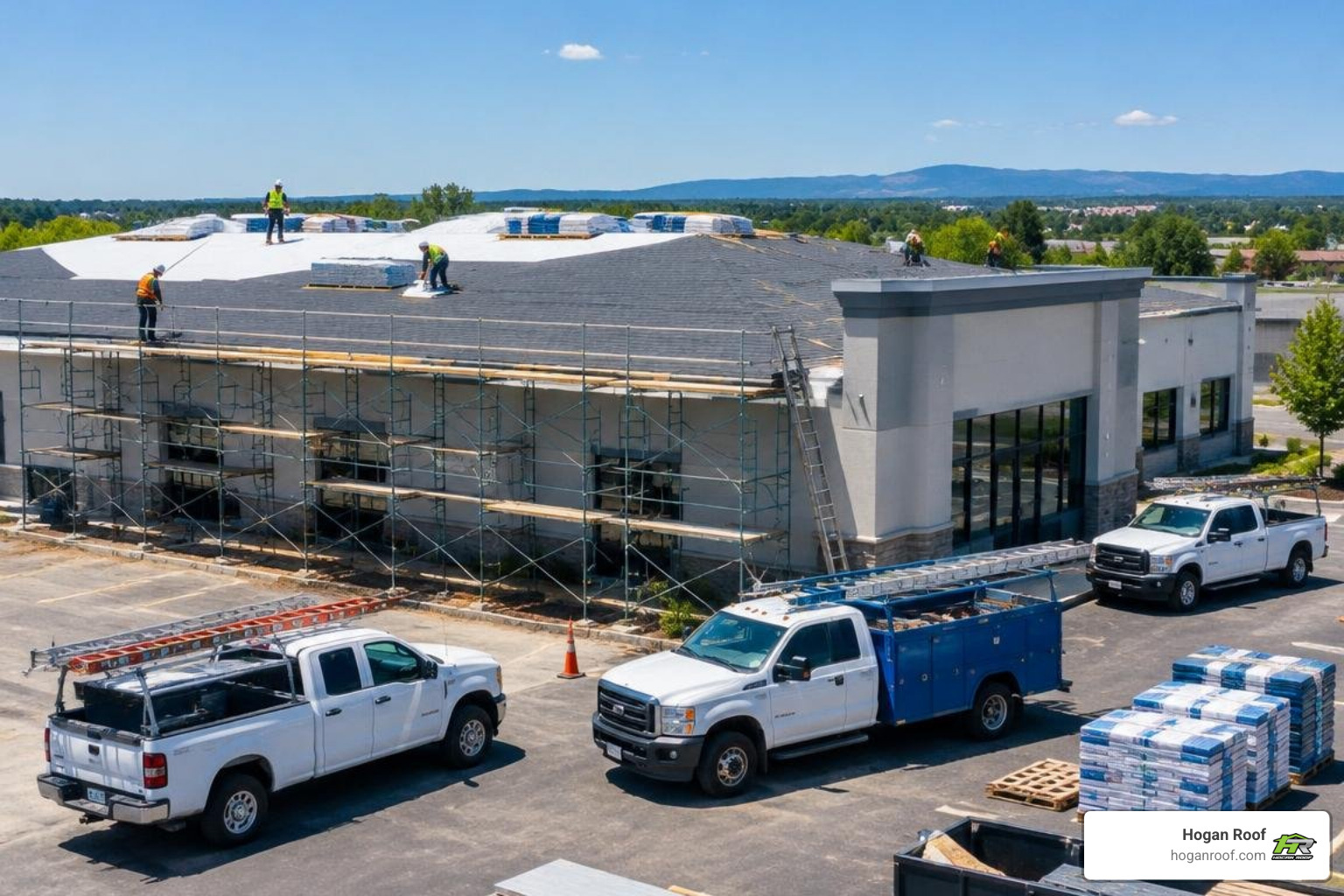
While offering payment options to homeowners secures sales, managing backend operational capital keeps the business running. Roofing is an operationally intensive trade with significant upfront outlays for every job.
Securing adequate business capital ensures a roofing company can take on larger commercial bids, maintain weekly payroll, and purchase bulk materials without straining cash reserves.
| Financing Type | Best Used For | Typical Approval Speed | Repayment Terms | Collateral Required |
|---|---|---|---|---|
| Business Line of Credit | Seasonal cash flow, payroll, and supply floats | 1–3 business days | Revolving (6–24 months) | Often unsecured or blanket lien |
| Working Capital Loan | Upfront materials and storm mobilization | 24–48 hours | Short-term (3–18 months) | Cash flow / bank deposits |
| Equipment Financing | Trucks, crane hoists, dump trailers | 3–7 business days | Long-term (2–7 years) | The purchased equipment |
| SBA 7(a) Loan | Large expansion, facility purchase, major fleet | 2–6 weeks | Long-term (5–10+ years) | Real estate / business assets |
Working Capital and Lines of Credit: Essential Financing for Roofing Contractors
A business line of credit provides revolving access to cash, meaning you only pay interest on what you draw. This flexibility is vital when managing supplier accounts and maintaining steady crew payroll before customer payments clear.
For larger upfront outlays, dedicated roofing contractor business loans provide lump-sum capital to fund multiple concurrent tear-offs. Having predictable working capital prevents business interruptions during peak operational windows.
Equipment Loans, Fleet Upgrades, and Section 179 Tax Deductions
Roofing operations depend heavily on heavy equipment, including crane trucks, tear-off conveyors, hydraulic dump trailers, and mobile roll-forming machines. Liquidating cash reserves to buy these assets outright can starve a company of working capital.
Equipment loans allow contractors to secure machinery using the asset itself as collateral, which lowers borrowing rates. Furthermore, tax incentives such as Section 179 and bonus depreciation allow eligible contractors to deduct the full purchase price of qualifying vehicles and machinery during the tax year they are put into service, rather than depreciating them over several years.
Alternative Capital and Fast Funding Options: Short-Term Financing for Roofing Contractors
When an unexpected storm strikes, waiting weeks for a conventional bank review is not practical. Alternative financing options provide emergency liquidity:
- Revenue-Based Funding & Merchant Cash Advances (MCAs): Advances based on monthly bank deposit history rather than extensive tax return packages, funding in as fast as 24 to 48 hours.
- Invoice Factoring: Selling outstanding B2B or commercial invoices to a factor to access immediate cash rather than waiting on net-60 terms.
Specialized providers of funding for licensed contractors match businesses with capital based on active operational cash flow rather than strict traditional collateral requirements.
Navigating Seasonal Fluctuations and the Insurance Settlement Lag
Roofing cash flow is heavily cyclical. In northern markets, the primary roofing season runs from April through October, with those seven months generating 75% to 85% of total annual revenue. The winter months bring lower volume, while fixed expenses such as facility leases, insurance premiums, and core staff salaries remain constant.
Complicating matters further is the insurance settlement timeline. When restoring storm-damaged properties, insurance replacement cost value (RCV) checks take an average of 42 days to arrive, with total settlement timelines often stretching between 30 and 90 days. Contractors must pay for materials and labor immediately, creating a considerable cash float gap.
Managing Peak Storm Mobilization and COD Material Orders
A single residential re-roof can require $3,000 to $8,000 in shingles, underlayment, and flashing, while a commercial flat roof replacement can demand $25,000 to $80,000 in upfront supplies. When multiple projects start simultaneously, supply yards often require Cash on Delivery (COD).
Maintaining dedicated working capital or short-term lines of credit bridges this float, ensuring crews are deployed without delay. Clear estimates based on transparent project pricing help streamline this entire cycle for both contractors and property owners.
Winter Bridge Financing and Off-Season Cash Management
During the winter slowdown, savvy contractors use bridge financing to retain key crew leaders, maintain commercial preventative maintenance contracts, and prepare marketing campaigns for the spring rush.
Contractors should also educate clients about public assistance programs. Connecting eligible homeowners with resources on government home repair grants and eligibility guidelines can unlock winter grant-funded projects that keep installation crews active year-round.
Qualification Requirements and Underwriting Standards for Commercial Lenders
Securing commercial financing requires understanding how lenders assess risk in the specialty construction trades.
Bank Statement Underwriting vs. Traditional Bank Packages
Traditional retail banks often misunderstand the roofing revenue cycle. When a major hailstorm creates a massive revenue spike, banks may view this as unsustainable volatility. Furthermore, traditional lenders generally ignore pending insurance receivables and require two to three years of steady tax returns.
Alternative commercial lenders utilize bank-statement underwriting. They review three to six months of recent business bank deposits to assess real-time cash flow and deposit consistency, allowing contractors to secure funding based on current business volume.
Key Financial Documents and Credit Score Thresholds
To prepare for a business loan or line of credit application, assemble the following:
- Bank Statements: 3 to 6 months of complete business operating accounts.
- Identification & Entity Proof: Valid government ID, Articles of Incorporation, and active contractor license (such as C-39 or regional trade licenses).
- Financial Statements: Year-to-date Profit & Loss (P&L) and balance sheet.
- Credit Profile: A personal FICO score of 600 or higher unlocks competitive lines of credit and equipment leases, while revenue-based products may approve scores down to 550 based on strong deposit volume.
Homeowners planning their roof replacements can start with an instant roof quote to get an accurate scope of work before exploring payment options.
Frequently Asked Questions About Roofing Business and Customer Financing
How quickly can a roofing contractor access working capital for emergency storm restoration?
Standard working capital and revenue-based funding applications can be approved in 4 to 6 hours, with funds disbursed via wire transfer within 24 to 48 hours. This rapid turnaround allows contractors to secure COD materials and mobilize crews immediately following a severe weather event.
What minimum credit score is needed to qualify for contractor business loans or consumer financing programs?
For business funding, specialized lenders provide revenue-based advances for scores around 550 to 580, while prime bank lines of credit and equipment loans generally require a FICO of 620 or higher. On the homeowner financing side, second-look consumer lending programs can approve property owners with scores as low as 550 using soft credit inquiries.
How does Section 179 benefit roofing contractors purchasing new vehicles and heavy machinery?
Section 179 of the IRS tax code allows businesses to deduct the full purchase price of qualifying equipment—including crew trucks, cranes, conveyors, and trailers—in the tax year the equipment is placed in service. Combining equipment financing with Section 179 tax deductions enables contractors to acquire vital machinery with minimal upfront cash while reducing their net taxable income.
Conclusion
Sustained growth in the roofing industry requires a balanced financial strategy. Offering flexible point-of-sale customer financing eliminates homeowner sticker shock and increases closing rates, while dedicated business lines of credit and equipment loans protect operational cash flow against seasonal slowdowns and insurance claim delays.
At Hogan Roof, our Owens Corning Platinum Preferred team brings over two decades of residential and commercial experience to properties throughout New York, New Jersey, and Connecticut. Explore our flexible roofing financing options to see how accessible, professional exterior solutions can protect your home today.