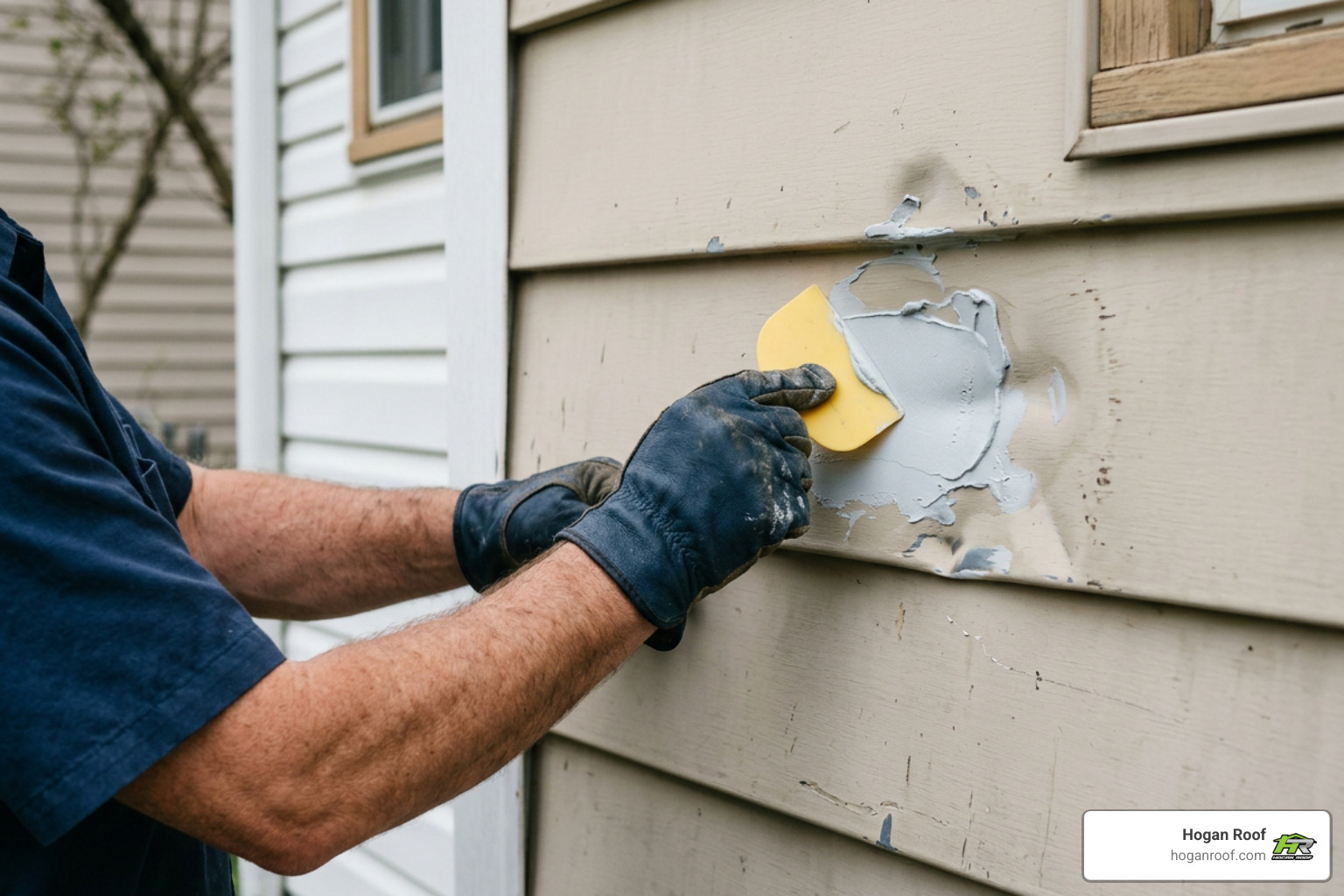
The Complete Guide to Upgrading Your Long Island Siding
Choose Long Island Siding That Can Handle Coastal Weather
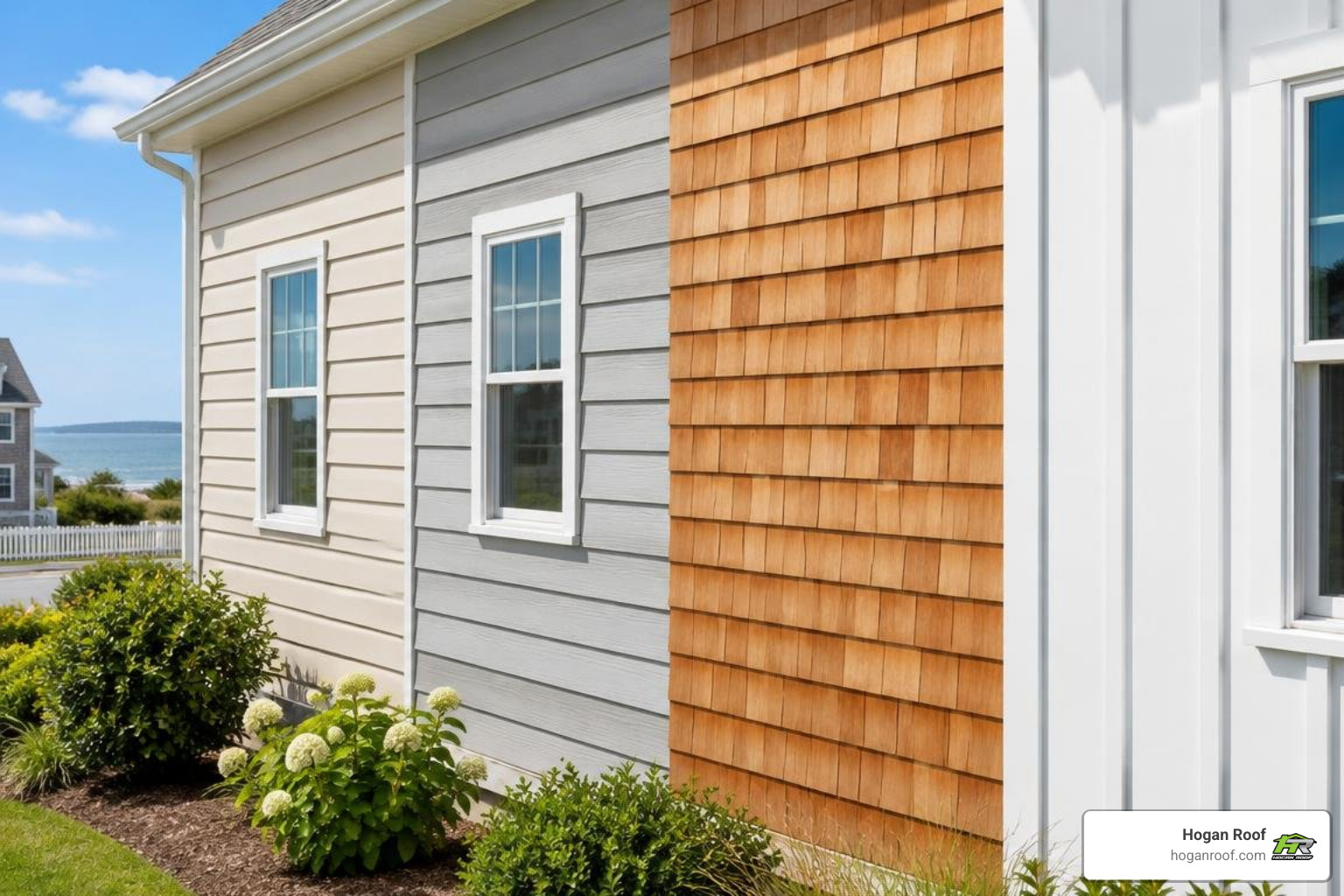
The best Long Island siding balances moisture resistance, wind performance, maintenance needs, and budget . Vinyl is a practical low-maintenance choice for many homes, while fiber cement offers strong resistance to rot, pests, and impact. Cedar delivers classic coastal character but needs regular care, especially near salt air and humidity.
Before choosing a material, homeowners should consider:
- Exposure: Homes near the shore need siding and trim that can manage salt, wind-driven rain, and moisture.
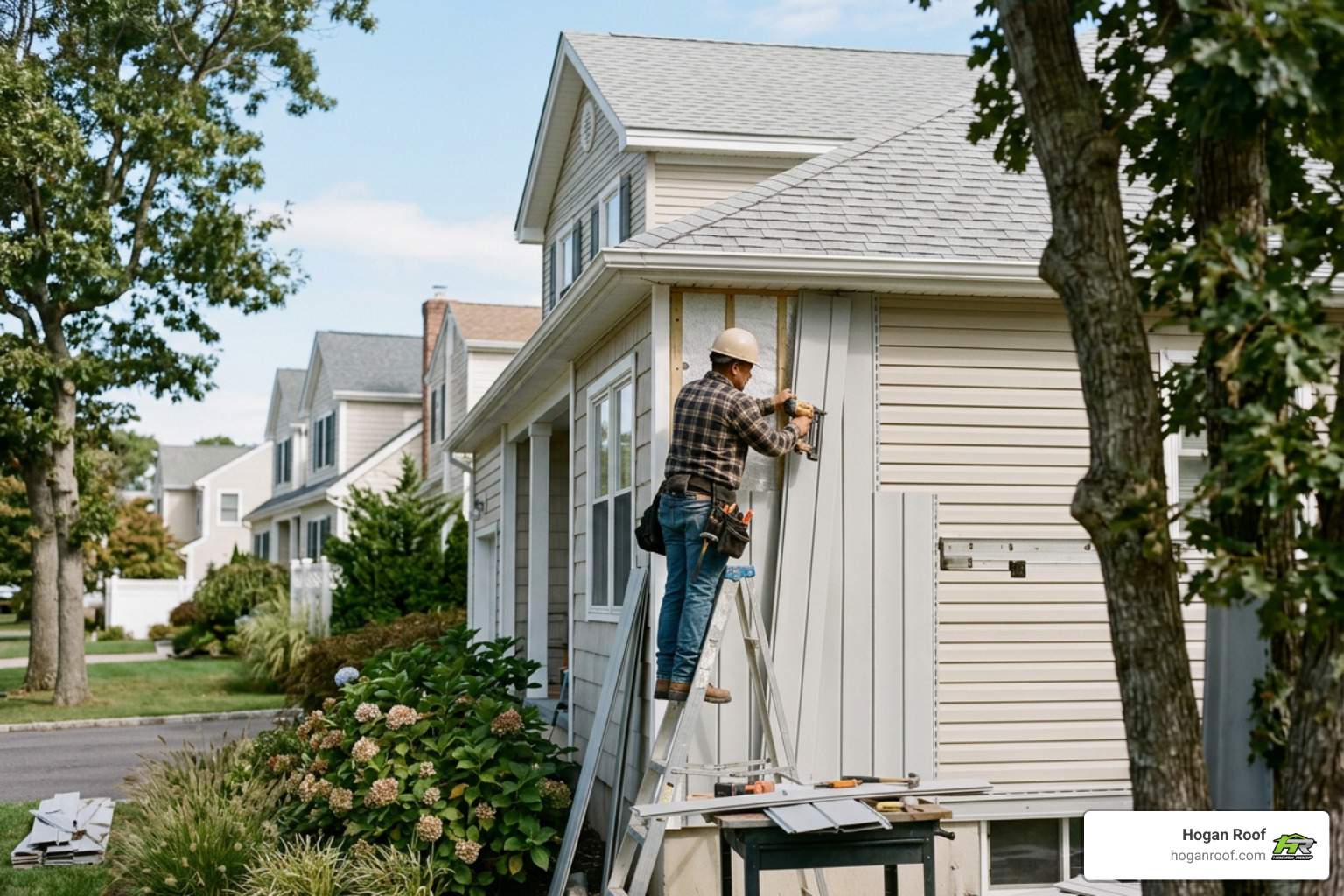
- Installation quality: A weather-resistive barrier, correct flashing, and proper fastening matter as much as the siding itself.
- Long-term cost: Compare maintenance, expected lifespan, removal of old siding, and insulation upgrades - not just the initial estimate.
- Home style: Profiles such as clapboard, shingles, board and batten, and Dutch lap can change curb appeal as much as color.
New siding can help protect wall framing, reduce drafts when paired with proper insulation and air sealing, and refresh a home's appearance. This guide explains the leading material choices, replacement warning signs, local cost factors, energy-efficiency benefits, and how to select a contractor and warranty with confidence.
I'm Bill Hogan, owner of Hogan Roof, and I have more than 20 years of experience helping NY/NJ/CT property owners make durable exterior improvements. In the sections ahead, I'll share the practical factors that matter most when planning a Long Island siding upgrade.
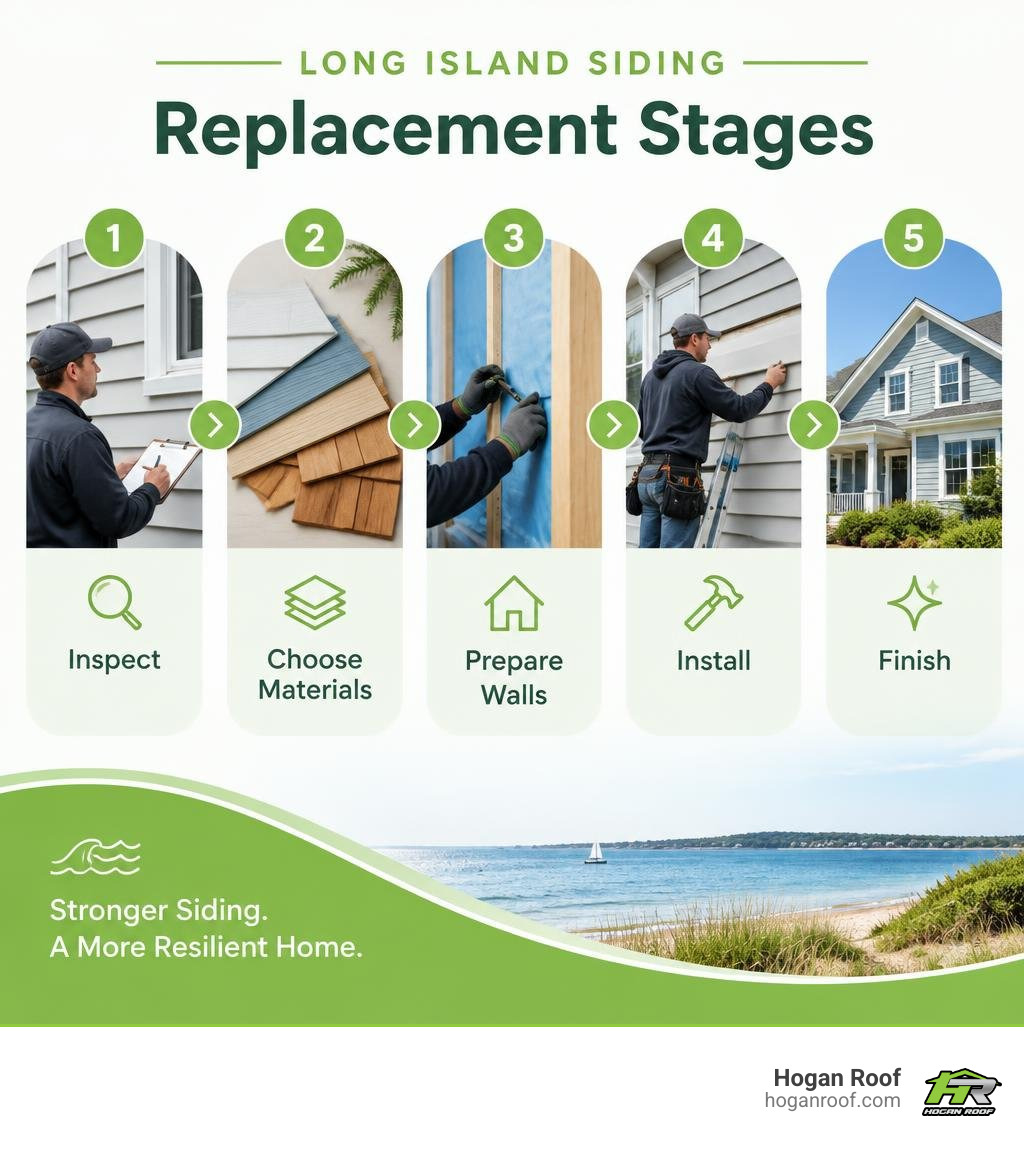
Basic long island siding vocab:
Best Long Island Siding Materials for Coastal Climate Performance
Living on Long Island means dealing with unique weather patterns. Between damp Atlantic breezes, humid summer heatwaves, freezing winter nor'easters, and salt spray carrying miles inland, your home's exterior takes a beating. The wrong exterior cladding will buckle, rot, fade, or peel prematurely under these harsh coastal conditions.
Selecting the right profile requires balancing aesthetic appeal with tough engineering. Below is a breakdown comparing the primary materials installed across Nassau and Suffolk counties:
| Siding Material | Average Lifespan | Maintenance Level | Relative Cost | Wind & Coastal Resistance |
|---|---|---|---|---|
| Premium Vinyl | 25 – 40 Years | Very Low (Occasional wash) | $ - $$ | High (Up to 110-130 mph rated) |
| Cedar Shake | 20 – 35 Years | High (Staining/painting every 3-5 yrs) | $$$$ | Excellent (Flexible, naturally durable) |
| Fiber Cement | 30 – 50 Years | Low to Moderate (Repaint ~15 yrs) | $$$ | Superior (Class A fire rated, impact resistant) |
| Aluminum | 20 – 30 Years | Low (Prone to dents/scratches) | $$ | Good (Corrosion resistant, but can dent in storms) |
Vinyl Siding Durability and Versatility
Vinyl remains the most installed exterior covering across the region, and modern manufacturing has elevated it far beyond the brittle plastics of the past. Today's premium vinyl panels are engineered with UV inhibitors that protect deep colors from fading under harsh sunlight.
For homeowners living near western Long Island bays, upgrading your exterior with the best vinyl siding in Nassau County ensures your property benefits from high wind-load ratings and interlocking panel designs that keep gale-force rain from reaching your wall sheathing. When planning your project, how to choose the right vinyl siding in Suffolk County often comes down to selecting thicker gauges (0.044" to 0.046" or greater) that resist warping during humid summers. Furthermore, protecting your home with quality vinyl siding in Nassau County NY gives you total freedom from scraping, sanding, and repainting.
Cedar Shake and Shingle Authenticity
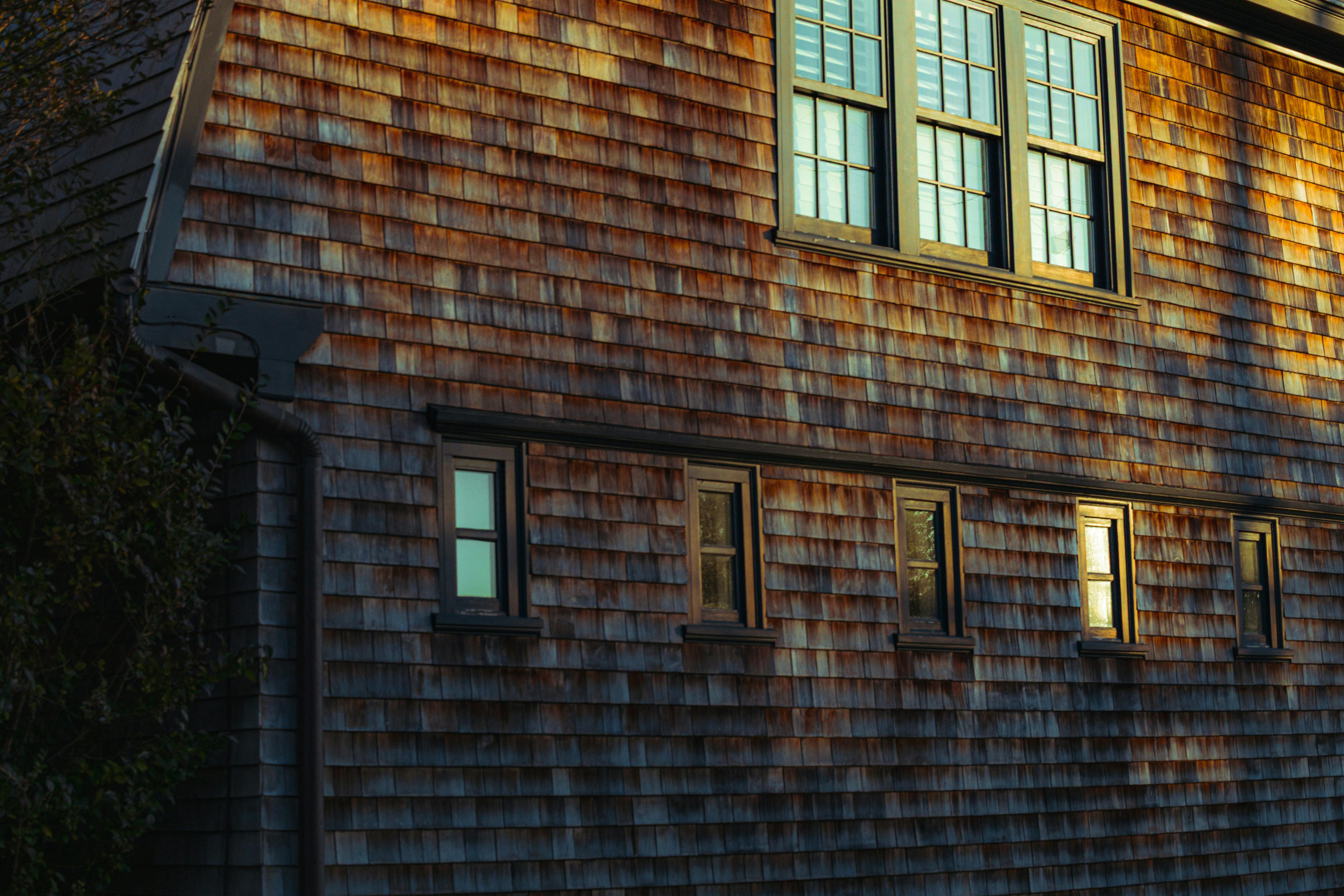
Nothing captures the quintessential South Shore or East End aesthetic quite like natural wood shingles. Cedar contains natural oils and tannins that make it naturally resistant to decay and insect infestations. Over time, unfinished cedar weathers into that iconic, silvery-gray patina loved throughout Montauk, the Hamptons, and historic coastal villages.
However, real wood demands commitment. Without proper maintenance, persistent moisture and coastal humidity can cause individual shakes to split or develop mold. When boards begin to cup or rot, mastering cedar shingle siding replacement for your home becomes necessary to maintain structural integrity. If you are weighing real cedar against composite or vinyl cedar-look impressions, understanding the real cost to re-shingle your home siding will help you budget for both initial installation and long-term protective treatments.
Fiber Cement and Aluminum Alternatives
Fiber cement—composed of Portland cement, sand, and cellulose fibers—has surged in popularity. It replicates wood grain with incredible fidelity while offering non-combustible fire protection and complete immunity to woodpeckers and termites. It withstands flying storm debris exceptionally well and will not rot when exposed to salt fog.
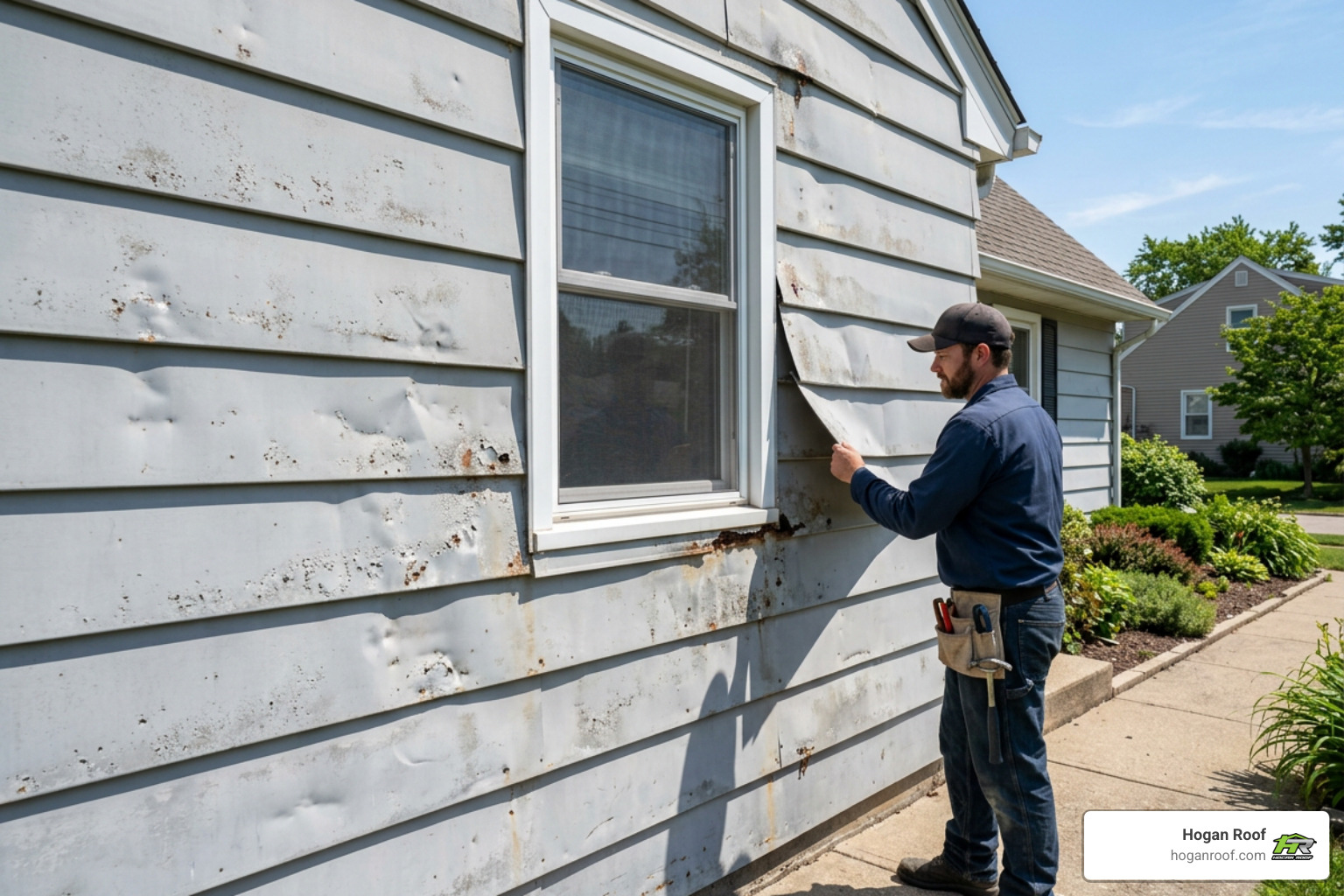
Aluminum siding is another traditional alternative that never absorbs water or rots. While it can suffer cosmetic blemishes from stray baseballs or heavy hail, it provides a stable metal barrier. If your existing metal panels are showing minor localized damage, reading a simple guide to repairing loose or dented aluminum siding can help you decide whether a spot repair or full replacement makes the most sense.
Critical Signs Your Home Needs a Siding Replacement
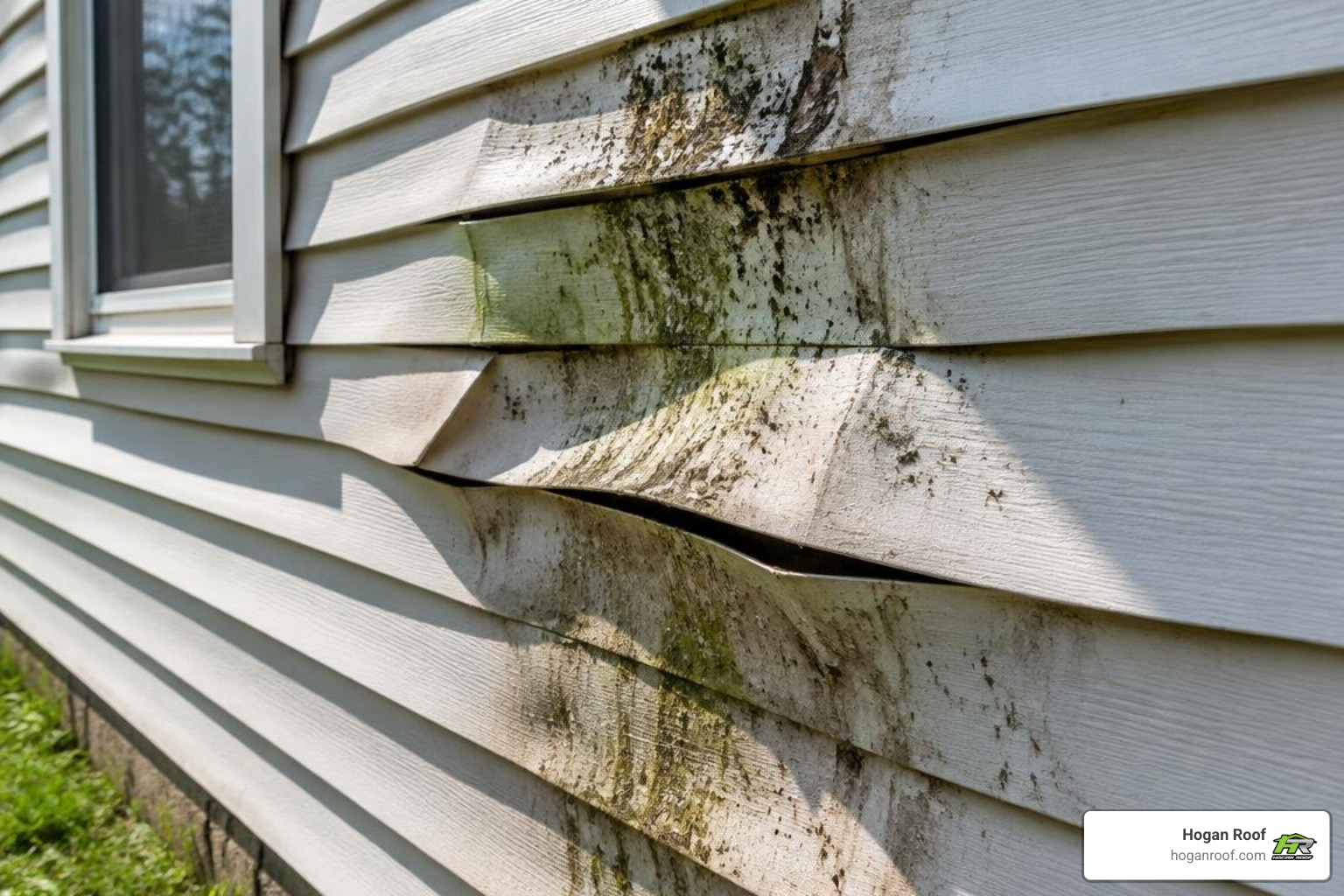
Many homeowners only notice siding issues when boards literally fall off the wall, but water intrusion often works quietly behind the scenes for months before becoming visible inside your living spaces.
Common indicators that your exterior cladding has reached the end of its serviceable lifespan include:
- Visible Warping, Buckling, or Cracking: Panels that are no longer straight allow wind-driven rain to funnel directly behind the wall envelope.
- Faded, Chalky, or Peeling Surfaces: When factory coatings wear down, the core material loses its UV protection and weatherproofing.
- Soft, Spongy Wood Trim: Poking bottom trim boards or window frames with a screwdriver reveals rot caused by hidden water leaks.
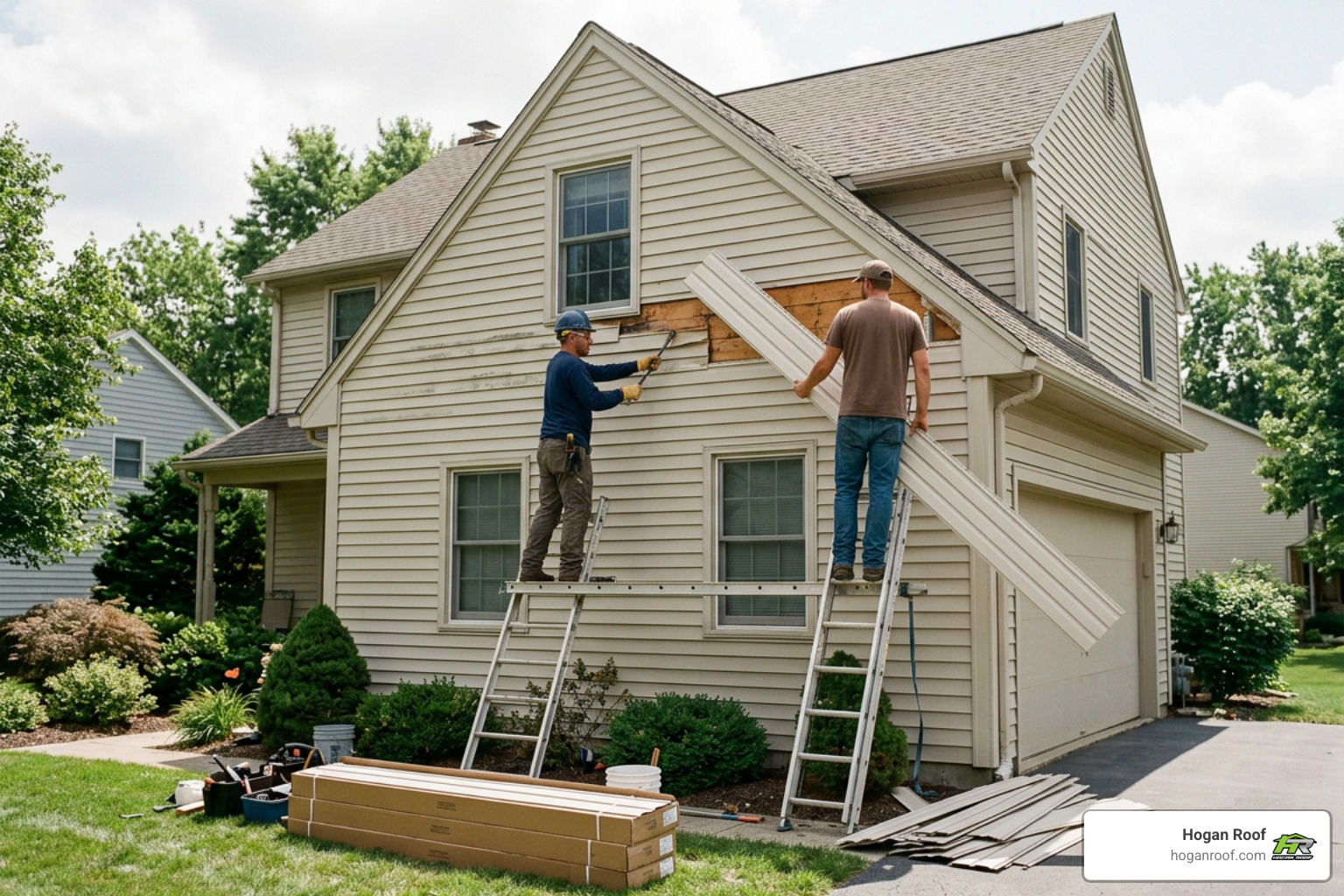
- Loose or Rattling Panels: Nails that have pulled free during high winds indicate compromised fastening or decaying sheathing beneath.
- Interior Drywall Stains and Peeling Paint: If indoor wallpaper is peeling or ceilings show water marks near exterior walls, moisture is migrating inward.
Moisture Damage, Warping, and Mold Growth
The combination of wet winters and humid summers creates an ideal breeding ground for fungus, moss, and mildew. If your siding was installed without adequate ventilation or a breathable housewrap barrier, trapped moisture quickly rots your plywood sheathing and wood framing studs.
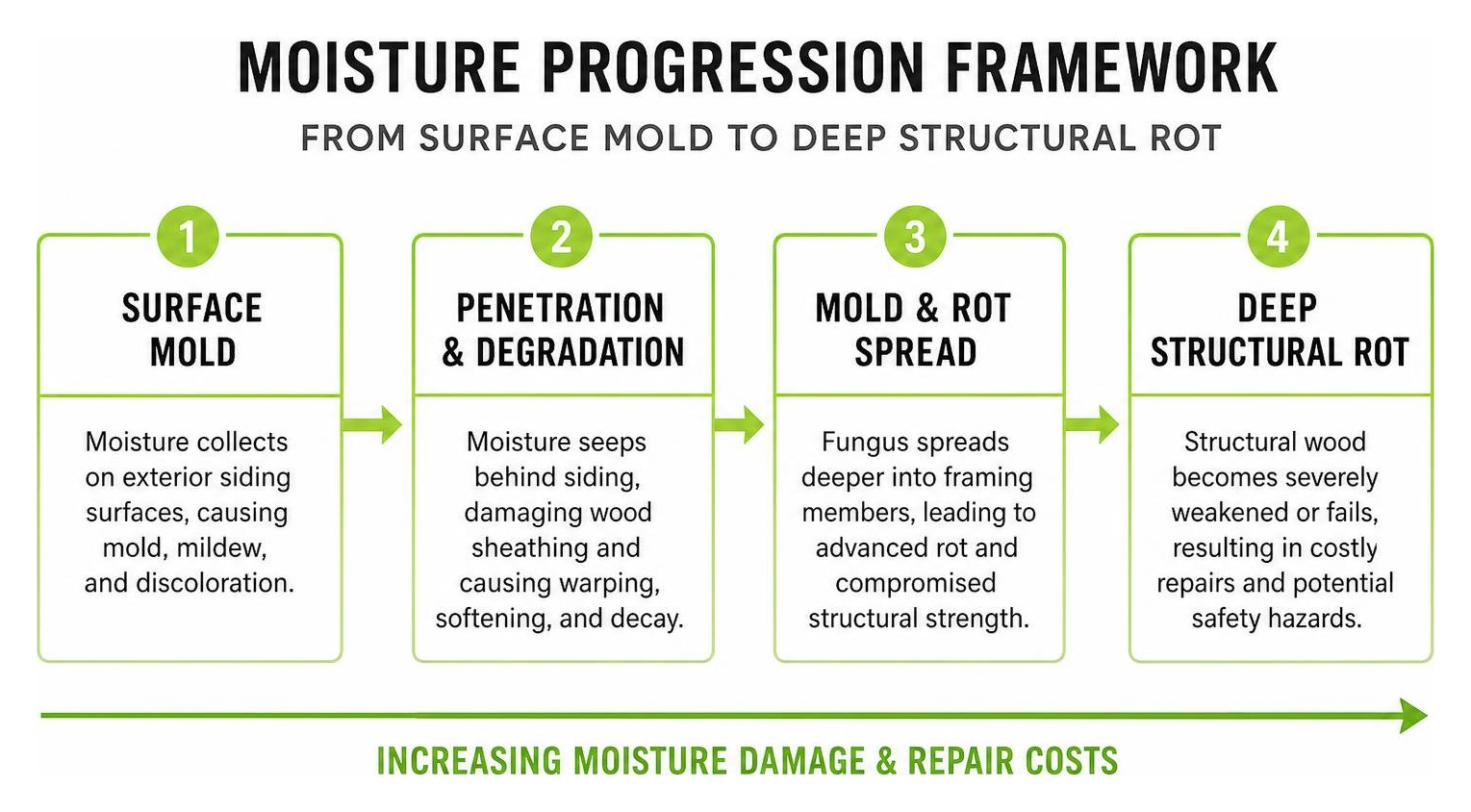
Once structural dry rot takes hold, the repair bill grows exponentially. Replacing siding before water compromises the framing saves thousands of dollars in deep structural carpentry.
Rising Energy Bills and Drafty Walls
Have you noticed your heating system running constantly during January freezes, or your air conditioner struggling to keep up in July? Siding serves as an exterior shield for your thermal envelope. When older siding pulls away or lacks proper insulation beneath it, heat escapes through "thermal bridging"—where wall studs conduct outdoor temperatures directly through the walls. Drafty baseboards and erratic indoor temperatures are strong signals that your exterior envelope needs an upgrade.
Cost, Energy Efficiency, and Value of Siding Replacement
Investing in a full siding replacement is one of the highest-value home renovations you can undertake. Beyond giving your house an immediate visual facelift, modern materials dramatically increase overall building performance.
Key Factors Influencing Long Island Siding Costs and ROI
The total cost of a siding project on Long Island varies based on architectural complexity, wall height, material grade, and the condition of the underlying substrate. Local labor rates and waste disposal fees for hauling away old materials also factor into project totals. According to the U.S. Department of Energy, exterior wall insulation and air sealing are among the most effective ways to reduce household energy waste.
To help budget effectively, we provide clear information on pricing so you know what goes into full-service tear-off, wall prep, and premium installation. Furthermore, exploring accessible financing options allows you to choose high-performance materials without compromising your monthly household budget.
According to regional real estate remodeling data, exterior siding replacement consistently recoups 75% to 85% of its cost at resale, making it one of the most reliable investments for protecting and growing your home equity.
Insulated Siding and Thermal Barrier Improvements
Standard siding provides weather protection, but insulated siding incorporates a contoured layer of rigid foam backing (EPS or GPS) directly bonded to or placed behind each panel.
Insulated systems create continuous exterior insulation, blanketing the home's framing studs to stop thermal bridging. By increasing the overall R-value of your exterior walls, your HVAC equipment runs less frequently, extending its life and keeping your family comfortable through every seasonal temperature spike.
Selecting Styles, Colors, and Reputable Contractors
Upgrading your home exterior is your chance to redefine its character. Whether you own a classic Cape Cod, a split-level ranch, or a modern colonial, matching the profile and color to your neighborhood and personal taste makes all the difference.
Popular Styles and Colors for Long Island Siding Upgrades
Current design trends across Long Island blend traditional coastal elements with crisp, contemporary lines:
- Board and Batten: Wide vertical boards accented by narrow strips create vertical height and provide a modern farmhouse or coastal cottage look.
- Dutch Lap: Features a distinct decorative groove at the top of each horizontal plank, offering deep shadow lines and historical appeal.
- Coastal Blues and Grays: Shades like slate blue, coastal mist, charcoal, and warm off-whites continue to dominate coastal neighborhoods, providing high visual contrast against bright white trim.
- Rich Earth Tones: Forest greens, deep espreso, and warm sienna are increasingly popular on wooded, inland lots across the North Shore.
Vetting Local Contractors, Warranties, and Installation Pitfalls
Even the best siding material will fail prematurely if fastened incorrectly. Improper nailing—such as driving nails too tightly and preventing natural thermal expansion—causes vinyl to warp and buckle. Flashing errors around windows and roof-to-wall intersections represent the number one source of exterior leaks. Following established FEMA coastal construction guidelines helps ensure exterior wall envelopes withstand severe coastal storms and high winds.
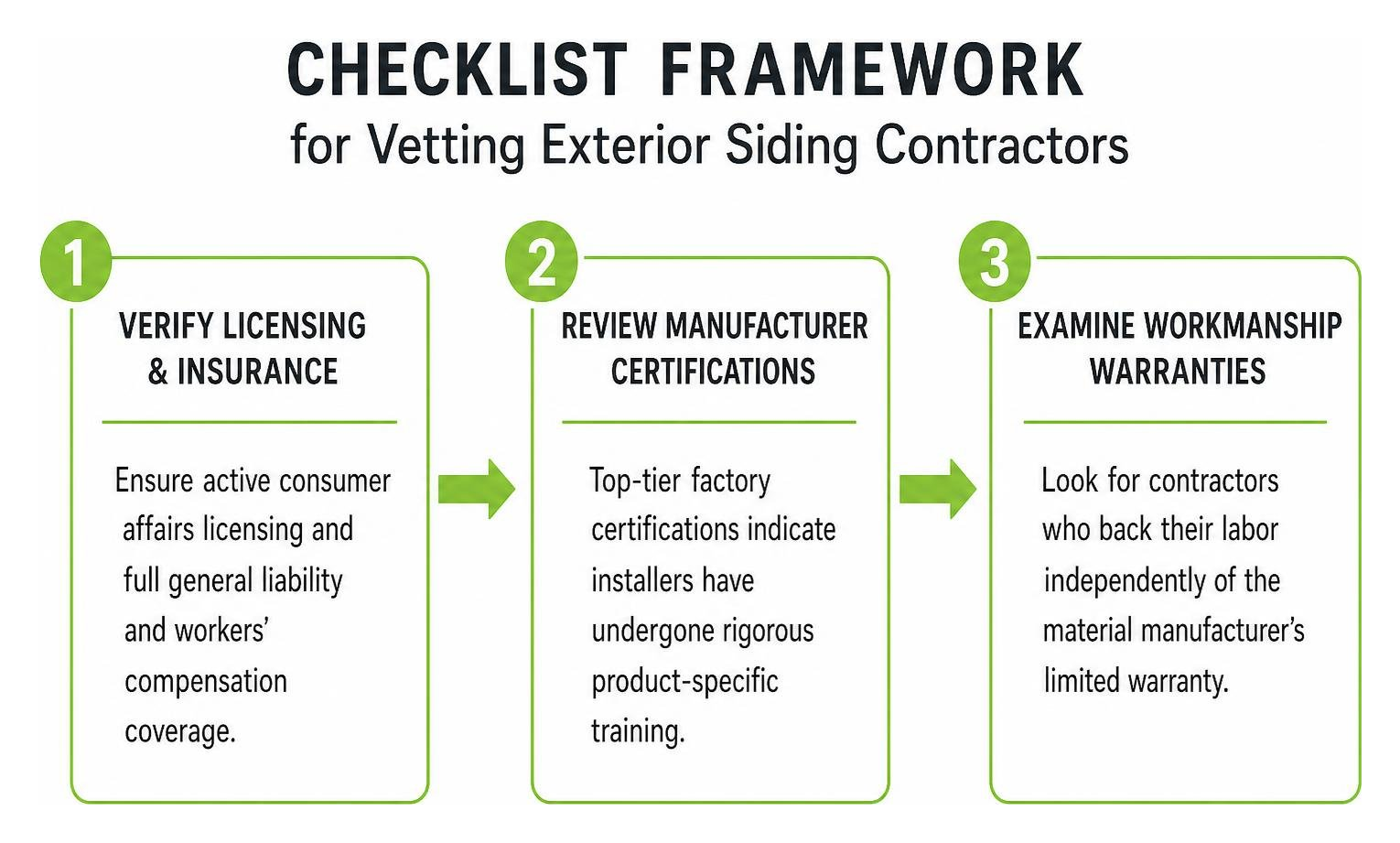
When interviewing siding professionals:
- Verify Licensing & Insurance: Ensure active consumer affairs licensing and full general liability and workers' compensation coverage.
- Review Manufacturer Certifications: Top-tier factory certifications indicate installers have undergone rigorous product-specific training.
- Examine Workmanship Warranties: Look for contractors who back their labor independently of the material manufacturer's limited warranty.
For dependable project planning, schedule contact with our factory-trained team to review your home's exterior details and receive an honest, transparent estimate.
Frequently Asked Questions About Exterior Siding Replacement
How long does siding typically last in a coastal environment?
High-grade vinyl and fiber cement typically last 30 to 50 years with minimal care when properly installed. Natural cedar shingles last 20 to 35 years , provided they receive regular washing and protective sealant every few years to guard against salt mist and rot.
Can new siding help lower heating and cooling bills?
Yes. When you replace old siding, installers inspect and tape the housewrap air barrier and install rigid continuous foam insulation behind the panels. This air sealing stops drafts and eliminates thermal bridging, reducing household heating and cooling energy usage by 10% to 20% .
What is the best season to replace siding on Long Island?
Siding can be installed year-round, but spring and autumn offer optimal mild temperatures that make installation straightforward and comfortable. Professional crews can still install vinyl in winter by taking special care during cutting and fastening to account for material contraction in cold weather.
Conclusion
Your home's exterior serves as its first line of defense against ocean gales, pounding rain, and freezing temperatures. Upgrading your exterior cladding not only enhances curb appeal and raises resale value, but also seals out moisture and keeps utility bills manageable throughout the year.
With more than two decades of dedicated service across the tri-state area, our team brings top-tier craftsmanship, Platinum-level certifications, and transparent communication to every project. When you are ready to enhance your home's defense and beauty, learn more about our complete siding replacement solutions and schedule your comprehensive on-site assessment today.